


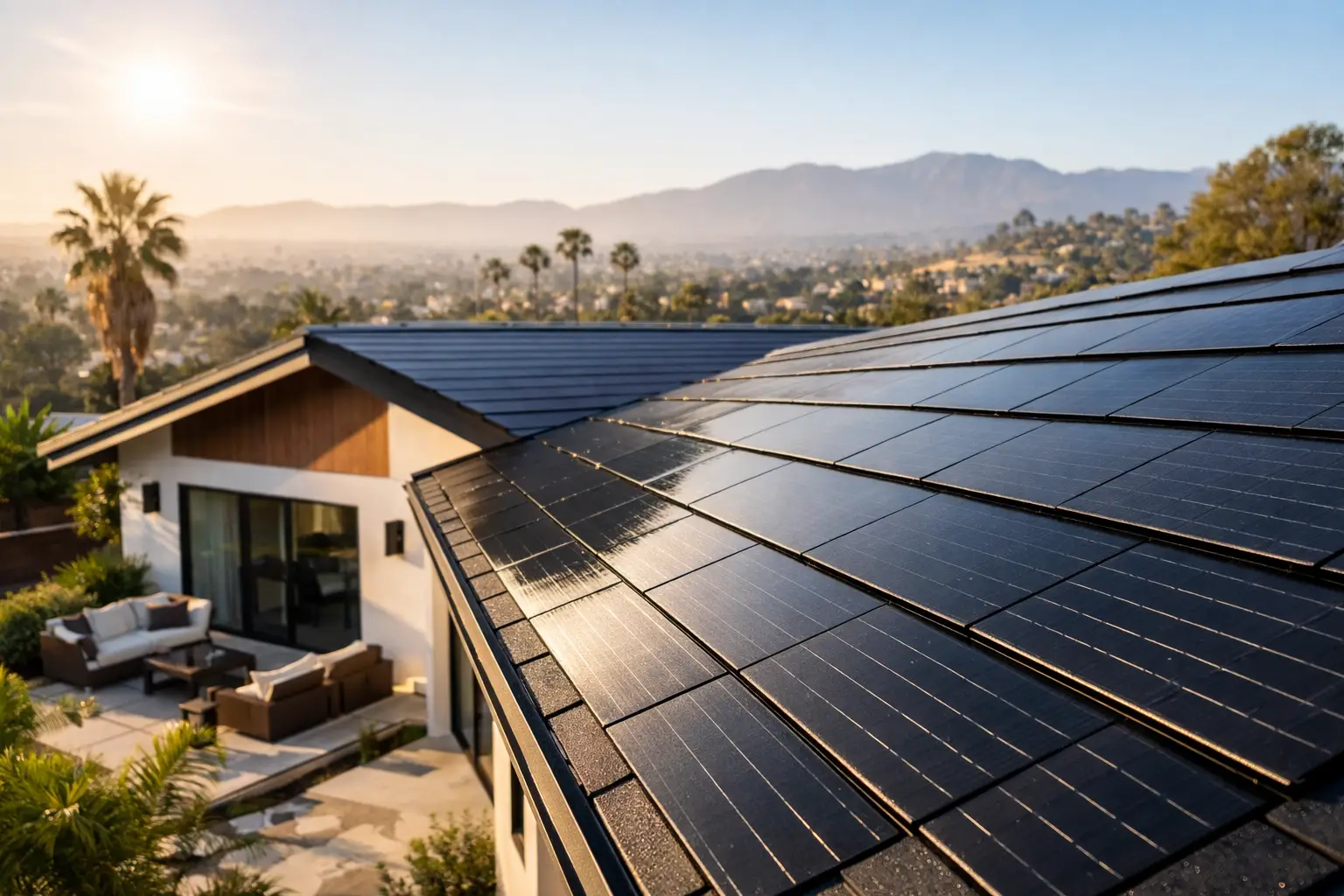
Solar Roof Shingles Review for California Homes
A roof replacement is already one of the biggest investments a homeowner can make. Adding solar at the same time can feel like a smart way to combine two projects, but solar roof shingles are not automatically the best fit for every property. The right choice depends on your roof’s condition, your electric bill, your design preferences, and how much solar production you need.
This solar roof shingles review looks at what these products do well, where they fall short, and when traditional solar panels may deliver better value for homes and businesses in Southern California.
What Are Solar Roof Shingles?
Solar roof shingles, also called solar shingles or solar roofing tiles, are photovoltaic products designed to function as part of the roof surface. Rather than mounting standard solar panels above existing shingles or tile, solar shingles are installed in sections of the roof and generate electricity from sunlight.
The appeal is easy to understand. Many homeowners want the energy savings of solar without the appearance of visible panel racks. Solar shingles create a more integrated look, especially on newer homes, modern designs, and properties where curb appeal is a major consideration.
They are not the same as simply putting solar panels on a roof. A solar roof project often involves more coordination between roofing and electrical work. That can be a real advantage when a roof is near the end of its life, but it also makes planning especially important.
Solar Roof Shingles Review: The Real Advantages
The strongest reason to consider solar shingles is integration. If you need a new roof anyway, combining roofing and solar can reduce the hassle of completing separate projects years apart. One coordinated plan can account for roof materials, electrical equipment, solar production, and battery storage from the beginning.
A cleaner appearance is another major benefit. Solar shingles sit closer to the roofline than conventional panels and can blend into certain roof styles more naturally. For homeowners who have avoided solar because they do not like the look of panels, that difference can matter.
Solar roofing can also be a practical choice for complex projects. If your property needs roofing repairs, a service panel upgrade, gutter work, or an energy storage system, coordinating the improvements together may help avoid duplicate labor and scheduling problems. A full-property approach is often easier than calling separate contractors for every step.
For California property owners, the timing can be favorable when a roof replacement is unavoidable. Installing traditional panels on an aging roof may mean paying to remove and reinstall them when reroofing becomes necessary. Starting with a roofing plan first helps protect your investment.
The Trade-Offs You Should Know Before Buying
Solar shingles are not a shortcut to cheaper solar. In many cases, they cost more per watt of electricity produced than conventional solar panels. You are paying for an integrated roofing product, specialized installation, and a design-forward finish, not just solar generation.
Their power output also deserves close attention. Standard solar panels are often more efficient and can produce more electricity in a smaller area. That matters for homes with high air-conditioning use, electric vehicles, pool equipment, or growing household energy needs. If your usable roof space is limited, traditional panels may be better positioned to offset a larger share of your bill.
Repair and expansion can be more involved, too. With conventional solar, adding a few more panels later may be relatively straightforward if the roof and electrical system allow it. With solar roofing, expanding the system can be more dependent on the product design, roof layout, and available matching materials.
There is also a supplier consideration. Solar shingle availability, warranty terms, installation requirements, and product support vary significantly by manufacturer. A low price without clear warranty coverage or dependable installation coordination is not a bargain. Before moving forward, ask who is responsible for the roof, the solar equipment, workmanship, permitting, and future service.
Solar Shingles vs. Traditional Solar Panels
For most homes, traditional solar panels remain the strongest value when the goal is maximum energy production for the budget. Panels are widely available, proven across many roof types, and generally easier to size around your energy usage. They can be paired with batteries and other electrical upgrades without requiring a full solar roof system.
Solar shingles make more sense when visual integration and roof replacement are central to the project. Think of them as a roofing decision and an energy decision at the same time. They can be a compelling option for a homeowner building a new home, completing a major remodel, or replacing a roof that has reached the end of its useful life.
Neither option is universally better. A homeowner with a newer roof, strong sun exposure, and a goal of lowering bills quickly may benefit more from traditional panels. A homeowner who must replace the roof and wants a less visible solar design may find the higher solar roofing cost worthwhile.
What Solar Roof Shingles Cost in Southern California
A precise price requires an on-site evaluation because every roof is different. Roof pitch, square footage, material choice, electrical capacity, shading, local permit requirements, desired system size, and battery storage all affect the final number.
As a general rule, solar roofing is usually a premium option compared with installing a conventional solar panel system on an existing roof. The most useful comparison is not solar shingles versus panels alone. Compare the full cost of a needed roof replacement plus conventional solar against the full cost of an integrated solar roof.
Financing can change how the project feels month to month. Instead of treating roofing, solar, and storage as separate large expenses, qualified property owners may be able to explore financing that bundles eligible improvements into one plan. The terms, payment, and long-term savings should be reviewed carefully, especially if your main goal is predictable household expenses.
In California, utility billing structure and energy usage patterns matter as much as system price. Solar production during the day is valuable, but homeowners who use more electricity in the evening may benefit from adding battery storage. A battery can store excess daytime solar energy for later use and provide backup power options during outages, depending on the system design.
Questions to Ask During a Solar Roofing Consultation
A good consultation should not begin with a one-size-fits-all quote. It should start with your roof, your utility bills, and your goals. Ask how much of your annual electricity use the proposed system is expected to cover, not simply how many shingles will be installed.
You should also ask whether your roof needs replacement now, how shading will affect production, and whether your electrical panel can support the planned equipment. If you are considering a battery, discuss which circuits you want backed up and how long you want essential power to last.
Warranty details are equally important. Get clarity on the manufacturer warranty for the solar shingles, the roof warranty, inverter or electrical equipment warranties, and workmanship coverage. Those are different protections, and each should be explained in plain language.
Finally, ask who manages the complete project. Solar roofing can involve design, permits, utility paperwork, roofing, electrical work, inspections, and system activation. A coordinated team can reduce confusion and help you avoid being passed between multiple contractors when questions come up.
Is a Solar Roof Right for Your Property?
Solar shingles are worth considering if your roof needs replacement, you place high value on a streamlined appearance, and your expected solar production fits the available roof area. They can be an attractive long-term upgrade when planned carefully with the right roofing and electrical scope.
If affordability and maximum power production are your priorities, conventional solar panels may be the more practical path. They can often deliver strong savings and flexible system sizing without the premium cost of integrated solar roofing.
At Accessible Solar & Energy Storage, the goal is to make that decision easier to understand. A thoughtful evaluation can compare your roofing needs, solar options, financing goals, battery plans, and expected energy use before you commit to a project.
The best solar roof is not necessarily the one that looks the most advanced. It is the one that fits your property, supports your budget, and gives you confidence each time the sun comes out.


Leave A Comment