


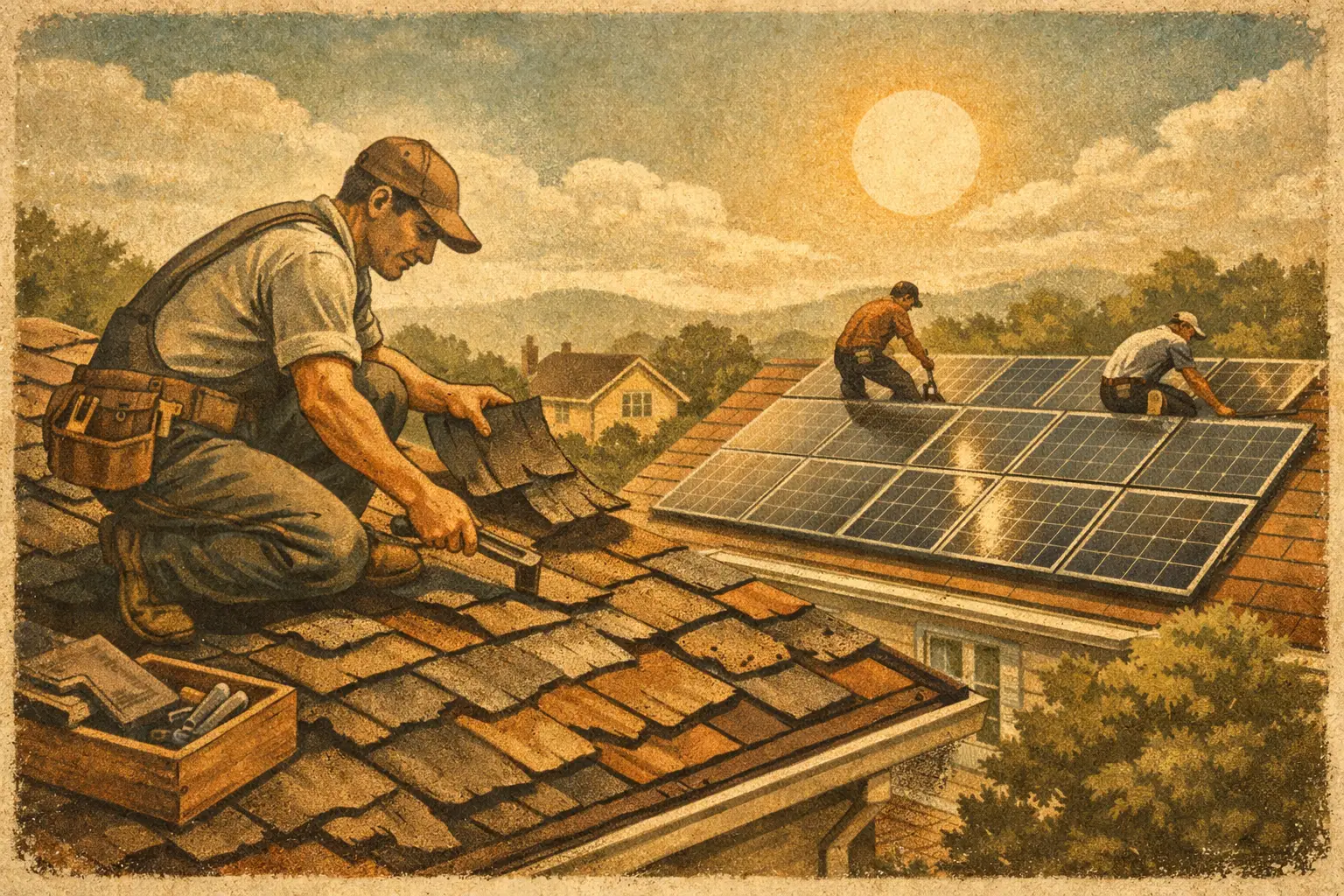
Roof Replacement Before Solar Panels?
A solar project can look straightforward until someone gets on the roof. Then the real question comes up fast: do you need roof replacement before solar panels, or can your current roof handle another 25 years?
For many homeowners and business owners in Southern California, that answer affects the budget, timeline, and long-term value of the whole project. Solar is meant to lower utility costs for years. If the roof underneath it is already near the end of its life, installing panels first can create an expensive problem later.
Why roof replacement before solar panels often makes sense
Solar panels are built to last a long time. Many systems are expected to perform for 25 years or more. That means your roof needs to be ready for the same stretch.
If your roof only has five to ten years left, putting solar on top of it may not be the smart move. When the roof eventually needs work, the solar system usually has to be removed and reinstalled. That adds labor, coordination, and extra cost that could have been avoided by handling the roofing first.
This is why roof replacement before solar panels is often the better investment. It gives you a fresh foundation for the system and helps you avoid paying for the same roof access twice.
That said, not every property needs a new roof before going solar. Some roofs still have plenty of life left. The right answer depends on the roof type, age, condition, and any existing damage.
How to tell if your roof should be replaced first
Age is one of the biggest clues. Asphalt shingle roofs often last around 20 to 30 years, depending on material quality, weather exposure, and maintenance. Tile roofs can last longer, but the underlayment beneath the tile may still wear out sooner. Flat commercial roofs have their own timeline and can be more sensitive to ponding water or membrane damage.
Visible issues matter too. Missing shingles, cracked tiles, soft spots, leaks, sagging areas, and signs of water intrusion are all red flags. Even if the damage seems minor, solar installers and roofers need to look at whether the roof structure and surface can support the system safely.
A roof can also look fine from the ground and still have hidden problems. That is why a proper site visit matters. A good installer should not treat solar as a standalone product. The roof, electrical system, and future maintenance all need to be considered together.
A simple rule of thumb
If your roof is expected to need major work during the life of the solar system, replacing it first is usually the cleaner and less expensive path.
If your roof is newer and in solid condition, you may be able to move forward with solar without adding reroofing to the project.
What happens if you install solar on an aging roof
The main issue is removal and reinstallation. If the roof fails or needs replacement after the panels are installed, the solar equipment has to come off first. Then it goes back on after the roofing work is complete.
That process is not just inconvenient. It can add thousands of dollars in labor and delay. It may also create downtime where the system is not producing energy.
There is also a coordination issue. You may end up dealing with separate contractors, separate schedules, and finger-pointing if something goes wrong. For budget-conscious property owners, that is exactly the kind of avoidable cost and stress worth planning around.
The cost question: roof now or pay later
It is understandable to hesitate when roofing adds to the upfront project total. A new roof is a major expense. But the comparison should not be roof cost versus no roof cost. It should be roof cost now versus reroofing later plus solar removal and reinstallation.
In many cases, doing both together is more efficient. Crews can coordinate timing, permit planning can be cleaner, and financing may be easier when upgrades are bundled into one project.
That does not mean every customer should automatically reroof. If the roof is in good shape, replacing it early may not be necessary. But if the roof is borderline, waiting can turn a manageable decision into a more expensive one.
Roof replacement before solar panels and financing
For many families and business owners, affordability is the deciding factor. The good news is that bundled project planning can open more options than treating roofing and solar as completely separate jobs.
When roofing, solar, battery storage, and electrical upgrades are looked at together, it becomes easier to understand the full project economics. Instead of patching one issue now and another next year, you can plan around the property’s long-term needs.
That is especially important for customers who want predictable monthly costs. In some situations, financing a bundled upgrade makes more sense than paying for emergency roof work later while also trying to preserve your solar investment.
Not all roofs are the same
A big reason this topic gets confusing is that roofing materials behave differently.
Asphalt shingle roofs are common and fairly straightforward, but age matters a lot. If the shingles are curling, brittle, or near the end of their life, it is usually wise to replace them before installation.
Tile roofs are popular across Southern California, and they can look durable for a very long time. Still, the waterproof layer underneath the tile may be the real issue. A tile roof can seem fine on the surface while the underlayment is close to failing.
Flat roofs on commercial properties require special attention to drainage, membrane condition, and equipment placement. Solar can work very well on flat roofs, but only if the roof system is sound.
This is one reason a one-size-fits-all answer does not work. The decision should be based on inspection, not guesswork.
Why bundled planning saves headaches
When roofing and solar are planned together, the project usually goes more smoothly. The layout can be designed with the new roof in mind. Any needed structural or electrical improvements can be identified earlier. The installation sequence becomes more efficient.
For customers, that means fewer surprises. It also means one team can help coordinate the moving parts instead of leaving you to manage multiple contractors on your own.
That service model matters because most people are not shopping for a roof and a solar system every day. They want clear answers, fair pricing, and someone to walk them through the trade-offs without making it feel complicated.
For that reason, many property owners prefer working with a provider that can evaluate the whole picture. Accessible Solar & Energy Storage often helps customers think through solar, roofing, battery storage, and electrical readiness as one connected plan rather than a series of disconnected purchases.
When you may not need roof replacement before solar panels
There are plenty of cases where the current roof is good enough. If the roof is relatively new, structurally sound, and has many years of useful life left, solar can move forward without reroofing.
The key is confidence. You want reasonable confidence that the roof will outlast or closely match the life of the solar system without needing major disruption.
If an inspection shows the roof is in strong condition, replacing it first may just add unnecessary cost. A trustworthy evaluation should tell you that too. Good guidance is not about selling extra work. It is about helping you avoid the wrong work.
Questions to ask before you move forward
Before signing a solar agreement, ask how much life your roof realistically has left. Ask whether any damage or weak areas need to be addressed first. Ask what it would cost to remove and reinstall the system later if reroofing becomes necessary.
You should also ask who will coordinate the roofing if replacement is recommended, how the schedule will work, and whether financing can cover combined improvements. These questions are especially important if you are trying to keep the project affordable and predictable.
Clear answers upfront can save a lot of frustration later.
The smartest solar investment starts underneath the panels
Solar should make your property stronger, not create a future repair bill you could have seen coming. If your roof is aging, leaking, or simply too close to the end of its life, replacing it first is often the practical move.
If the roof is in good shape, great. You may be ready to go. But if there is doubt, this is the moment to address it before the panels go up. A good project starts with an honest look at the surface that will support everything else – and that kind of planning pays off long after installation day.


7 Comments