


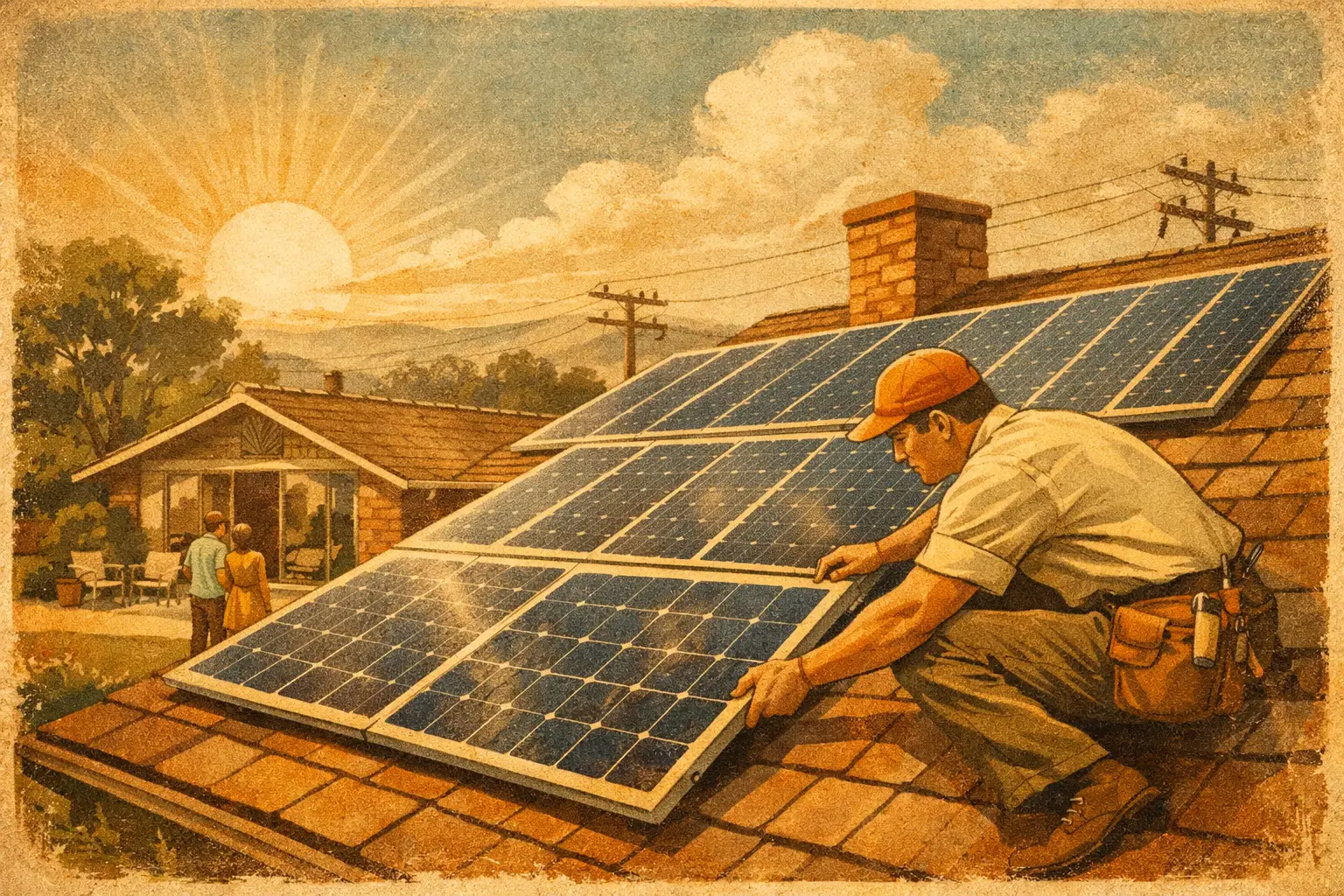
House Solar Installation That Makes Sense
Your electric bill usually tells the story before anything else does. If summer rates keep climbing, backup power feels more important, or you are planning roof work anyway, house solar installation stops being a vague idea and starts looking like a smart home upgrade.
For many homeowners in Southern California and Tijuana, the real question is not whether solar sounds good. It is whether the numbers work, whether the process will be manageable, and whether the company handling the project will actually guide you from start to finish. That is where good planning matters.
What house solar installation really involves
A lot of people picture solar as just panels on a roof. In practice, a house solar installation is a full system design based on how your home uses energy, what your roof can support, and whether you want battery storage, electrical upgrades, or roofing work handled at the same time.
The process usually starts with your utility usage. A strong proposal looks at how much electricity you use across the year, not just one high bill or one mild month. From there, system size, panel layout, inverter type, and battery options can be matched to your goals.
That last part matters. Some homeowners want the lowest possible monthly bill. Others care more about backup power during outages. Some are thinking ahead about EV charging, air conditioning, or a future home addition. Solar is not one-size-fits-all, and a system that looks cheap upfront may not serve you well over the next 10 to 20 years.
The biggest factors that affect cost and value
Price matters, but price alone does not tell you whether a project is a good value. The size of the system is a major factor, of course, but so are your roof condition, the complexity of installation, permitting requirements, and whether your home needs an electrical panel upgrade.
Batteries add cost, but they also add flexibility. If your area experiences outages or if you want to store power for use during expensive utility periods, storage can make a big difference. On the other hand, not every home needs a battery on day one. Sometimes it makes sense to install solar now and plan for storage later, depending on your budget and energy priorities.
Roofing is another area where timing can save money and stress. If your roof is near the end of its life, installing panels before replacing it may create avoidable labor costs later. Bundling roofing and solar can be more efficient, especially when one provider coordinates the full scope instead of leaving you to manage multiple contractors.
Financing also changes the conversation. Many homeowners who assume solar is out of reach are really reacting to the idea of a large cash purchase. Monthly financing can make the upgrade much more practical, especially if the payment is competitive with your current utility costs. For budget-conscious households, accessibility is not a slogan. It is the difference between waiting indefinitely and moving forward with a real plan.
How to know if your home is a good fit
Most homes can support some level of solar, but not every roof produces the same result. Sun exposure, roof orientation, shade from trees or nearby buildings, and available roof space all affect production. A home with perfect south-facing exposure may need fewer panels than a home with more shade or a less ideal roof angle.
That does not mean a less-than-perfect roof is disqualified. It just means the design has to be realistic. A trustworthy installer should be clear about expected production and not oversell what the system can do.
Your electrical setup matters too. Older homes sometimes need panel work before solar can be installed safely and in compliance with local requirements. This can feel like an unwelcome extra, but it is often part of modernizing the home for long-term energy use.
If you are planning to buy an electric vehicle, add a mini-split system, remodel, or build an ADU, mention that early. A house solar installation should account for future demand whenever possible. Undersizing a system to match only today’s usage can leave money on the table.
Batteries, backup power, and energy independence
Battery storage has become one of the most common questions in residential solar, and for good reason. A standard solar system may reduce utility dependence during the day, but without storage, it does not automatically give you backup power during an outage.
A battery changes that equation. It can store excess production and keep selected loads running when the grid is down. For some households, that means preserving essentials like refrigeration, internet, lights, and medical devices. For others, it is about more control over when they use power and less exposure to changing utility rate structures.
Still, batteries are not automatic yes-or-no decisions. Capacity, critical load planning, and budget all matter. If full-home backup is the goal, costs may be higher than expected. If your goal is partial backup for the most important circuits, the project may be more affordable and still highly useful.
This is where clear education matters more than a sales pitch. Homeowners deserve to understand what a battery will actually power, for how long, and under what conditions.
Why the installer matters as much as the equipment
Panels and batteries get the attention, but the customer experience often comes down to project coordination. Permits, utility approvals, inspections, financing support, and scheduling with roofers or electricians can turn a promising project into a frustrating one if nobody is leading the process.
That is why many homeowners prefer a provider that can coordinate the full scope instead of treating solar like a standalone transaction. If roofing, gutters, electrical work, and storage are all connected, the project should be managed that way.
A local, consultative company also tends to be better at speaking plainly. You should feel comfortable asking basic questions without getting buried in jargon. You should know what happens first, what can delay the timeline, and what your responsibilities are during the process.
For many families, especially first-time solar buyers, bilingual support also matters. Being able to discuss financing, installation details, and long-term expectations in the language you are most comfortable with can remove a lot of uncertainty. That is one reason companies like Accessible Solar & Energy Storage focus so much on education and accessibility, not just equipment.
What to ask before you sign
You do not need to become a solar expert before moving ahead, but you should ask a few practical questions. How much of your current usage is the system designed to offset? What assumptions were used to estimate production? If financing is involved, what does the monthly payment look like over time? If your roof or electrical panel needs work, is that included in the planning now or left for later?
You should also ask who is managing permits, inspections, and interconnection. Delays can happen in any construction project, but vague answers early on usually lead to bigger headaches later.
A good provider will welcome these questions. The goal is not pressure. The goal is confidence.
The best time for house solar installation
The best time is usually before you are forced into a rushed decision. If you know your utility bills are rising, your roof may need replacement in the next few years, or you want more resilience before the next outage season, it makes sense to start the conversation now.
Waiting can still be the right choice in some situations. If you plan to move soon, need major structural roof work first, or have usage patterns that are about to change dramatically, it may be better to design around those realities. Solar works best when the plan matches the home, the budget, and the timeline.
For most homeowners, the smartest next step is not guessing from online calculators or comparing equipment names in isolation. It is getting a real evaluation from someone who can look at the full picture and explain your options clearly.
A well-planned solar project should leave you feeling more in control of your energy costs, not more confused by the process. When the design is honest, the financing is workable, and the project is coordinated properly, solar starts to feel less like a leap and more like what it should be – a practical investment in a brighter future.


One Comment