


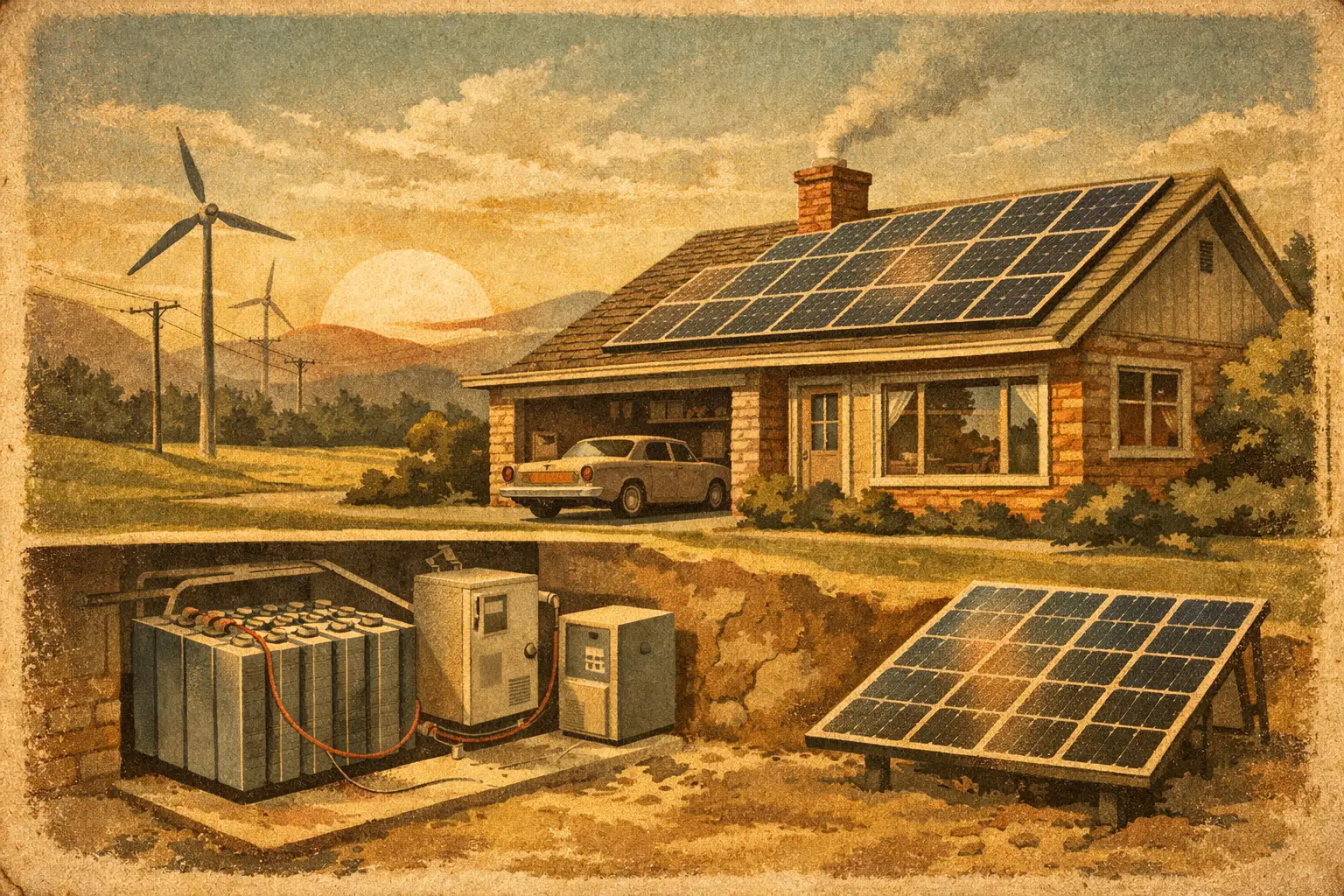
Energy Storage Systems for Homes Explained
Power usually feels invisible until it goes out at dinner, during a heat wave, or right when electric rates spike. That is why more homeowners are asking about energy storage systems for homes – not as a luxury add-on, but as a practical way to keep the lights on, protect food and medicine, and get more value from solar.
For many families in Southern California and nearby communities, the question is not whether batteries sound useful. It is whether they make financial sense for their home, their budget, and their daily energy use. The honest answer is that it depends. A good storage setup can be a smart long-term upgrade, but the right system size, backup goals, and financing plan matter just as much as the battery itself.
What energy storage systems for homes actually do
An energy storage system stores electricity for later use. Most residential systems use batteries that charge from solar panels, the utility grid, or both. When rates are high or the grid goes down, the battery sends stored power back into the home.
That sounds simple, but the real value comes from timing. If your home produces extra solar power during the day, storage lets you use more of that power at night instead of sending it away and buying electricity back later at a higher rate. If the utility shuts off power during extreme weather or grid strain, a battery can keep selected circuits running.
Not every home uses storage in the same way. Some homeowners want whole-home backup. Others only care about keeping the refrigerator, Wi-Fi, lights, and a few outlets on. Some want to lower bills under time-of-use rates. Others are planning ahead for electric vehicles, future rate increases, or more frequent outages.
Why more homeowners are considering battery storage now
The timing makes sense. Utility costs have been rising, and many customers are paying more attention to how and when they use electricity. At the same time, homeowners who already have solar are looking for ways to keep more of the power they generate.
Battery storage can also make a solar investment feel more complete. Without storage, a solar-only system may still leave you dependent on the grid at night or during outages. With storage, you gain more control. That does not mean every battery pays for itself quickly, but it does mean the system can serve more than one purpose.
There is also the comfort factor. For households with kids, older adults, medical devices, remote work needs, or refrigerated medication, backup power is not just convenient. It can be a real safety issue.
How to tell if energy storage systems for homes are worth it
The best way to judge value is to start with your priorities, not the equipment brochure. If your main goal is resilience, the question becomes how much backup power you need and for how long. If your main goal is lower bills, you need to look at rate plans, evening energy use, and whether solar is already part of the picture.
A battery often makes more sense if you have one or more of these situations: frequent outages, high evening electricity use, solar panels that produce excess daytime power, or plans to electrify more of the home. If your electricity use is low and outages are rare, the financial case may be less urgent.
There are trade-offs. A larger battery gives you more flexibility, but it costs more. Whole-home backup sounds appealing, but many households can save money by backing up only the circuits that matter most. And while financing can make storage more accessible, monthly payment terms should still be weighed against expected savings and backup benefits.
Choosing the right battery size and setup
This is where homeowners often get overwhelmed, and for good reason. Battery sizing is not just about square footage. It depends on what you want to run, how long you want it to run, and whether your battery will recharge from solar during an outage.
A home with central air conditioning, an electric oven, pool equipment, and two refrigerators has very different needs than a smaller home that mainly wants lights, internet, and basic kitchen use. That is why a real site evaluation matters. Your panel, appliance loads, roof layout, and solar production all shape the right solution.
In many cases, the smartest option is not the biggest one. It is the one matched to your habits. If you mostly want evening energy shifting and limited outage support, a modest battery may be enough. If you want stronger backup coverage, you may need multiple batteries, load management, or panel upgrades.
Solar plus storage vs. storage alone
Energy storage can work with or without solar, but the economics and benefits are different. Storage alone can help with backup power and may offer limited bill management depending on your utility plan. Solar plus storage usually gives homeowners the strongest long-term value because the battery can charge from your own production instead of relying mainly on grid electricity.
That pairing is especially appealing for homeowners who want more independence from utility price swings. Solar handles daytime generation, and storage helps move some of that value into the evening when the home still needs power.
If your roof also needs work, it is often better to think of the project as one coordinated upgrade instead of tackling roofing, solar, and storage in separate phases. A bundled approach can reduce headaches, avoid repeat labor, and help homeowners make cleaner decisions about financing and timing.
What affects the cost
Battery pricing varies, and homeowners deserve a straight answer on why. Cost usually reflects battery capacity, backup capability, brand, installation complexity, and whether the project includes solar, panel work, or other home upgrades.
Permitting, electrical work, and load configuration also matter. A home that needs a main panel upgrade or extra preparation may have a different budget than a newer home with simpler electrical conditions. That is why online price ranges can be misleading. They rarely reflect the full job.
The good news is that storage has become more accessible than many people assume, especially when financing is available. For budget-conscious homeowners, the right conversation is not just What is the total price? It is also What does this monthly payment look like, what problem does it solve, and what future costs might it help reduce?
Common mistakes homeowners make
The biggest mistake is buying based on fear or hype. Some people overbuild for outages they rarely experience. Others underbuild and end up disappointed when the battery cannot support the appliances they expected.
Another mistake is focusing only on battery brand while ignoring system design. Even a strong product can underperform if the loads are not planned well or if the installation is not tailored to the home. A storage project should feel like a solution, not a box dropped onto the wall.
Homeowners also sometimes treat storage as separate from the rest of the house. In reality, roofing condition, electrical panel capacity, solar production, and future plans all affect whether a battery investment will age well.
What a good consultation should cover
A useful consultation should leave you clearer, not more confused. You should come away understanding how much energy your home uses, which circuits matter most in an outage, whether solar should be part of the plan, and what your realistic savings or backup expectations are.
You should also get honest guidance about trade-offs. If whole-home backup is possible but expensive, that should be explained. If a smaller essential-load system gives you better value, that should be on the table too. For many homeowners, especially those comparing financing options, plain language matters just as much as technical accuracy.
That is where a local, service-first company can make a real difference. Accessible Solar & Energy Storage works with homeowners who want clear answers, practical options, and coordinated support across solar, storage, roofing, and electrical upgrades instead of piecing everything together on their own.
The real question is control
At the end of the day, most people are not shopping for a battery because they love equipment. They are looking for more control over costs, outages, and the way their home uses energy. Energy storage can help with that, but only when the system fits your actual life.
If you are considering storage, start with your needs, your budget, and your future plans for the property. The right setup should feel accessible, understandable, and worth the investment – not oversized, oversold, or out of reach. A well-planned system does more than store electricity. It gives your home a little more stability when the grid does not.


6 Comments