


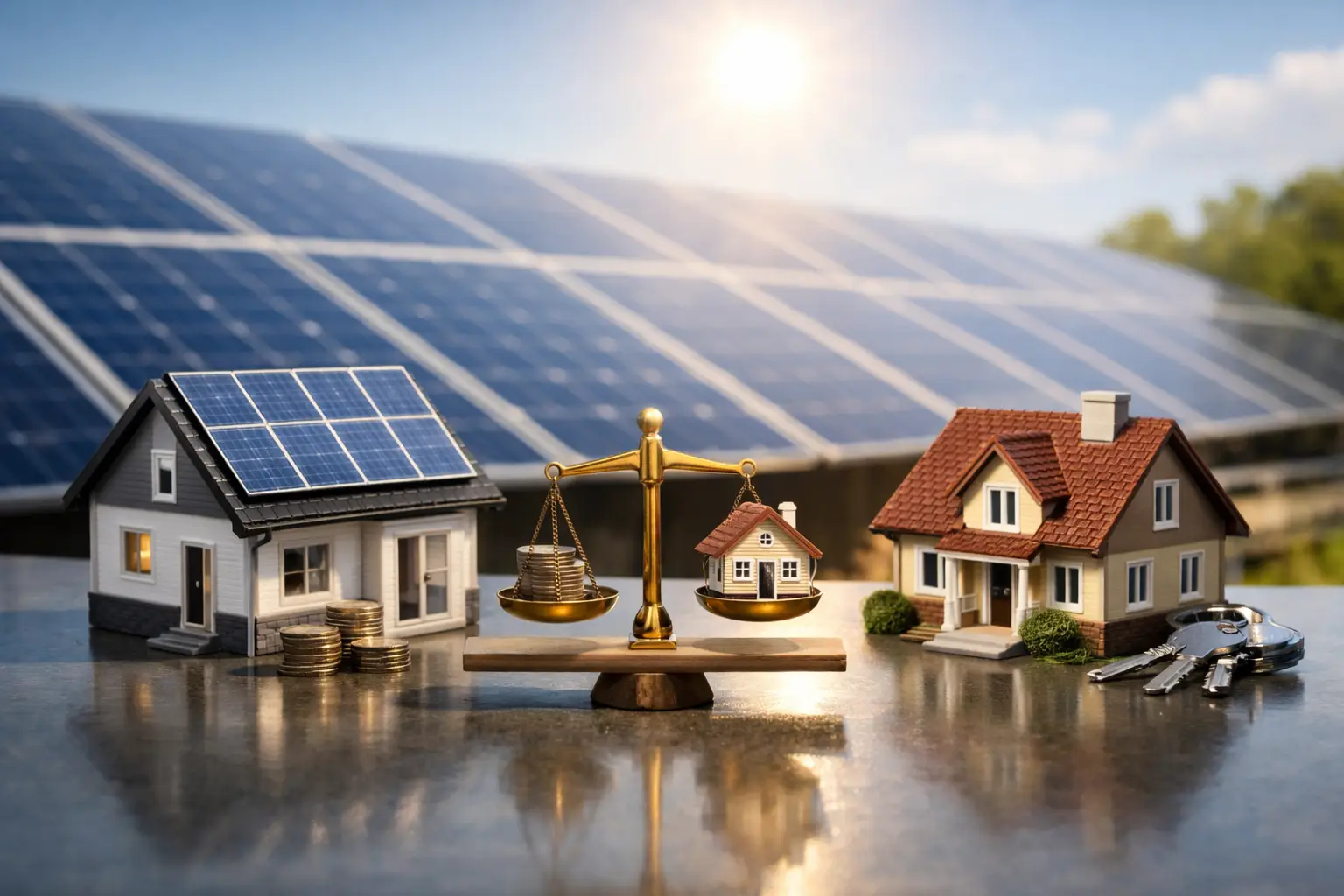
Solar Lease vs Ownership: Which Option Pays Off?
A solar proposal can look affordable on paper while creating very different results over the next 20 to 25 years. That is why the solar lease vs ownership decision deserves more than a quick look at the monthly payment. For homeowners and business owners in Southern California, the right choice depends on your cash flow, tax situation, plans for the property, and how much control you want over your energy system.
A lease can reduce the upfront barrier to going solar. Ownership can offer greater long-term value and flexibility. Neither is automatically right for every property, but the details in the contract matter a great deal.
Solar Lease vs Ownership at a Glance
With a solar lease, a third-party company owns the panels on your roof. You pay a set monthly amount to use the energy the system produces. The leasing company is generally responsible for monitoring, maintenance, and certain system repairs during the agreement term.
With solar ownership, you buy the system outright or use a loan. The panels become part of your property, and you receive the energy savings directly. You are also usually the party eligible to claim available tax incentives, subject to your individual tax situation and program requirements.
The biggest difference is simple: a lease focuses on access with less upfront cost, while ownership focuses on building a long-term asset.
When a Solar Lease Can Make Sense
A solar lease can be a practical option for someone who wants solar benefits without making a large upfront investment. If your priority is a predictable payment and you do not have the tax liability needed to benefit from a federal tax credit, leasing may be worth considering.
For some households, especially those balancing other expenses such as a roof replacement, electrical upgrade, or family needs, a lease can make clean energy feel more accessible. The installer or lease provider typically handles the system’s performance responsibilities, which can also bring peace of mind to customers who prefer a hands-off arrangement.
Still, affordable does not always mean lowest cost over time. Many leases include an annual payment escalator. A payment that feels comfortable in year one may rise each year, while your utility bill savings can vary based on weather, energy use, utility rates, and system production. Ask to see the payment schedule for the full term, not just the first monthly payment.
Questions to ask before signing a lease
Read every lease document carefully and ask direct questions. What is the starting monthly payment? Does it increase every year? How long is the agreement? What happens if the system underproduces? Who covers roof-related removal and reinstallation if repairs are needed?
You should also ask what happens when you sell the property. In many cases, the buyer must qualify to take over the lease, or you may need to buy out the agreement. That does not make a lease a bad choice, but it can add a step during a home sale.
Why Solar Ownership Often Builds More Value
When you own a solar system, you have more control over its future. You choose whether to pay cash, finance the project, add battery storage, or make upgrades as your energy needs change. Once a loan is paid off, the electricity the system produces can continue helping offset utility costs for years without a lease payment.
Ownership may also strengthen the value proposition when you sell. Buyers often appreciate a home with owned solar because there is no separate lease transfer to manage. The exact effect on resale value depends on the local market, system age, electricity costs, and the condition of the home, but an owned system is generally simpler to explain in a real estate transaction.
For qualifying owners, available tax credits can significantly affect the economics. A lease customer does not claim the homeowner tax credit because they do not own the equipment. The leasing company may factor its own incentives into its pricing, but that is not the same as receiving the credit yourself. Speak with a qualified tax professional about your eligibility before making a decision.
Ownership does come with responsibilities
Owning solar does not mean you are left on your own. Quality panels and inverters often come with manufacturer warranties, and a trusted local provider can help coordinate service if a problem comes up. But you are still the owner, so it is wise to understand the warranties, monitoring tools, workmanship coverage, and any future maintenance expectations.
A loan also needs to be evaluated honestly. Compare the loan term, interest rate, dealer fees if applicable, monthly payment, and total amount paid over time. A low monthly payment may come from a longer repayment period, not necessarily a lower project cost.
California Energy Rates Make Timing Matter
For many customers in San Diego, Orange, Riverside, Imperial counties, and nearby communities, solar is no longer only about producing the most electricity possible at midday. It is about using and managing electricity at the right times.
California’s current utility rate structures often place more value on energy used later in the day, when demand is higher. That can make battery storage especially valuable for households that use power in the evening, want backup power for essential circuits, or want more control over when they pull electricity from the grid.
This matters in the solar lease vs ownership conversation because not every lease includes a battery, and not every lease makes it easy to add one later. If energy storage is part of your goal, ask whether the proposed agreement includes it, who owns it, what backup capability it provides, and whether it can be expanded.
For a business, the analysis may be different. A company with high daytime use may benefit strongly from solar production during operating hours. A business with refrigeration, critical equipment, or evening operations may see more value from storage and demand-management planning. The best design starts with actual usage patterns, not a one-size-fits-all package.
Do Not Separate Solar From Your Roof and Electrical System
Solar should fit the property, not just the utility bill. If your roof is nearing the end of its life, it may be smarter to address roofing before installing panels. Removing and reinstalling solar later adds cost and coordination.
The same is true for an outdated electrical panel. A modern solar and battery system may require electrical work to meet current requirements and safely support the equipment. Gutters, roof layout, shading, and available space can also shape the final design.
This is where a full property evaluation is valuable. Accessible Solar & Energy Storage helps customers look at solar, storage, roofing, and related upgrades as one connected project, so avoidable surprises are less likely to appear after installation begins.
How to Choose the Right Path
Start with your goal. If you want the lowest upfront barrier and a managed system with a predictable starting payment, a lease may be a reasonable fit. If you want potential tax-credit eligibility, greater control, the ability to build long-term value, and flexibility to add storage, ownership is often the stronger path.
Then look beyond the proposal headline. Compare estimated utility savings, payment changes over time, warranty coverage, system production assumptions, contract length, buyout terms, and what happens if you move. For financed ownership, compare the total financing cost as carefully as you compare the monthly payment.
Most importantly, make sure the proposed system matches your household or business energy habits. A family that is home in the afternoon, a restaurant with steady daytime demand, and a homeowner seeking outage backup should not receive the same recommendation.
The best solar decision is one you can explain clearly years from now: what you pay, what you own, what your system is designed to do, and how it supports your property. A no-pressure consultation can turn those questions into a plan that fits your budget and your future.


Leave A Comment