


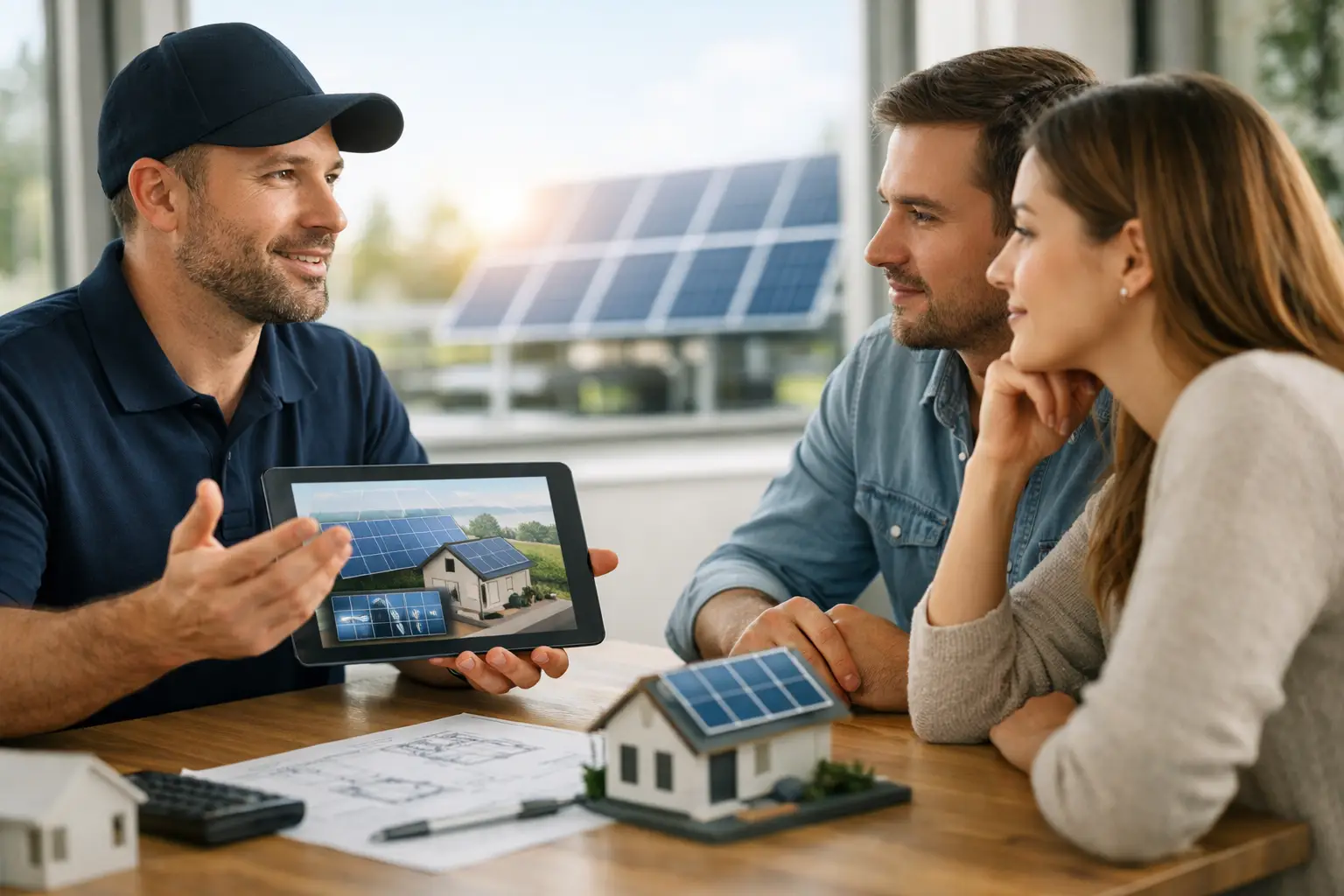
Solar Consultation Questions to Ask First
A solar proposal can look simple on paper: panels, savings, a monthly payment. But the details behind those numbers determine whether your system truly fits your home, business, budget, and energy goals. Bringing the right solar consultation questions to ask helps you compare proposals clearly and move forward with confidence.
For property owners across Southern California and Tijuana, the best consultation is not a high-pressure sales presentation. It is a practical conversation about your utility bills, roof condition, electrical needs, financing, and the role solar can play in your long-term plans.
Solar consultation questions to ask about your energy needs
How much electricity do I use, and when do I use it?
Start with your actual usage history, ideally 12 months of utility bills. A good solar professional should explain your annual electricity consumption and identify the months when your use rises. Summer air conditioning, pool equipment, electric vehicles, home offices, and business operating hours all affect system design.
Timing matters as much as total usage. Under California’s current utility rate structures, electricity can cost more during certain periods of the day. A home that uses most of its power after sunset may benefit from a different design than one with strong daytime use. For a business, high daytime consumption may make solar especially useful, while demand charges and operating schedules can add another layer to the analysis.
Ask whether the proposed system is designed around your current habits or whether it accounts for planned changes. If you expect to buy an EV, add air conditioning, convert to electric appliances, expand your business, or build an ADU, discuss it now. Building for the future can be smart, but oversizing without a clear reason can also raise the upfront cost.
What does the production estimate assume?
Every proposal should show an estimated annual production number in kilowatt-hours. Ask what information supports that estimate. The answer should consider your roof orientation, shading from trees or nearby structures, panel angle, local weather patterns, and usable roof area.
No provider can promise that the sun will produce the exact same amount every year. Weather, soiling, and changes around the property can affect output. What they should provide is a realistic estimate and a clear explanation of the assumptions behind it.
It is also worth asking how shade will be evaluated. A roof that looks open at noon may receive morning or late-afternoon shade. Removing or trimming trees may improve production, but that decision has cost, permitting, and property considerations. The right answer depends on how much energy the shade is expected to reduce.
Questions about savings, rates, and the proposal
How are my projected savings calculated?
This is one of the most valuable questions you can ask. A savings estimate is not simply the system’s production multiplied by your current utility rate. It may include assumptions about future utility rate increases, your energy usage, the value of exported solar power, financing terms, and potential battery use.
Ask the consultant to walk through the numbers in plain language. What utility rate increase is assumed each year? Is the estimate based on your real bills or an average home? Does it show the remaining utility bill you may still receive? A credible proposal makes room for the fact that solar usually reduces utility costs rather than eliminating every utility charge.
California homeowners should also ask how the proposal accounts for the current net billing rules, often referred to as NEM 3.0. Exported power can be valued differently from the electricity you avoid buying from the grid. That is one reason batteries have become a more relevant part of many solar conversations. For Tijuana properties, ask how the local utility rules, billing structure, and project requirements affect the estimate.
What is included in the quoted price?
A low price can be attractive, but it is only useful when you know what is included. Ask whether the proposal covers permits, engineering, installation coordination, utility interconnection paperwork, monitoring, and inspections. If your property needs a main electrical panel upgrade, roof work, trenching, or structural repairs, find out whether those costs are included or quoted separately.
Request a clear breakdown of the system size, panel count, inverter type, battery capacity if included, and all major project costs. If incentives are listed, ask which ones are already included in the price and which require you to qualify separately. Tax credits may be valuable, but your ability to claim them depends on your individual tax situation. A tax professional can help confirm what applies to you.
What financing options are available, and what will I pay over time?
Solar financing can make a project more accessible, especially when you want to avoid a large upfront payment. Still, the monthly payment alone does not tell the full story. Ask about the interest rate, loan term, dealer fees, origination fees, payment increases, prepayment options, and total amount paid over the life of the loan.
Also ask whether there is a cash price and how it compares with financed pricing. If a proposal mentions a low starting payment, ask when that payment could change and what assumption it makes about applying a tax credit. The best financing choice depends on your budget, credit profile, expected time in the property, and comfort with a longer-term payment.
Questions about equipment, batteries, and your property
Which equipment are you recommending, and why?
A good answer should go beyond brand names. Ask why those panels, inverters, and mounting components fit your roof and goals. Panel efficiency can matter when roof space is limited, but the highest-efficiency panel is not automatically the best value for every property.
Ask about product warranties, workmanship coverage, expected performance over time, and who handles a warranty claim if an issue arises. You should also understand how monitoring works. Can you view production from your phone? Who receives alerts if the system stops producing as expected?
Should I add battery storage now or prepare for it later?
Battery storage can help you use more of your solar energy after the sun goes down and can provide backup power during an outage when properly configured. It is not automatically necessary for every project. The right decision depends on your evening usage, utility plan, outage concerns, and budget.
Ask exactly what the battery will power during an outage. Some systems back up only selected essential loads, such as refrigeration, lights, internet, and a few outlets. Backing up an entire home, central air conditioning, or heavy commercial equipment generally requires more storage and careful electrical planning.
If you are not ready for a battery, ask whether the solar system and electrical design can make a future addition easier. Planning ahead may reduce disruption later, particularly if electrical panel work is already part of the project.
Is my roof and electrical panel ready for solar?
Solar panels are a long-term investment, so your roof deserves an honest evaluation. If it may need replacement in the next several years, it can make sense to address roofing before or alongside solar rather than paying to remove and reinstall panels later.
Ask whether the consultation includes an assessment of roof condition, structural needs, and electrical panel capacity. Older homes may need upgrades to safely support a solar and battery system. A full-service project partner can coordinate these related upgrades so you are not left managing separate contractors and disconnected timelines.
Questions about installation and accountability
Ask who will manage permits, utility paperwork, inspections, and communication throughout the project. Find out who your point of contact will be after you sign, what the expected timeline is, and what could cause delays. Permit reviews, utility approvals, weather, roof repairs, and equipment availability can all affect scheduling.
You should also ask about licensing, insurance, installation standards, and workmanship support. If a problem comes up after installation, who do you call and what is the process for resolving it? Clear answers now can prevent frustration later.
For commercial properties, add questions about business operations. Will installation interrupt customers or employees? Can work be scheduled around your busiest hours? Does the design account for future equipment loads, tenant changes, or facility expansion?
Bring your goals to the consultation
The most useful solar conversation starts with what you want to solve. You may be focused on lowering a high SDG&E bill, gaining backup power, preparing for an EV, improving a rental property, or controlling operating costs at your business. Those goals shape the right recommendation.
At Accessible Solar & Energy Storage, we believe clean energy should feel understandable and within reach. Bring your bills, your questions, and your plans for the property. The right consultation should leave you with clear numbers, realistic expectations, and a project path that fits your life – not pressure to make a rushed decision.


Leave A Comment