


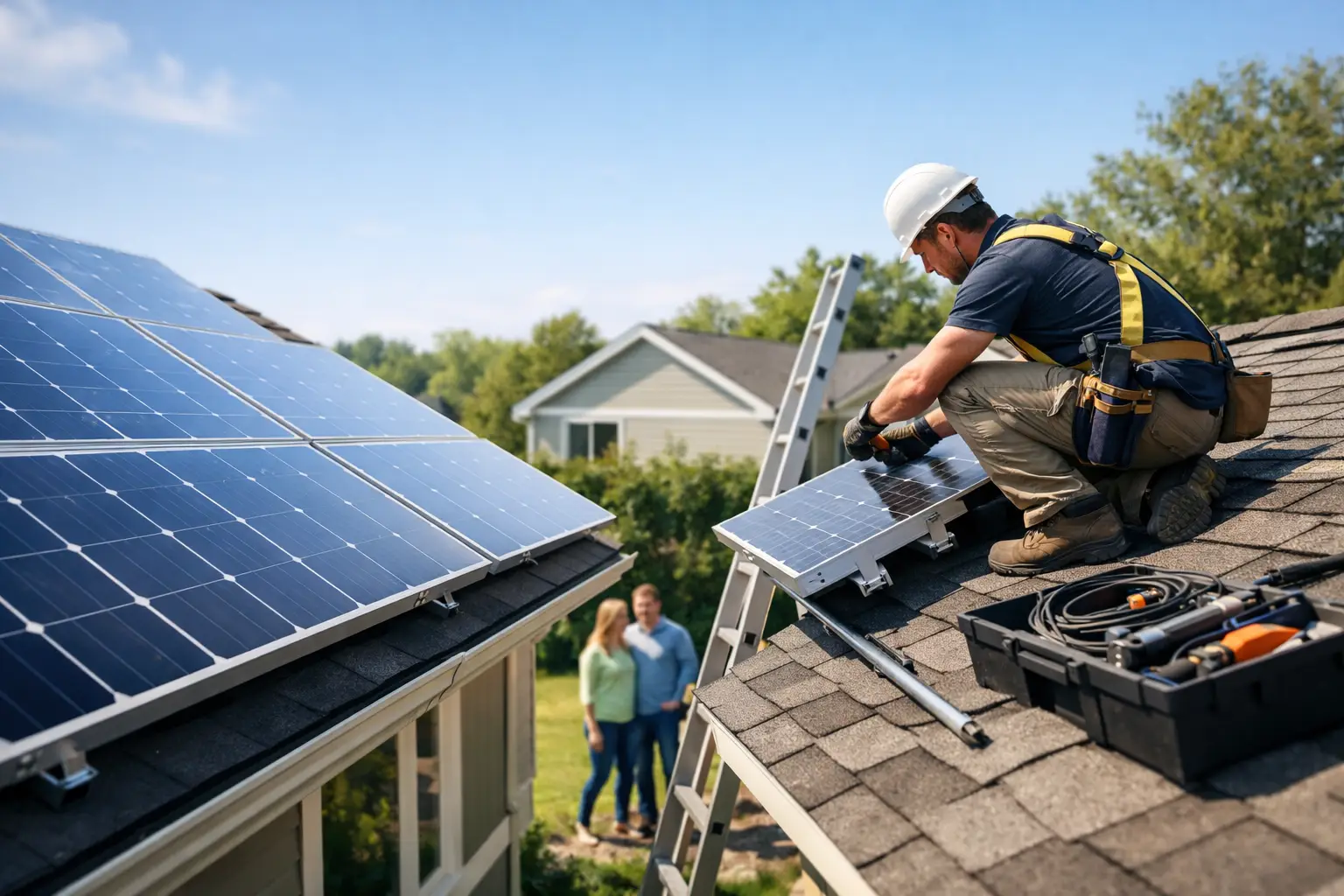
Residential Solar Installation Guide for Homeowners
Your electric bill usually tells the story before anything else does. If summer rates keep climbing, or you are tired of feeling stuck with utility price increases, a residential solar installation guide can help you make sense of what comes next without the sales pressure or the technical overload.
For most homeowners, solar is not really about panels. It is about monthly savings, more predictable energy costs, and having a home that works better during high-demand seasons. In Southern California especially, where utility costs can hit hard, solar starts to look less like a luxury upgrade and more like a practical home improvement.
What a residential solar installation guide should actually help you decide
A good residential solar installation guide should do more than explain equipment. It should help you answer a few very real questions. Does your home make sense for solar? How much system do you actually need? Is a battery worth it? And how do you avoid paying for extras that do not improve your results?
That matters because solar is never one-size-fits-all. Two homes on the same block can need very different systems based on roof shape, panel orientation, shade, electric usage, and whether the homeowner wants backup power. The right project starts with your household goals, not a prebuilt package.
Start with your roof, usage, and utility bill
Before talking about panel brands or battery sizes, look at the basics. Your roof condition matters because if it needs replacement soon, it is usually smarter to address that before installing solar. Removing and reinstalling panels later adds cost that many homeowners could avoid with better planning.
Your electric usage matters just as much. A low bill and a high bill do not point to the same system design. Reviewing 12 months of electric usage gives a much clearer picture than looking at one seasonal statement. If you plan to add central air, an EV charger, or other major appliances, that should be part of the conversation too.
Then there is the utility rate structure. Some homeowners want to offset as much grid usage as possible. Others want to reduce peak-rate exposure, which can make battery storage more attractive. The best setup depends on how and when your home uses electricity.
How system sizing really works
One of the most common misunderstandings is that bigger always means better. It does not. An oversized system can raise your financing amount or upfront cost without giving you the return you expected. An undersized system may leave you disappointed when your bill stays higher than planned.
System sizing usually comes down to balancing current usage, future needs, available roof space, and local utility rules. A smart installer looks at production estimates based on your specific property, not just your zip code. Roof pitch, azimuth, and shade all affect output.
This is where local experience helps. Homes in San Diego County, Riverside County, Imperial County, Orange County, and nearby communities can have very different sun exposure patterns and home layouts. A clean design on paper is not enough if it ignores real-world conditions.
Panels, inverters, and batteries without the jargon
You do not need to become a solar engineer to make a good decision. You just need to understand what each part does.
Panels capture sunlight and generate electricity. Higher-efficiency panels can help when roof space is limited, but they also may cost more. That trade-off can be worth it on smaller or more complex roofs, while a standard panel may be the better value on a large, open roof area.
Inverters convert the electricity your panels produce into power your home can use. Some systems use one central inverter, while others use microinverters attached to individual panels. If part of your roof gets intermittent shade, microinverters may improve performance. If your roof has broad, consistent sun exposure, a string inverter setup may still make sense.
Batteries store excess power for later use. They can help during outages, reduce reliance on the grid during expensive rate periods, and give homeowners more control over how solar energy is used. But batteries add cost, so they are not automatically right for every project. If your main goal is the lowest possible entry price, solar-only may be the better start. If resilience and backup matter to you, storage deserves a serious look.
The installation process from consultation to permission to operate
The actual installation is only one phase of the project. Most homeowners are surprised by how much of the timeline involves planning, permitting, approvals, and inspections.
It usually begins with a site evaluation and design review. That is where measurements, roof condition, electrical setup, and energy usage are assessed. Once the system design is approved, plans are prepared for permitting and utility review.
If your home needs electrical panel upgrades, roofing work, or related improvements, those may need to happen before solar goes on the roof. This is one reason bundled project management can save homeowners time and frustration. Coordinating multiple trades separately often creates delays and confusion.
After permits are issued, installation itself is often completed in a matter of days, depending on system size and scope. Then come inspections and utility approval. Your system is not fully live until you receive permission to operate. A trustworthy provider sets expectations early so you are not wondering why panels are installed but not yet activated.
Financing, cash flow, and the real question homeowners ask
Most homeowners are not asking whether solar works. They are asking whether it makes financial sense for them.
That answer depends on your current utility bill, available incentives, financing terms, and how long you plan to stay in the home. Cash purchases usually deliver the strongest long-term return, but financed systems can still be a smart move if the monthly payment compares favorably to your current electric costs.
This is especially important for budget-conscious households. Accessibility matters. A project only helps if the numbers work in real life, not just in a sales presentation. Clear financing support, honest payment expectations, and realistic savings projections should all be part of the process.
Homeowners should also ask what happens if a roof issue, panel upgrade, or electrical change affects the total scope. The lowest advertised price is not always the lowest final project cost. Transparent planning is often more valuable than a flashy quote.
Common reasons a solar project changes midstream
Even well-planned projects can shift once a home is inspected in detail. Sometimes the roof has less usable space than expected. Sometimes the electrical panel needs upgrading to meet code. In older homes, that is not unusual.
Shade is another factor that can change the design. A tree that barely seemed noticeable at first can significantly impact production during key hours. In those cases, the right answer may be fewer panels in better positions, not simply packing the roof edge to edge.
Homeowners should not see these changes as red flags by default. Often, they are signs that the design is being adjusted to fit the property honestly. The problem is not when a project evolves. The problem is when nobody explains why.
Why local support matters in a residential solar installation guide
Solar is easier when you have one team helping you understand the whole picture. That includes system design, financing options, permitting, installation coordination, and related upgrades like roofing or battery storage. For many homeowners, especially first-time buyers of solar, having that guidance makes the difference between moving forward confidently and putting the project off for another year.
That is part of why a community-focused company can matter. Accessible Solar & Energy Storage serves homeowners who want straight answers, bilingual support, and practical solutions that fit real budgets. That approach helps make solar feel like a smart next step instead of a complicated leap.
Questions to ask before you say yes
Before signing anything, ask how production is estimated, what assumptions are built into the savings numbers, and whether your roof or electrical panel may require extra work. Ask who handles permits, inspections, and utility coordination. Ask what kind of monitoring comes with the system and what support looks like after installation.
And ask yourself one simple question: does this proposal match the way you live? A great-looking system on paper is not enough if it ignores your budget, your future plans, or your need for backup power.
Solar works best when it is planned around your home, your goals, and your finances. If you start there, the technology gets a lot less intimidating – and the path to lower energy costs gets much clearer.
The right time to explore solar is usually before the next expensive utility bill arrives, not after.


Leave A Comment