


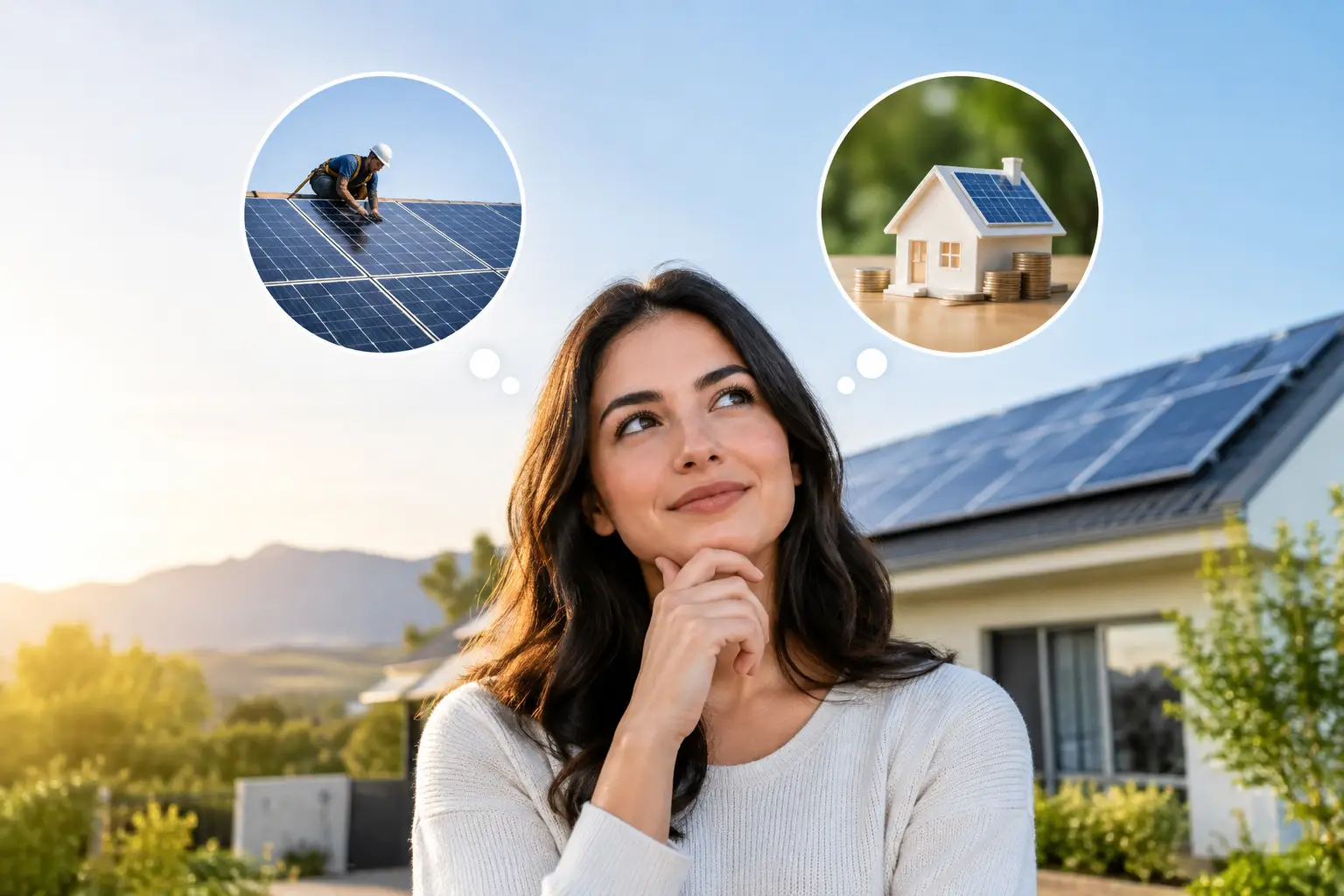
PPA Versus Solar Ownership: Which Fits You?
A low electric bill feels good, but the way you pay for solar can shape your savings for years. When comparing PPA versus solar ownership, the right answer is not always the option with the lowest payment today. It is the option that fits your property, budget, tax situation, and long-term goals.
For homeowners and business owners across Southern California and Tijuana, solar should feel practical, not confusing. A clear comparison can help you move forward with confidence, whether your priority is avoiding upfront costs, building long-term value, or adding battery backup for greater energy independence.
What Is a Solar PPA?
A solar power purchase agreement, or PPA, lets you use electricity from solar panels installed on your property without purchasing the system yourself. A solar provider or third-party owner pays for the equipment, installation, monitoring, and often maintenance. You then pay for the solar electricity the system produces, usually at a set rate per kilowatt-hour.
That rate is designed to be lower than what you would otherwise pay your utility. In many PPA agreements, the rate may increase gradually each year through an annual escalator. Other agreements offer a fixed rate. The exact terms matter because a low starting rate can look different after 10, 15, or 20 years.
The biggest advantage of a PPA is accessibility. You may be able to go solar with little or no upfront investment, making it a useful option for property owners who want lower energy costs but do not want to use cash or take out a solar loan. Because the provider owns the system, it generally receives available tax benefits and incentives, not the customer.
A PPA can also simplify maintenance concerns. If performance issues arise, the system owner typically has responsibility for monitoring and service under the agreement. Still, customers should read the contract carefully to understand who handles roof-related work, system removal, insurance questions, and what happens if the property is sold.
What Does Solar Ownership Mean?
With solar ownership, you buy the solar energy system outright with cash or finance it through a loan. Once the system is paid off, you own the equipment and the electricity it produces. You are not buying solar power from another company. You are investing in an energy-producing asset for your home or business.
Ownership usually offers the strongest long-term savings potential because you keep more of the financial benefit from the system. Eligible owners may also be able to claim available federal tax credits and other incentives. Tax eligibility depends on your individual circumstances, so it is wise to speak with a qualified tax professional before making decisions based on incentives.
A loan can make ownership more manageable by spreading the cost into monthly payments. Depending on your financing terms, a solar loan payment may be higher or lower than a PPA payment at the beginning. The key difference is that the loan ends. Once it is paid off, your solar panels can continue producing power with no solar loan or PPA electricity payment.
Ownership comes with more responsibility as well. Your installer may provide workmanship and equipment warranties, but homeowners are ultimately responsible for the system as their property. That is why proper design, quality equipment, roof planning, and dependable installation coordination matter so much.
PPA Versus Solar Ownership: The Real Trade-Offs
The simplest way to compare a PPA and ownership is to look beyond the first monthly payment. A PPA prioritizes low barriers to entry and predictable solar electricity costs. Ownership prioritizes control and long-term value.
With a PPA, you do not own the panels, and you usually do not receive tax credits tied to the system. You may have fewer upfront responsibilities, but you also have less flexibility. If you sell your home, the buyer may need to assume the agreement, qualify with the PPA provider, or you may need to explore a buyout option. None of these outcomes are automatically a problem, but they should be understood before signing.
With ownership, you have more choices. You can decide when to pay off a loan, add compatible equipment, or keep the system for its full productive life. You may also improve the appeal of your property to a buyer who values lower operating costs and energy independence. But ownership asks you to qualify for financing or commit your own capital upfront.
Neither model is automatically better. The better fit depends on what you need from solar right now and what you want it to do for you later.
When a PPA may make sense
A PPA can be a good fit if you want to reduce utility costs without making a major upfront purchase. It may also appeal to customers who prefer a provider-owned system and a clearly defined electricity rate rather than equipment ownership.
This path deserves close attention if you expect to move soon, have a complex roof situation, or are comparing multiple financing choices. Ask about the contract length, annual rate increases, transfer requirements, buyout terms, production guarantees, and any end-of-agreement options. Clear answers are more valuable than a fast signature.
When solar ownership may make sense
Ownership is often a strong choice for homeowners and businesses planning to stay in their property for the long term. It may be especially attractive if you can use available tax incentives, want to build equity in the system, or want the freedom to pair solar with battery storage and future electrical upgrades.
For many customers, the goal is not simply a lower bill next month. It is reducing exposure to rising utility rates over time. Once an owned system and any related loan are paid off, the electricity produced by the panels can provide meaningful value for years, subject to system performance and normal maintenance needs.
Why Batteries Change the Conversation in California
In California, solar is no longer only about producing power during the day. Utility compensation for extra solar energy sent to the grid can be lower than the price of electricity you buy in the evening. That makes self-use more important.
A battery stores excess daytime solar production so you can use it later, when household demand and utility rates may be higher. It can also provide backup power during an outage, depending on the battery design and the circuits selected for backup. For families working from home, households with medical equipment, and businesses that need continuity, that added resilience can be just as valuable as bill savings.
Whether you choose a PPA or ownership, ask how battery storage is handled. Is a battery included? Can it be added later? Who owns it? Does the agreement explain backup capability and limitations? Solar, storage, roofing, electrical panel upgrades, and gutters can all affect one another, so planning the project as a whole can prevent expensive surprises.
Questions to Ask Before You Choose
Start with your electric usage, not a sales price. Review a full year of utility bills if possible, because summer air conditioning, business operations, and seasonal changes all affect the right system size. Then consider your roof age, shade, electrical panel capacity, and how long you expect to keep the property.
Ask each provider to explain the estimated production, your expected utility bill after solar, and the assumptions behind those numbers. For a PPA, request the payment schedule and escalator in writing. For ownership, review the loan term, interest rate, dealer fees if applicable, warranties, and estimated total cost over the life of financing.
You should also ask who will coordinate permits, utility paperwork, roof work, panel upgrades, and battery installation. A solar project can involve more than panels. Working with a team that helps organize the full scope can make the process far less stressful.
At Accessible Solar & Energy Storage, the goal is to make those decisions easier to understand. A thoughtful consultation should leave you clear on your options, not pressured into one payment model.
The best solar choice is the one you can comfortably afford, clearly understand, and feel good about years from now. Bring your utility bill, your questions, and your goals to the conversation. The right plan can turn Southern California sunshine into a practical step toward lower costs and greater peace of mind.


Leave A Comment