


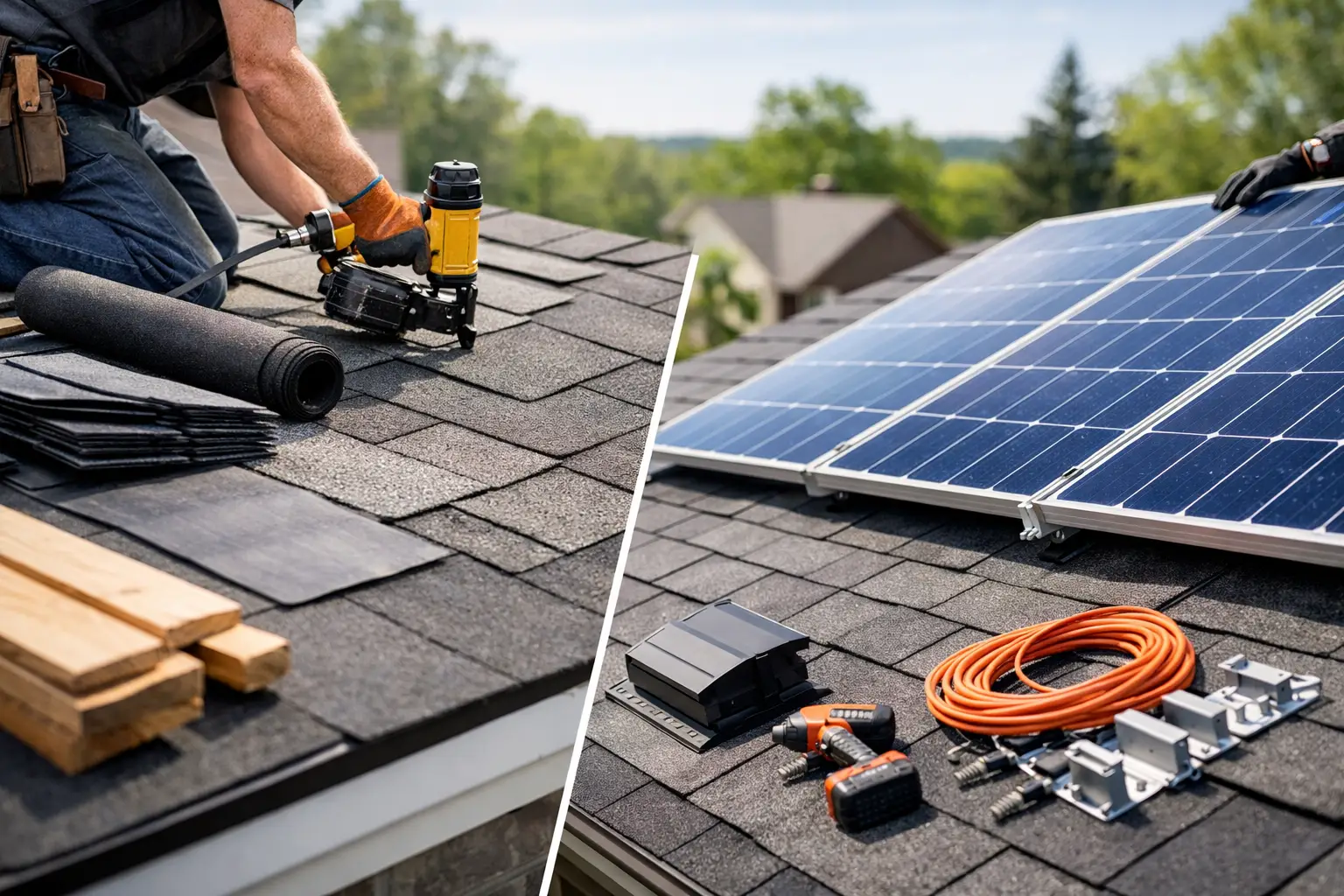
Best Roof Upgrades Before Solar That Pay Off
A solar system can produce clean energy for 25 years or more. Your roof needs to be ready for that same commitment. Installing panels on a roof that is near the end of its life can mean paying to remove and reinstall the system later, turning a smart investment into an avoidable expense. That is why the best roof upgrades before solar start with an honest look at the roof you already have.
For homeowners and business owners across Southern California and Tijuana, the right answer is not always a complete reroof. Sometimes a few targeted repairs, better drainage, or an electrical upgrade are all that is needed. A professional site evaluation can help you make decisions based on your roof condition, energy goals, and budget.
Start With the Roof’s Remaining Life
Before selecting panels, batteries, or financing, find out how much useful life your roof has left. Asphalt shingle roofs commonly last about 20 to 30 years, while tile, metal, and certain flat-roof systems may last longer. Age alone is not the full story. Sun exposure, coastal moisture, wind, past repairs, and installation quality all affect how a roof performs.
A roof that is only a few years old and in good condition may need no major work before solar. But if it is showing widespread curling shingles, cracked tiles, soft spots, ponding water, recurring leaks, or failing underlayment, address those issues first. Solar panels do not cause a healthy roof to fail, but they can make future roof access more complicated.
Ask for a roof inspection that identifies both immediate repairs and likely future needs. This gives you a clearer picture of whether a repair is a practical solution or whether replacement makes more financial sense before panels are installed.
The Best Roof Upgrades Before Solar
The most valuable upgrades protect the building, support a safe installation, and reduce the chance of having to disturb your solar system later. What makes sense depends on the roof material, property layout, and condition.
Replace Aging Roofing Before Panel Installation
If your roof will likely need replacement within the next five to 10 years, reroofing before solar is often the wiser move. Removing a solar array for roofing work involves labor, permitting considerations, coordination, and downtime. It is usually much simpler to complete the roof first, then install panels on a fresh surface.
This is especially worth considering for older asphalt shingle roofs with multiple repair areas. A full replacement lets the roofing team correct underlying issues, install updated underlayment, and create a dependable foundation for your energy system. It can also give you a clean starting point for manufacturer warranties.
There is a trade-off: reroofing raises the upfront project cost. For many property owners, however, bundling the work with solar financing or coordinating both projects at once can make the plan easier to manage than handling a reroof several years after solar installation.
Repair Leaks, Damaged Decking, and Weak Flashing
Not every roof needs replacement. If the roof has plenty of life remaining, focused repairs can be the right choice. Resolve active leaks, missing or damaged shingles, cracked tiles, deteriorated seals, and loose flashing before installation.
Pay special attention to the roof decking beneath the outer material. Soft or rotted decking may not provide the secure base required for mounting hardware. Repairing it before solar protects both the roof and the mounting system.
Flashing deserves careful attention as well. Solar installations require properly sealed roof penetrations where attachments are made. Starting with sound flashing around vents, skylights, chimneys, and existing roof transitions helps prevent water problems later. Good workmanship matters more than cutting corners on a small repair today.
Upgrade Underlayment on Tile Roofs
Tile roofs are common throughout San Diego, Orange, Riverside, and Imperial counties. The tiles themselves can last for decades, but the underlayment below them often has a shorter service life. A tile roof can look good from the street while the waterproof layer underneath is aging.
If the underlayment is nearing the end of its useful life, consider replacing it before solar. This may involve carefully lifting and resetting tiles, replacing damaged pieces, and installing new underlayment in the areas that need it or across the full roof. Doing this first can help avoid a future project that requires panel removal.
A qualified evaluation should account for the condition of the tiles, the underlayment, roof slope, and areas where solar equipment will be placed. Tile roofs need thoughtful planning, not assumptions.
Consider a Cool Roof Where It Fits
Southern California sunshine is an asset for solar, but it also puts serious heat on roofs. If you are replacing a low-slope or flat roof, a reflective cool-roof material may be worth considering. These systems are designed to reflect more sunlight and absorb less heat, which can help reduce heat transfer into the building.
A cool roof can be particularly useful for commercial properties, garages, additions, and homes with large low-slope roof sections. It does not replace solar, and its value depends on the building design, insulation, and climate. Still, pairing roof efficiency with solar generation can improve overall comfort and energy performance.
For pitched residential roofs, material color and local design requirements may influence the best choice. The goal is to select a durable roof system that works with your property, not to chase an upgrade that does not fit your needs.
Improve Drainage and Gutters
Water should move off the roof and away from the building as intended. Clogged, undersized, or damaged gutters can contribute to overflow, fascia damage, and moisture issues around roof edges. On flat roofs, poor drainage can create ponding water that speeds up material wear.
Before solar, make sure gutters, downspouts, scuppers, and drains are in good working order. Repair sagging gutters, seal leaking joints, and correct drainage problems that repeatedly leave water where it does not belong. This is a modest upgrade compared with reroofing, but it protects the larger investment.
Keep future panel access in mind. Your solar design should allow room for maintenance around roof edges, drains, and service areas where practical.
Do Not Overlook Structural and Electrical Readiness
Roof work is only one part of preparing for solar. The mounting plan must account for roof framing and the weight of panels and equipment. Most well-built homes can support a properly designed system, but the installer should evaluate the roof structure, attachment locations, and any conditions that may require engineering review.
Electrical readiness matters too. An older main service panel may have limited capacity for solar, battery storage, or future electric upgrades. In some cases, a panel upgrade, subpanel, or other electrical work may be recommended before or alongside solar installation.
This can feel like an added expense, but it is also an opportunity. If you expect to add battery storage, an electric vehicle charger, or other electric appliances later, planning electrical capacity now can reduce the need for repeated upgrades. The right plan should prioritize what you need today while leaving reasonable room for tomorrow.
Plan Roofing and Solar as One Project
The biggest advantage of working with a full-service energy partner is coordination. Roofing, solar, electrical work, gutters, and battery storage affect one another. When each contractor works separately, property owners can end up repeating inspections, scheduling around conflicts, or discovering a needed upgrade after equipment has already been ordered.
A coordinated project begins with a site assessment and a clear sequence of work. If a reroof is needed, it should be completed and inspected before solar mounting begins. If only repairs are needed, document them and confirm the roof is ready before finalizing the installation plan. This approach helps protect warranties, keeps schedules cleaner, and gives you a more accurate view of project costs.
At Accessible Solar & Energy Storage, we help property owners look at the complete picture, including solar panels, roofing needs, electrical upgrades, storage, and financing options. Clear guidance helps you invest with confidence rather than guessing which work can wait.
Your roof is not just where solar panels sit. It is the long-term platform for your energy investment. A careful evaluation now can help your system start strong, stay protected, and keep your home or business powered by sunshine for years ahead.


Leave A Comment