


How to Prepare for Power Outages at Home
A power outage changes the routine fast. The refrigerator stops humming, the Wi-Fi drops, and a home that felt comfortable can become stressful within a few hours. Knowing how to prepare for power outages before an emergency gives your family or business more choices, more comfort, and a safer path through the disruption.
For property owners across Southern California and Tijuana, preparation can mean planning for heat, wildfire-related shutoffs, storms, grid issues, or a neighborhood equipment failure. The right plan does not need to be expensive or complicated. It should simply match your household, your building, and the appliances you depend on most.
Start With a Practical Outage Plan
Before buying equipment, think through what an outage would affect at your property. A family with young children, an older adult, refrigerated medication, or medical equipment will have different needs than a household that mainly wants lights, phone charging, and a working refrigerator. A restaurant, retail store, office, or workshop may need to protect inventory, payment systems, security, or essential operations.
Choose one person who will check alerts and communicate with family members or employees. Decide where everyone should meet if cell service is unreliable, and make sure key phone numbers are written down. Keep an updated list of medications, medical providers, insurance information, and emergency contacts in a waterproof folder or a protected digital file.
If someone in the home relies on powered medical equipment, speak with their health care provider and equipment company ahead of time. They may have recommendations for backup power, battery capacity, or emergency procedures. Do not wait for an outage to find out how long essential equipment can operate without grid electricity.
For a business, create a short continuity plan. It should identify who can authorize closing early, how customers will be notified, what equipment must be shut down safely, and which systems need backup power first. A few clear decisions made in advance can prevent costly confusion later.
Build Supplies You Will Actually Use
An emergency kit is most helpful when it is easy to find and stocked with items your household already knows how to use. Store it in a central location, tell everyone where it is, and check it twice a year.
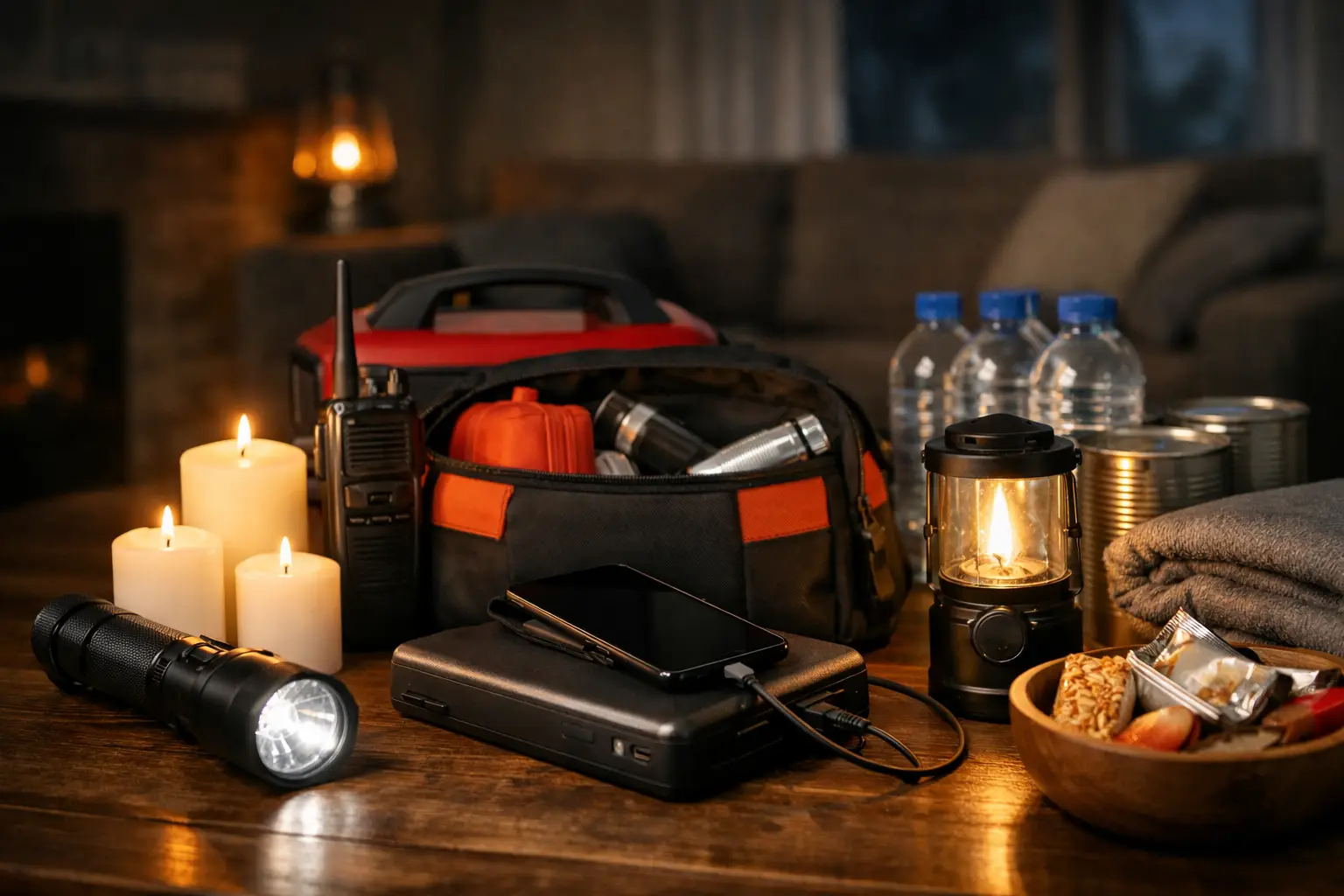
Keep enough drinking water for at least several days, along with shelf-stable food that does not require cooking. Include a manual can opener, reusable plates or utensils, flashlights, extra batteries, a first-aid kit, necessary medications, hygiene supplies, and basic pet supplies. Add a battery-powered radio if possible, since it can provide local updates when internet service and television are unavailable.
Avoid relying on candles for lighting. Flashlights and battery-powered lanterns are safer around children, pets, and flammable materials. Keep portable phone power banks charged, and place charging cords where they are easy to reach.
A cooler and ice packs can also be useful for protecting food or medication during a shorter outage. Keep refrigerator and freezer doors closed as much as possible. In general, refrigerated food is safest for about four hours without power, while a full freezer can hold a safe temperature for roughly 48 hours if left unopened. When in doubt, throw out food that has been held at an unsafe temperature.
Make Your Home Safer Before the Lights Go Out
Small home improvements can make an outage much easier to manage. Test smoke alarms and carbon monoxide detectors regularly, especially if they use batteries. Keep a fire extinguisher accessible, and make sure every adult in the household knows how to turn off water, gas, and electricity if local officials or emergency conditions require it.
If you use an electric garage door opener, learn how to operate the manual release. Keep car keys, shoes, and a flashlight near an accessible exit. During a nighttime outage, these simple steps reduce the risk of falls and delays.
Hot weather deserves special attention in inland San Diego County, Riverside County, Imperial County, and other high-temperature areas. Close blinds and curtains during the hottest part of the day, drink water regularly, and identify a cool place you can visit if the outage becomes prolonged. Check on neighbors who may be more vulnerable to heat, particularly older adults and households without reliable transportation.
For homes in areas affected by wildfire conditions, maintain defensible space and follow local evacuation guidance. Backup power helps with comfort and communication, but it should never delay an evacuation order.
Choose the Right Backup Power Option
Backup power is not one-size-fits-all. The best option depends on how long outages typically last, what you need to keep running, your budget, and the electrical capacity of your property.
Portable power stations can be a simple option for charging phones, running small electronics, or powering a few low-wattage devices. They are convenient for short outages, but they usually cannot support central air conditioning, large appliances, or a full business operation for long.
Fuel-powered generators can provide substantial power, but they require careful operation, ongoing fuel storage, and regular maintenance. Never run a generator inside a home, garage, shed, or near windows and doors. Carbon monoxide is odorless and dangerous. A generator must be operated outdoors, well away from the building, and connected properly by a qualified professional when serving home circuits.
A home battery can provide a quieter, cleaner option for essential loads such as lights, refrigerators, internet equipment, outlets, and selected appliances. The amount of backup time depends on battery size, household energy use, and which circuits are included. Running only essential loads can extend backup much longer than trying to power every appliance in the home.
For many homeowners, solar plus battery storage offers the strongest long-term approach. Solar panels alone generally shut off during a grid outage for safety reasons, even if the sun is shining. A properly designed battery system can separate the home from the grid during an outage and use stored energy, with solar helping recharge the battery during daylight when conditions allow.
That difference matters. If outage protection is a priority, tell your solar provider from the beginning. The system needs to be designed around the appliances and circuits you want to support, not simply around annual energy savings.
How to Prepare for Power Outages With Solar Storage
Start by deciding what must stay on. For many homes, that includes refrigeration, lighting, Wi-Fi, phone charging, garage access, a few outlets, and perhaps a medical device. Some households also prioritize a well pump, sump pump, security system, or a small air-conditioning unit. Businesses may prioritize refrigeration, point-of-sale equipment, networking, lighting, and security.
Next, consider your realistic energy use during an outage. A battery that covers essential circuits may be more affordable than a system designed to power the entire property. Whole-home backup can make sense for larger homes or critical business needs, but it usually requires more battery capacity and may involve electrical panel upgrades.
Roof condition is another part of the conversation. If your roof is nearing the end of its useful life, handling roofing work before or alongside solar installation can help avoid removing and reinstalling panels later. Electrical panel capacity, local permitting, and utility requirements may also shape the final design.
Accessible Solar & Energy Storage helps property owners look at these connected decisions together, including solar, battery storage, financing, roofing, and electrical upgrades. A clear on-site evaluation can help you understand what is practical for your property instead of paying for equipment that does not match your actual needs.
Protect Appliances, Information, and Your Budget
When an outage begins, unplug sensitive electronics such as computers, televisions, and gaming systems if you do not have surge protection. This can reduce the chance of damage when power returns. Leave one light switched on so you know when service has been restored.
Keep cash on hand in small bills because card readers and ATMs may not work. If you work from home, save key files locally and consider a backup internet option if your work cannot pause. Businesses should back up customer data, confirm security procedures, and make a plan for refrigerated or temperature-sensitive inventory.
Preparation does not mean purchasing every product available. Start with water, food, lighting, communication, and safety. Then decide whether a portable battery, generator, or solar and storage system fits your longer-term goals. The right investment is the one that supports your most important needs without stretching your budget beyond what makes sense.
A power outage is never convenient, but a prepared home feels very different from an unprepared one. Take one step this week: refresh your emergency supplies, write down your essential loads, or ask for a professional assessment of your backup power options. Those small actions can make the next outage far less disruptive.


Leave A Comment