


Battery Backup vs Generator: Which Fits?
When the power goes out at 8 p.m. and the fridge is full, the question gets real fast: battery backup vs generator – which one will actually keep your home or business running without adding new headaches? For many property owners in Southern California, the answer depends less on hype and more on how long outages last, what you need to power, and how much convenience matters day to day.
Some people assume a generator is always the stronger option because it can run for a long time. Others assume a battery is automatically better because it is cleaner and quieter. Both ideas are only partly true. The better choice comes down to your priorities, your building, and whether you want backup power to be a standby tool or part of a bigger energy plan.
Battery backup vs generator: the core difference
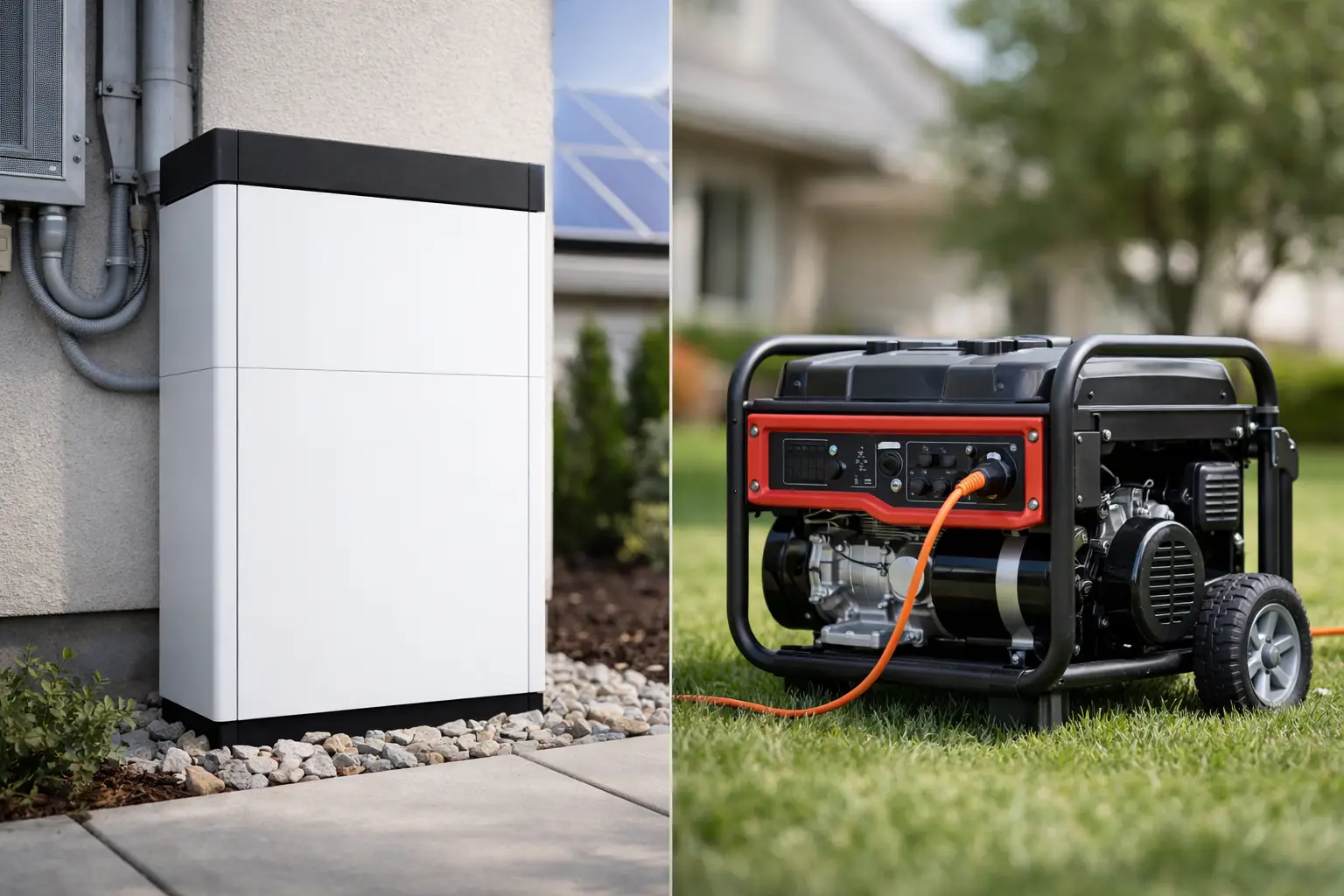
A generator creates electricity, usually by burning natural gas, propane, or gasoline. A battery backup stores electricity ahead of time and then supplies it when the grid goes down. That sounds simple, but it changes almost everything about how each system feels to own.
A generator is built for extended runtime if fuel is available. It can be a strong fit for long outages, larger homes, and properties with heavy electrical loads. But it also comes with engine noise, fuel needs, emissions, and regular maintenance.
A battery backup is quiet, automatic, and low maintenance. It can power selected circuits or even larger portions of a home, depending on system size. It also works especially well when paired with solar, because your panels can help recharge the battery during daylight under the right backup configuration. For homeowners looking for cleaner energy and more control over utility costs, that matters.
What matters most during an outage
Most families do not need to power every single appliance during a blackout. They want the essentials: refrigeration, internet, lights, phone charging, a few outlets, maybe medical equipment, and in some homes, air conditioning or well pumps. Business owners often think about computers, point-of-sale systems, security, lighting, and refrigeration.
This is where the battery backup vs generator decision gets practical. If your main goal is to cover essential loads quietly and automatically, batteries are often the more comfortable option. If your goal is to run a very large home for multiple days with central AC, pool equipment, and major appliances all operating at once, a generator may be the more realistic fit unless you invest in a larger battery system.
The phrase to remember is load planning. Backup power works best when the system is designed around what you truly need, not what sounds impressive.
Where battery backup makes more sense
Battery storage has become much more attractive for homeowners who want more than emergency power. It can help reduce dependence on the grid, support solar production, and in some utility rate structures, help lower energy costs by shifting when stored power is used.
That everyday value is a big reason many people choose batteries. A generator usually sits and waits for an outage. A battery can do useful work year-round.
There is also the experience of living with it. Batteries are quiet. They switch on automatically. There is no fuel delivery to think about, no exhaust, and no engine start-up noise outside your window. In neighborhoods where space is tight or noise is a concern, that can be a deciding factor.
For Southern California customers, batteries also align well with a longer-term clean energy strategy. If you are already considering solar, electrical panel upgrades, or a roofing project, adding storage can be a smart bundled investment instead of a separate future project.
When a generator may still be the better choice
Generators still have a real place, especially when outage duration is the top concern. If your area deals with long blackouts and you need to keep larger electrical loads running for days, a generator can offer peace of mind that a smaller battery system may not match.
This is especially true for properties with high energy demands. Large HVAC systems, commercial refrigeration, workshops with heavy equipment, and homes that do not want to limit usage during an outage often push the conversation toward generator capacity.
Fuel source matters here. A natural gas standby generator can be more convenient than a portable gas unit because it does not require constant refueling. But it still needs maintenance, testing, and room for installation. And if fuel supply becomes an issue, the advantage changes.
So yes, generators can be powerful and dependable. They are just not as effortless as some marketing makes them sound.
Cost is not just the purchase price
A lot of people compare upfront price tags and stop there. That can lead to the wrong decision.
Generators may look more affordable at first, depending on size and installation details. But over time, you need to factor in fuel, maintenance, inspections, and possible repairs. They are mechanical systems with engines, and engines need attention.
Battery systems can cost more upfront, especially if you want enough storage to back up major loads. But their operating costs are often lower, and when paired with solar, they can bring additional value outside of outages. That means the financial picture is broader than backup alone.
For budget-conscious homeowners and business owners, financing can be just as important as sticker price. A system that improves resilience and supports lower utility bills may be easier to justify than one that only helps during rare outages. That is one reason many customers ask about storage as part of a complete solar and home upgrade plan.
Installation and maintenance realities
A battery backup system is generally cleaner and simpler to live with after installation. There are fewer moving parts, no oil changes, and no combustion. That does not mean no service is ever needed, but the ownership experience is usually easier.
Generators ask more from you. Even standby units need regular maintenance to stay ready. Portable generators require even more hands-on effort, from setup to fueling to safe operation. During an emergency, convenience matters more than people expect.
Installation also depends on your property. Some homes need panel upgrades, load management planning, or changes to support either option. This is why a site-specific evaluation matters. The best answer on paper can become the wrong answer if it does not fit your building well.
Battery backup vs generator for solar homes
If you already have solar or plan to install it, the battery backup vs generator conversation shifts. Batteries naturally complement solar because they can store excess energy for later use and support backup power when the grid is down. That creates a more connected energy system rather than a collection of separate products.
A generator can still work with a solar home, but it is not part of the same clean energy cycle. It is a separate backup tool. For some customers, that is perfectly fine. For others, especially those focused on energy independence and long-term savings, it feels like a partial solution.
At Accessible Solar & Energy Storage, this is often where consultation makes the biggest difference. The right setup is not just about equipment. It is about how solar, storage, roofing, and electrical upgrades can work together in a way that fits your property and budget.
So which one should you choose?
Choose a battery backup if you want quiet operation, low maintenance, automatic protection, and a solution that can support your broader solar and energy goals. It is often the better fit for homeowners who care about convenience, cleaner energy, and reducing reliance on the grid.
Choose a generator if your biggest concern is keeping larger loads running for long periods, especially when outages may last multiple days and fuel access is reliable. It can be the practical choice when runtime matters more than comfort, noise, or emissions.
And if you are torn, that is normal. This is one of those decisions where the right answer depends on how you live, what you need to protect, and what kind of energy future you want for your property.
The best backup system is not the one with the biggest spec sheet. It is the one that keeps your life moving without stretching your budget or adding stress when the lights go out.


Leave A Comment