


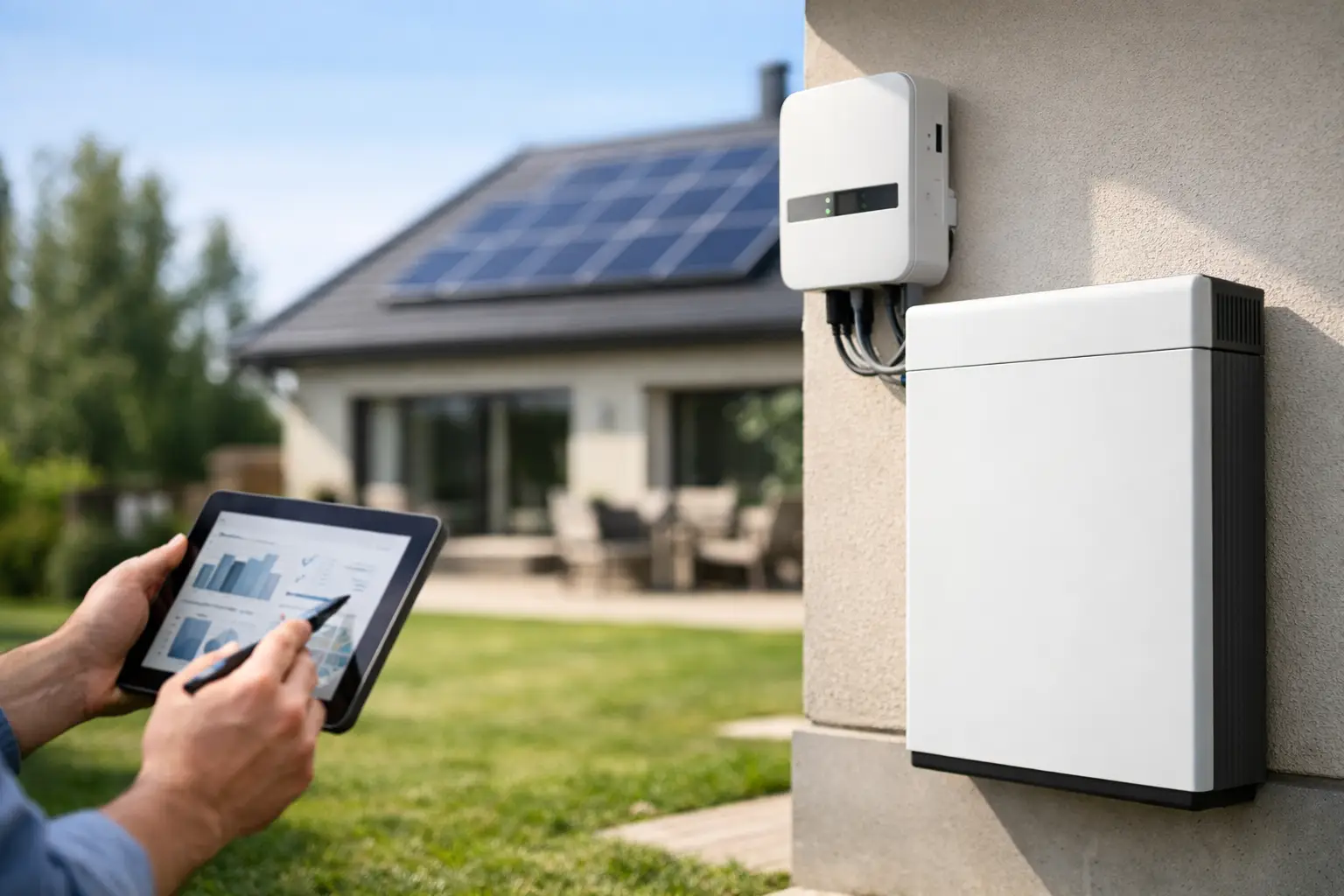
How to Size Battery Backup for Home Use
When the power goes out, most homeowners find out fast what actually matters. It is usually not every light and every outlet. It is the refrigerator, internet, a few rooms with lighting, medical devices, the garage door, and maybe the AC if the outage hits during a heat wave. That is why learning how to size battery backup for home use starts with your real priorities, not a guess.
A battery system that is too small leaves you frustrated during an outage. One that is too large can push the project cost higher than it needs to be. The right fit comes from understanding how much electricity you use, which circuits you want to protect, and how long you want backup power to last.
What it means to size battery backup for home
Sizing a home battery is really about matching stored energy and power output to your needs. Those are two different things, and both matter.
Energy capacity is measured in kilowatt-hours, or kWh. This tells you how much electricity the battery can store over time. If your essential loads use 2 kWh per hour on average, a 10 kWh battery could theoretically run them for about five hours.
Power output is measured in kilowatts, or kW. This tells you how much the battery can supply at one moment. A home may only use moderate energy over the course of a day, but some appliances have high startup demands. If the battery cannot handle that instant load, certain equipment may not run even if the battery still has plenty of stored energy.
This is where many homeowners get mixed up. They focus only on battery size in kWh and forget to ask whether the system can actually start the well pump, support the air conditioner, or handle the microwave and refrigerator at the same time.
Start with essential loads, not the whole house
For most homes, backing up everything is possible, but not always necessary. Whole-home backup sounds great, but it costs more and may require a larger battery bank, a stronger inverter, and sometimes electrical upgrades.
A more practical starting point is your essential loads panel. That usually includes refrigeration, lighting in key areas, internet, phone charging, television, medical equipment, garage access, and a few general outlets. In some homes, it also includes a sump pump or security system. In Southern California, many homeowners also ask about backing up a small HVAC load or at least a bedroom mini-split during extreme heat.
If you want to keep costs under control, this step matters. Protect the circuits that support comfort, safety, and daily function first. Then decide whether adding larger loads makes financial sense.
A simple way to estimate your needs
Look at the appliances and circuits you want backed up, then estimate how much power they draw and how long they run during a typical day. A refrigerator may cycle on and off, while lights and internet may run for more consistent periods. A central AC system is a very different conversation because it can drive battery size up quickly.
Here is a rough example. If your essentials include a refrigerator, Wi-Fi, a few lights, chargers, television, and garage door access, you might land around 10 to 20 kWh of daily backup need depending on usage habits. If you want to include larger loads like air conditioning, an electric oven, or pool equipment, the battery requirement can grow fast.
That is why an actual home evaluation is better than choosing a battery based on marketing language alone.
How long do you want backup power to last?
Outage duration is one of the biggest factors when you size battery backup for home systems. Some homeowners only want short backup support for brief utility interruptions. Others want to get through overnight outages, wildfire shutoffs, or multi-day disruptions.
If your goal is a few hours of coverage, one battery may be enough. If your goal is one to two days of essential use, especially without strong solar production, you may need multiple batteries.
There is also an important local factor. In sunny regions like San Diego County, Riverside County, Imperial County, Orange County, and nearby areas, solar can recharge your battery during the day. That can reduce how much battery storage you need compared to a home with no solar. But that only helps if the solar system is designed to operate with battery backup during an outage. Not every solar setup automatically does that.
Solar changes the math
A battery without solar is limited to the energy stored before the outage begins. Once it is depleted, you wait for the grid to come back. A battery paired with solar gives you a chance to recharge during daylight hours and extend your backup window.
This matters a lot for homeowners looking for energy independence instead of just short-term outage protection. If your solar array produces enough daytime energy, you may be able to run essentials, recharge the battery, and carry power into the evening.
Still, solar is not a free pass to undersize storage. Cloudy weather, winter production, roof orientation, and shading all affect what your system can deliver. A home that uses heavy evening electricity may still need more battery capacity even with good solar production.
Your electric bill is helpful, but it is not the whole answer
Monthly utility usage gives a useful starting point, but it does not tell the full story. A home that uses 900 kWh per month may not need a battery sized for all 900 kWh. The question is what you want powered during an outage and when you use electricity.
Time-of-use rates can also influence battery sizing. Some homeowners want a battery mainly to reduce expensive evening grid use, while others care more about backup resilience. Those goals can overlap, but they are not exactly the same.
For example, if your battery is meant to help lower peak-rate charges, the system may be sized around evening load shifting. If your top priority is emergency backup, the design should focus more on protected loads and outage duration.
Common mistakes homeowners make
One common mistake is assuming one battery means whole-home backup. That depends on the home, the battery model, and which loads are being served. In many cases, one battery covers essentials well but not every major appliance.
Another mistake is forgetting surge loads. Air conditioners, well pumps, and some kitchen appliances can demand a lot of power at startup. A battery system has to handle both ongoing use and those short bursts.
A third mistake is ignoring future changes. If you plan to add an EV charger, replace a gas appliance with an electric one, or expand your household, your battery plan should account for that. It is often smarter to design for expansion than to start over later.
Finally, some homeowners focus only on battery price and overlook the rest of the project. Panel upgrades, transfer equipment, inverter compatibility, roofing condition, and solar integration can all affect total cost and performance.
So what size battery backup does a typical home need?
There is no one-size-fits-all answer, but there are useful ranges.
For essential loads only, many homes land in the range of one to two batteries, often around 10 to 30 kWh total. That may comfortably cover refrigeration, lighting, internet, charging, and selected outlets.
For larger homes or homes wanting partial whole-home backup, the number may move higher, especially if air conditioning or other heavy loads are included. Homes aiming for longer backup during outages may also add storage even if their average daily use is moderate.
The key is not buying the biggest battery you can afford. It is buying the right system for your home, your outage concerns, and your budget.
Why a site visit matters
This is one of those projects where details matter. The age of your main panel, your service size, your solar production, and even the way your home is wired can change the right recommendation.
A good consultation should make the process easier, not more confusing. You should come away knowing what can be backed up, how long it can run, what the trade-offs are, and what financing options may be available. For many families, that clarity is what turns battery storage from a nice idea into a practical home upgrade.
At Accessible Solar & Energy Storage, that conversation is about making clean energy accessible, not overselling equipment you do not need.
The best battery size is the one that fits your life
If you are trying to size battery backup for home use, start with the moments that matter most. Think about what you need during an outage, what you want your solar to do for you, and what monthly payment or total investment feels comfortable. The smartest system is not the largest one on the market. It is the one that keeps your home running the way you need it to, with fewer surprises when the grid lets you down.


One Comment