


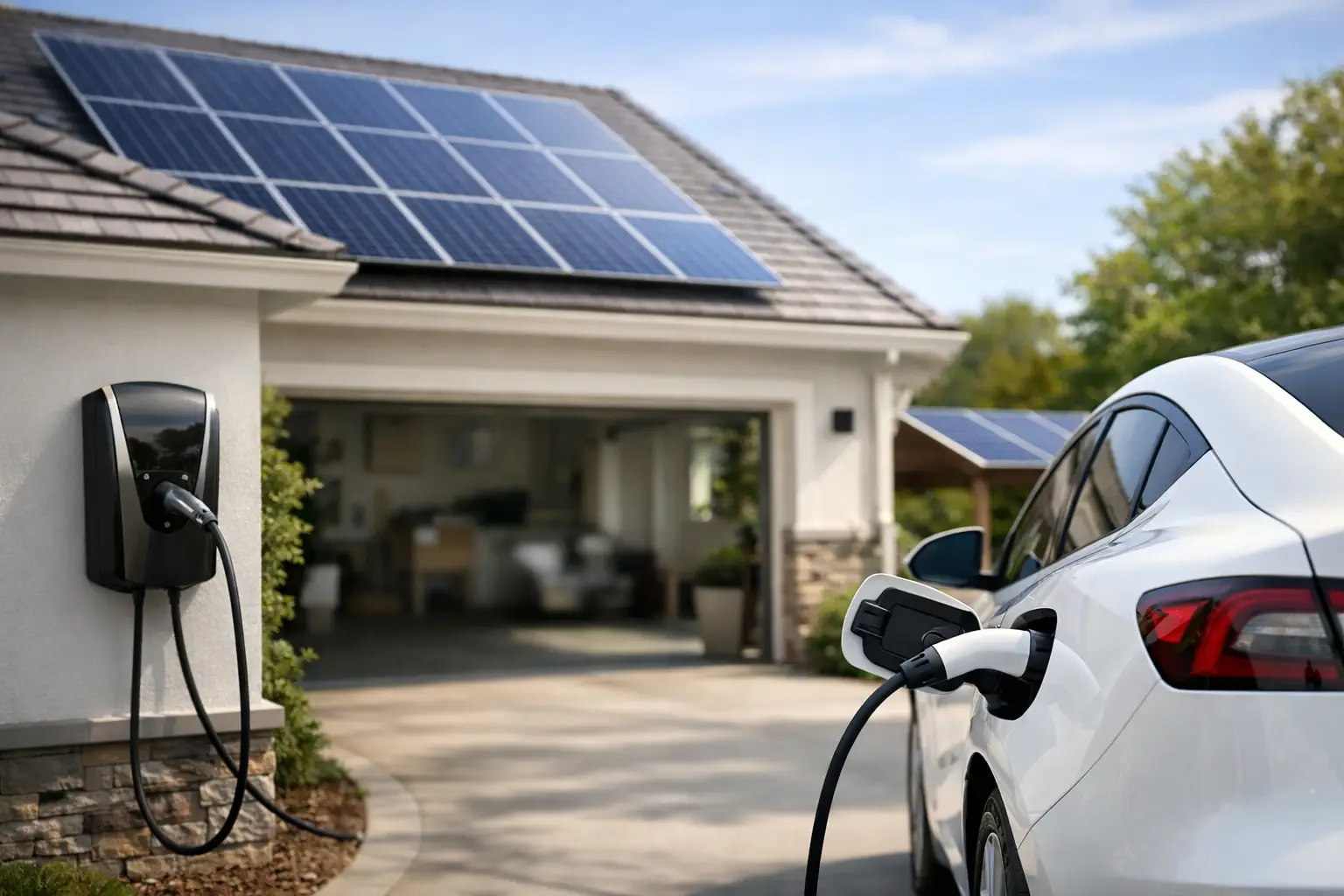
How Solar Supports Electric Vehicles at Home
A home EV charger can add a meaningful new load to your electric bill, especially when you are driving to work, school, appointments, or job sites every day. That is where understanding how solar supports electric vehicles becomes practical, not just environmental. Your roof can help offset the electricity used to charge your car, giving you more control over a cost that would otherwise depend on utility rates.
For homeowners and business owners across Southern California, an EV and solar can be a strong pairing. But the right setup depends on your driving habits, roof space, electrical panel, utility rate plan, and whether you want battery backup. A thoughtful plan matters more than simply adding panels.
How Solar Supports Electric Vehicles Every Day
Solar panels produce electricity during daylight hours. An electric vehicle needs electricity to charge. When those two systems are planned together, solar production can help reduce the amount of utility power needed for driving.
The timing is not always a perfect match. Many people charge their vehicles overnight, while solar panels produce the most energy around midday. Still, solar can lower the overall amount of electricity you buy from the grid over the course of a billing period. Depending on your utility program and rate plan, excess daytime production may be credited or valued differently than electricity used later at night.
The biggest benefit is usually long-term cost control. Instead of paying only for gasoline or relying fully on changing utility rates, you generate a portion of your driving energy at your own property. For a household with one or two EVs, that can make the solar investment more valuable because the home uses more of the energy it produces.
For businesses, the same principle applies to company vehicles, employee charging, customer charging, or fleet operations. Solar can help turn a parking area or roof into a source of energy that supports daily operations.
Start With Your Driving and Charging Habits
An EV does not use the same amount of energy for every driver. A person with a short commute may need relatively little charging each week. A rideshare driver, contractor, delivery business, or family with multiple EVs may use far more.
Before sizing a solar system, look at how many miles you drive in a typical month and where you charge. If you mainly charge at home, your solar design should account for that added electricity use. If you charge at work or at public stations most of the time, the impact on your home system may be smaller.
It also helps to consider when you can charge. Charging during the day may allow you to use more solar energy directly, particularly for people who work from home or have flexible schedules. Overnight charging can still work well with solar, but your system design, utility rate structure, and battery strategy become more important.
A consultation should look beyond last year’s utility bills. If you are planning to buy an EV soon, install a second charger, or replace a gas vehicle with an electric work truck, those changes should be included from the beginning. Designing for your future needs can prevent an undersized system and avoidable upgrades later.
Solar, Batteries, and EV Chargers Work Best as a Plan
Solar panels, home batteries, and EV chargers each serve a different purpose. Together, they can give a property owner more flexibility.
Solar panels generate energy. An EV charger delivers energy to the vehicle. A battery stores energy for later household use and may provide backup power during an outage, depending on the equipment and system design.
A battery is not required to make solar worthwhile for an EV. Many homeowners install solar and charge their vehicle from the grid at off-peak times while solar offsets electricity use overall. This can be a sensible, budget-conscious approach.
A battery may make more sense if you want to store daytime solar energy for the evening, reduce reliance on high-rate periods, or keep selected home loads running during an outage. In some cases, a battery can help you shift when you use solar-generated power. However, batteries add upfront cost, and their value depends on your household’s energy patterns and local utility rates.
It is also worth separating two ideas that are often confused. A typical home battery does not automatically charge your EV during a blackout. EV charging requires significant power, and backup systems are commonly designed to support essential loads such as refrigeration, lights, internet, and selected outlets. If backup EV charging is a priority, it needs to be discussed during system planning.
Your Electrical Panel May Need Attention
Adding an EV charger can require more than a new outlet in the garage. Level 2 chargers commonly need a dedicated 240-volt circuit, and your existing electrical panel must have adequate capacity for the home and the charger.
Older homes may need a panel upgrade, a subpanel, load management equipment, or other electrical work. This is not a reason to put off an EV or solar project. It is simply a reason to evaluate the full property early, before equipment is selected.
Bundling solar, storage, EV charging, roofing, and electrical work can make coordination easier. Rather than treating each upgrade as a separate project, property owners can plan around one clear energy goal: producing, storing, and using power in a way that fits their budget and lifestyle.
Roof condition matters too. If your roof is nearing the end of its service life, it is usually wiser to address roofing before or alongside a solar installation. Removing and reinstalling panels for a future roof replacement adds time and cost.
Choosing the Right Solar Size for an EV
There is no single number of panels that works for every EV owner. Solar production varies by roof orientation, shading, panel output, local weather, household electricity use, and driving miles.
A useful starting point is to estimate your added annual charging needs. Then, compare that number with your current electricity consumption. A solar professional can use site-specific production estimates to recommend a system size that supports your goals without assuming every kilowatt-hour will be used in the same way.
Oversizing can be tempting, especially if you expect to drive more in the future. Yet more panels are not always better. Utility compensation rules, available roof space, financing terms, and your actual energy use all affect the economics. A well-designed system should be right-sized for your property and plans, not sold as a one-size-fits-all package.
Commercial properties need a similarly careful approach. A business may have plenty of roof space but limited daytime charging, or it may need to plan for employees arriving and leaving at specific hours. Load patterns, parking layout, available electrical capacity, and operational needs should shape the design.
Lower Fuel Costs Are Only Part of the Value
When solar helps power an EV, the financial conversation often starts with fuel savings. Replacing gasoline miles with electricity from a solar-supported home can reduce transportation costs over time. For many families, that creates a more predictable monthly budget.
But there are other advantages. Solar can help reduce a property’s reliance on utility electricity. A battery can provide more flexibility during outages or expensive rate periods. An EV charger at home can save time compared with regular trips to a public charging station.
These benefits do have trade-offs. Solar requires a suitable roof and an upfront investment or financing plan. EV charging may require electrical upgrades. Battery storage is valuable for some households but may not be the best first step for every budget. Honest planning means looking at the entire picture, including what you need now and what you can add later.
A Local Plan Makes the Difference
Southern California has strong solar potential, but every property is different. Shade from trees, coastal conditions, roof angles, electrical service, utility territory, and household goals all shape the right answer. A bilingual, on-site evaluation can make the process easier for families and business owners who want clear information before making a decision.
Accessible Solar & Energy Storage helps customers look at solar as part of a complete property upgrade, including storage, roofing, panel work, and financing support when needed. The goal is not to make clean energy feel complicated. It is to build a plan that makes sense for the way you live, drive, and spend.
If an EV is in your future, mention it before your solar system is designed. A few early questions about driving miles, charger type, panel capacity, and backup priorities can help create a system that supports your next vehicle as confidently as it supports your home.


Leave A Comment