


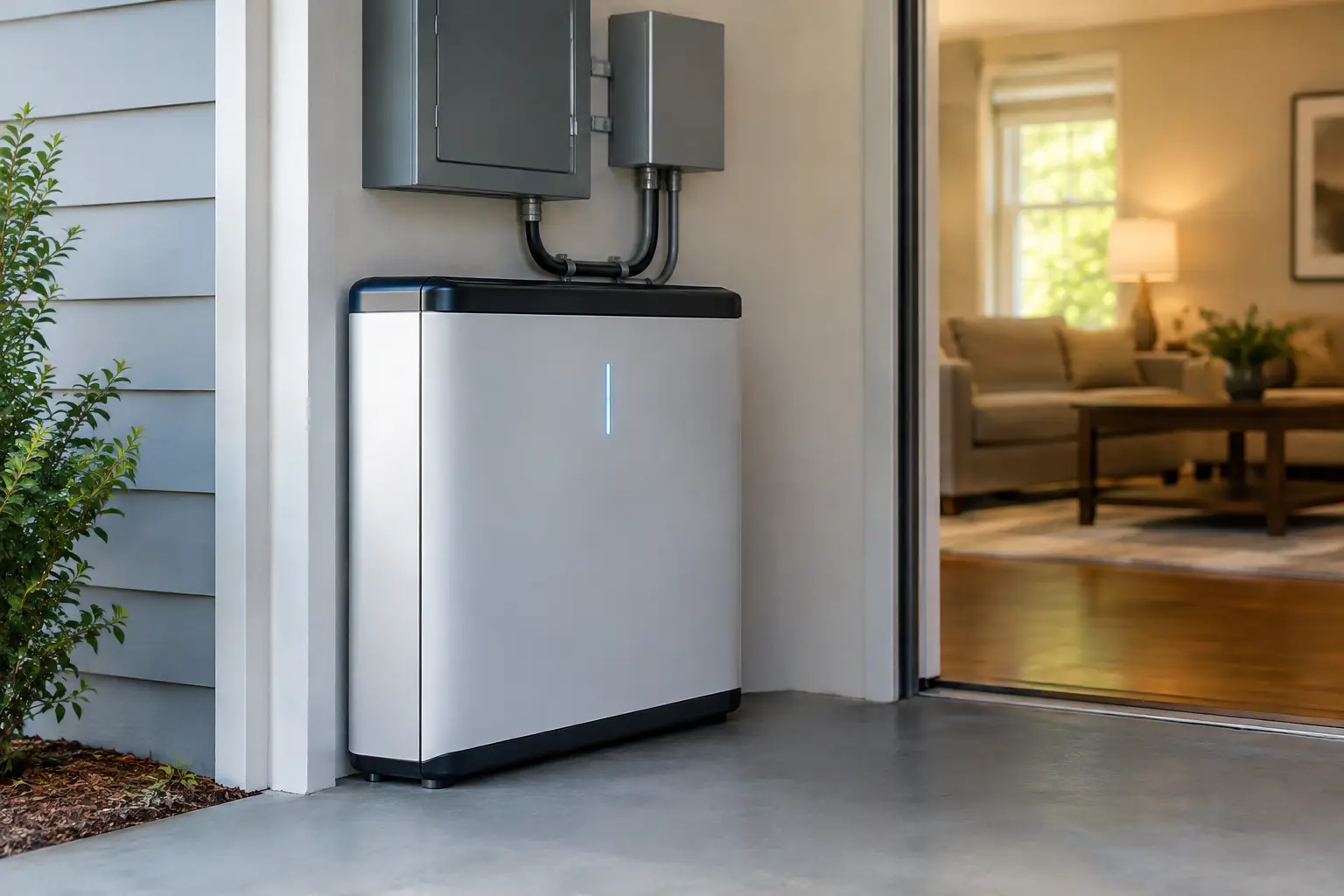
How Batteries Provide Outage Protection at Home
A power outage can turn an ordinary afternoon into a costly problem fast. Refrigerated food, internet service, medical equipment, security systems, business operations, and basic comfort all depend on electricity. Understanding how batteries provide outage protection helps homeowners and business owners choose a system that keeps the priorities running without paying for more backup power than they need.
A battery storage system does more than save extra solar power. When the utility grid goes down, it can supply stored electricity to selected parts of your property, and in some designs, to most or all of the building. The right setup depends on your energy use, your budget, and the loads that matter most when the lights go out.
How Batteries Provide Outage Protection
A home or business battery stores electricity for later use. It may charge from solar panels during the day, from the grid when rates are lower, or from a combination of both. During normal operation, the battery can help reduce the amount of expensive utility power you buy during peak-rate hours.
When an outage occurs, a properly designed storage system detects the loss of grid power and separates your property from the utility line. This safety step is called islanding. It prevents your solar and battery system from sending electricity back onto power lines while utility crews are working.
Once the system has isolated the property, the battery begins supplying power to the backed-up circuits. Depending on the equipment and design, that change can happen quickly enough that many devices remain on with little interruption.
Solar panels alone usually do not provide backup during an outage. Standard grid-tied solar systems are designed to shut down when the grid goes down for safety reasons. Pairing solar with battery storage and the appropriate backup equipment is what allows your property to use solar energy during a blackout.
What Can a Battery Keep Running?
The answer depends on two numbers: battery capacity and power output. Capacity is measured in kilowatt-hours, or kWh. It tells you how much energy the battery can store. Power output is measured in kilowatts, or kW. It tells you how much electricity the battery can deliver at one time.
For example, a battery may have enough stored energy to run a refrigerator, lights, Wi-Fi, and a few outlets for many hours. But if several high-demand appliances start at once, such as central air conditioning, an electric dryer, an oven, or a pool pump, the battery may reach its power limit even if it still has energy remaining.
Many property owners choose a critical-load backup setup. This focuses battery power on the essentials: refrigeration, kitchen outlets, selected lighting, internet equipment, garage access, security systems, and medical devices. It is often the most practical approach because it stretches stored energy further and can lower the cost of the project.
Whole-home backup is also possible for many properties. It is a stronger option for customers who want broader coverage, but it requires careful planning. Large air conditioners, electric water heaters, EV chargers, and other major loads can require additional battery capacity, load management equipment, or multiple batteries.
For a business, the priority list may look different. Backup power might protect point-of-sale systems, network equipment, essential lighting, refrigerators, freezers, security cameras, or a small office’s communications. A battery system is not always intended to run every piece of equipment during a long outage. It should protect the operations that keep your business safe and functional.
How Long Does Battery Backup Last?
There is no single number because outage duration depends on what you use while the grid is down. A battery will last much longer when it is supporting a few necessary circuits than when it is trying to power an entire home at normal usage.
A household that limits use to lights, refrigeration, internet, device charging, and a few outlets may have backup power through an evening or overnight period. Adding heavy loads can reduce that time significantly. Air conditioning is a common example in Southern California. It can be an important comfort need during hot weather, but it also uses substantial energy.
Solar can extend backup time. When the sun is out, solar panels can power active loads and recharge the battery, depending on system conditions and energy use. This can make a major difference during a multiday outage. Still, solar production changes with weather, shade, season, roof orientation, and the time of day. A good backup plan accounts for those real-world variables instead of promising unlimited power.
Choosing Between Critical Loads and Whole-Home Backup
The best battery design begins with a simple question: what must stay on during an outage? That conversation is more useful than choosing a battery based only on a brand name or advertised storage number.
Critical-load backup is often a smart fit for budget-conscious homeowners. It provides dependable power for the circuits that matter most while avoiding the added expense of backing up high-demand equipment. It can be especially effective for smaller homes, rental properties, and customers who are comfortable managing energy use during an outage.
Whole-home backup may make sense when a household relies on electrically powered medical equipment, works from home, has frequent outage concerns, or wants broader comfort and convenience. It can also be valuable for businesses that need more continuity to avoid lost revenue or spoiled inventory.
There are trade-offs. More battery capacity and greater power output generally mean a higher upfront cost. However, choosing too little storage can leave you without the coverage you expected. A site evaluation should review your utility usage, electrical panel, major appliances, roof and solar production potential, and the circuits you want protected.
The Equipment Behind Reliable Battery Backup
A complete outage protection system includes more than the battery itself. It typically needs an inverter to convert stored DC electricity into the AC power used in the building, along with a backup gateway or transfer equipment that safely disconnects from the grid during an outage.
Your electrical panel matters too. Some properties need a critical-load panel, while others may need electrical upgrades to support a larger backup design. If solar, storage, roofing, and panel work are all part of the plan, coordinating them as one project can reduce confusion and help avoid costly rework later.
Permitting, utility requirements, and local electrical codes are also part of the process. Working with an experienced provider helps ensure the system is designed around your actual property rather than a one-size-fits-all estimate.
Battery Backup Can Help Even When the Grid Is Working
Outage protection is the main reason many people consider batteries, but it is not the only benefit. In areas with time-of-use utility rates, a battery can store solar energy during the day and use it later when utility electricity costs more. This may improve the value of a solar system and give you more control over when you draw power from the grid.
For customers who do not yet have solar, storage can still offer backup benefits. For many Southern California property owners, though, solar and batteries work best together. Solar helps replenish the battery, while the battery makes more of your solar energy available when you need it most.
At Accessible Solar & Energy Storage, the goal is to make those choices clear. A consultation should cover what you want to protect, how long you want it to run, what your current electrical system can support, and financing options that fit your budget.
Start With Your Real Outage Priorities
Before choosing a battery, walk through a typical outage at your property. Consider what would create the biggest problem after the first hour, after the first night, and after several days. A family may prioritize food, communication, medication, and safe lighting. A business may prioritize inventory, payment systems, security, and customer service.
That list turns battery storage from a confusing technical purchase into a practical energy plan. With the right system size and a clear understanding of your backup priorities, you can be better prepared when the grid is not there to do its job.


Leave A Comment