


Can Solar Panels Charge Batteries at Home?
A battery can keep the lights on after sunset, but it cannot simply be connected to a solar panel and left to manage itself. Can solar panels charge batteries? Yes – with the right equipment, sizing, and installation plan, solar panels can charge batteries for evening use, backup power, or greater control over when your home uses electricity.
For homeowners and businesses across Southern California and Tijuana, that can mean putting more of the sunshine already hitting the roof to work. The best setup depends on your energy use, utility plan, backup priorities, and the condition of your roof and electrical system.
How solar panels charge batteries
Solar panels create direct current, or DC, electricity whenever enough sunlight reaches them. A solar battery stores that energy chemically, then releases it later as electricity when your home needs it. Because homes use alternating current, or AC, the system also needs equipment that safely manages the flow of power between the panels, battery, home, and utility grid.
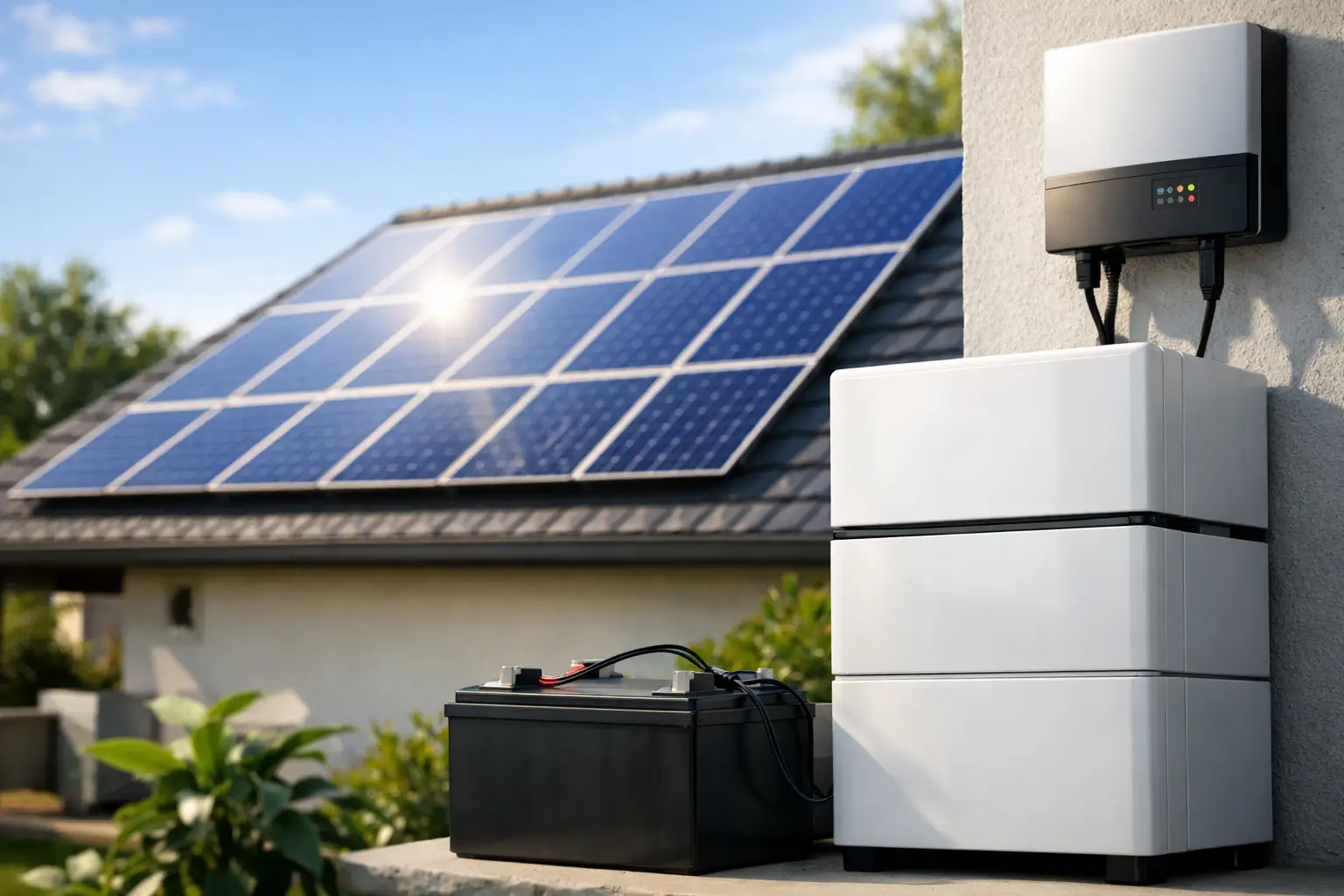
A typical home solar-and-storage system includes solar panels, an inverter, a battery, monitoring equipment, and a control system. The control system decides where available solar power goes. During the day, it may power appliances first, send extra energy to charge the battery, and export any remaining energy to the grid if the system and utility arrangement allow it.
The battery does not charge at one fixed speed all day. Production rises in the morning, peaks around midday, and falls later in the afternoon. Shade, cloud cover, panel orientation, dirt, and high temperatures can all reduce output. That is why a system should be designed around real production expectations, not just the nameplate rating of the panels.
Why a charge controller matters
In smaller off-grid systems, a charge controller sits between the solar panels and battery. Its job is to regulate voltage and current so the battery receives a safe, appropriate charge. Without it, batteries can be damaged by overcharging or improper charging.
Most modern home battery systems include this control function within their integrated equipment. Either way, the principle is the same: batteries need managed charging, not a direct, improvised connection to rooftop panels.
Solar battery charging is not the same as backup power
A common surprise for new solar owners is that solar panels alone usually do not keep a home powered during a grid outage. Standard grid-tied solar systems are designed to shut down when the grid goes down. This safety feature protects utility crews who may be repairing nearby lines.
Adding a battery and backup-capable equipment changes the equation. When an outage occurs, the system can isolate selected home circuits from the grid and use stored battery energy. If the sun is out, the solar panels may also continue charging the battery and helping supply those backed-up loads.
That does not always mean every appliance in the house can run normally. Air conditioners, electric dryers, ovens, pool pumps, and EV chargers can require substantial power. Many households choose to back up essentials such as refrigeration, lighting, internet equipment, garage doors, medical devices, and a few outlets. Others choose a larger system designed to support more of the home. The right choice comes down to budget and what you genuinely need during an outage.
How much battery capacity do you need?
Battery capacity is measured in kilowatt-hours, or kWh. It tells you how much energy the battery can store. Power output, measured in kilowatts, tells you how much it can deliver at one time. Both numbers matter.
A battery with enough capacity to run a refrigerator, lights, and Wi-Fi overnight may not have enough output to start a large central air conditioner. On the other hand, a battery with high power output but limited capacity may run major loads briefly without lasting through a long outage.
An experienced solar consultation looks at your electric bills, your typical use by time of day, and the equipment you want protected. It should also consider seasonal changes. A San Diego home may have modest heating needs, while a Riverside or Imperial County property may use much more electricity for cooling during hot periods.
For many households, the goal is not to store every kilowatt-hour the home uses. It is to store the most valuable energy: power for the evening, power during peak utility periods, or power for essential circuits when reliability matters most.
When batteries make the most financial sense
Solar batteries can help reduce the amount of electricity you purchase from the grid after the sun goes down. They can also help customers avoid using grid power during more expensive times, depending on their rate plan and how the system is programmed.
Still, battery savings are not identical for every property. A home that uses most of its electricity during sunny midday hours may benefit differently than a family that is away all day and returns to run appliances, cook, charge devices, and cool the home in the evening. Utility export credits, rate schedules, and local rules can also affect the value of storage.
A battery is often easiest to justify when it solves more than one problem. It can support backup power, increase self-use of solar energy, and give a property owner more flexibility around utility rates. For a business, storage may also help protect critical equipment or keep basic operations moving through a disruption.
The most useful question is not, “Will a battery pay for itself in exactly the same way for everyone?” It is, “What value does dependable, stored power provide for this property?”
Can solar panels charge batteries on cloudy days?
Yes, solar panels can charge batteries on cloudy days, but they will produce less electricity than they do under clear, direct sun. The amount depends on cloud density, the panel layout, and the system’s overall size.
A well-designed system plans for normal changes in weather rather than assuming every day will be perfect. It also recognizes that battery charging may be slower in winter, during extended storms, or when the home is using a lot of power while solar production is low.
If the system is grid-connected, the grid can fill the gap when solar production cannot meet household demand. Some batteries can also charge from the grid under certain settings, though this depends on the equipment, utility rules, and the homeowner’s goals.
Roof, electrical, and installation details matter
Battery storage is not only a solar decision. It is a home-upgrade decision. Before installation, a qualified team should evaluate the roof’s useful life, available panel space, electrical panel capacity, local permitting requirements, and the best location for battery equipment.
Installing solar on a roof that will soon need replacement can create avoidable future costs. Likewise, an older electrical panel may need an upgrade before it can safely support a new solar-and-storage system. Addressing these items as part of one coordinated project can make the process clearer and prevent surprises later.
Battery location also matters. Equipment must meet manufacturer guidance and local code requirements for clearance, access, ventilation where applicable, and safety. This is not a DIY shortcut project. Proper design and installation protect your home, your investment, and the people working on the electrical system.
A practical way to plan your solar battery system
Start with your reason for wanting storage. If your main concern is outages, identify the circuits and appliances you need to keep running. If you want lower utility costs, review when your household consumes electricity and how your current rate plan works. If you are replacing a roof or upgrading an electrical panel, consider whether combining the work now will make the project more efficient.
Then ask for a clear proposal that explains solar production, battery capacity, backup coverage, estimated system behavior, financing options, and any work needed beyond the panels themselves. A good plan should be easy to understand before you commit.
At Accessible Solar & Energy Storage, we believe clean energy should feel practical, not out of reach. A thoughtful on-site evaluation can show whether batteries fit your property, your budget, and the way you actually use power. The goal is not simply to add equipment to your home. It is to build a system that gives you more confidence every time the sun comes up.


Leave A Comment