


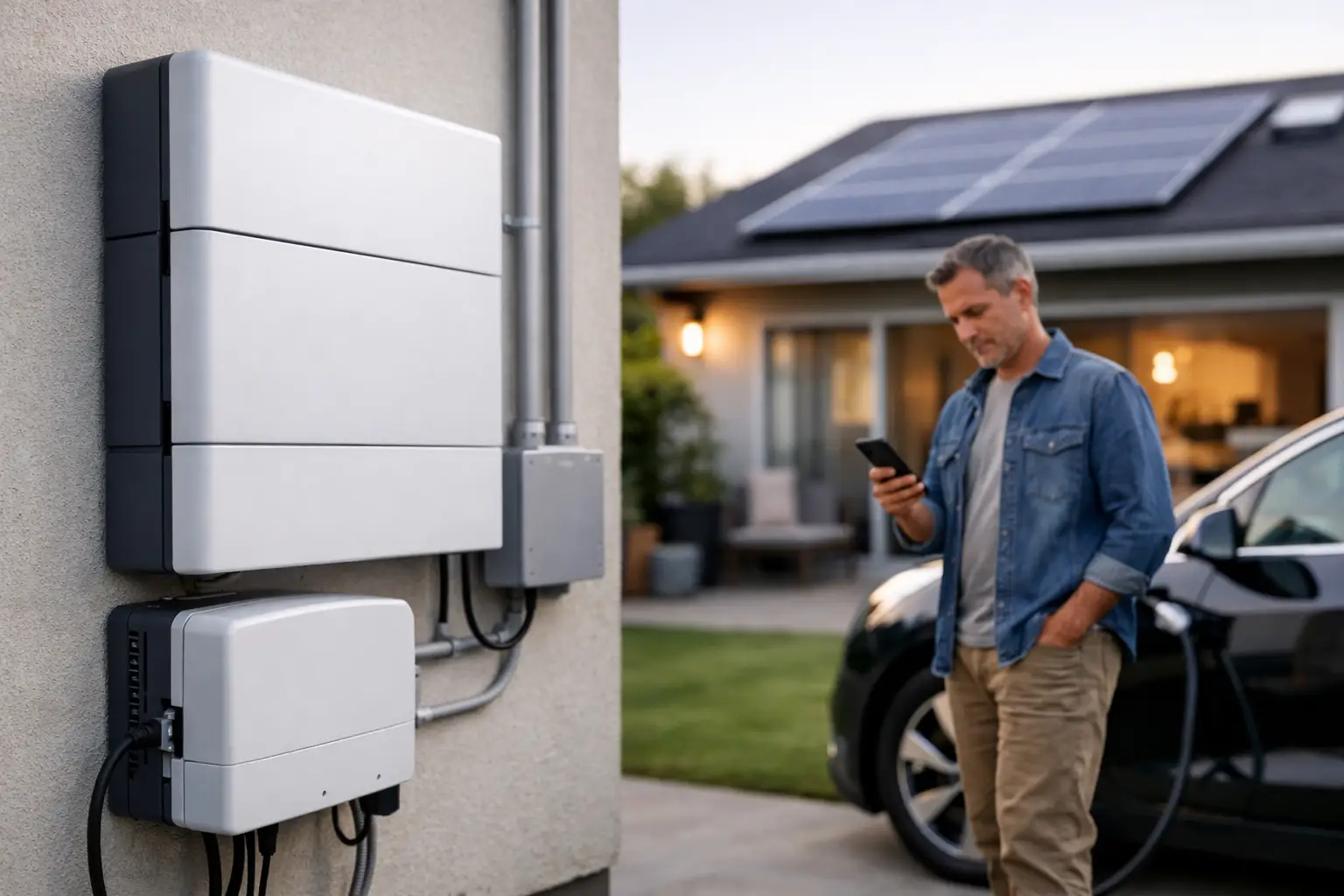
Home Battery Backup Review for Real-World Use
The difference between a battery that looks good on paper and one that actually helps your household usually shows up during the first outage. When the lights go out, you find out fast whether your system can run the fridge, keep Wi-Fi on, support medical devices, or carry your home through peak utility rates. That is why any honest home battery backup review has to go beyond brand names and specs. It has to focus on how people really live.
For homeowners and small business owners across Southern California, battery backup is no longer a niche upgrade. Utility rate pressure, wildfire-related shutoffs, aging electrical panels, and a growing interest in energy independence have made storage a practical conversation. The right battery can reduce stress, lower bills, and make a solar system more valuable. The wrong one can leave you paying for capacity you do not use or expecting whole-home backup when the system was never designed for that.
What a home battery backup review should actually cover
A lot of battery content online leans too heavily on marketing language. What matters more is whether the system matches your home, your budget, and your expectations.
The first question is backup performance. Some batteries are set up to support a few critical loads, such as refrigeration, lighting, outlets, internet equipment, and garage access. Others are designed for larger backup needs and can support central air, electric cooking, or more of the home if sized correctly. Neither approach is automatically better. It depends on what you want protected and how often outages affect you.
The second question is bill savings. In many California utility territories, a battery does more than sit there waiting for an outage. It can store solar production during the day and shift that energy into expensive evening hours. That can improve your return on investment, especially when net metering terms are less favorable than they used to be.
The third is expandability. Some households start with one battery and later add another. That can be a smart path if you want to spread cost over time, but only if the system architecture allows for it without creating a mess later.
Backup power: critical loads or whole-home coverage?
This is where many battery decisions go sideways. Homeowners often say they want backup for the whole house, but after looking at actual usage, they may decide they only need the essentials during an outage. That choice changes the size of the battery, the inverter strategy, and the total price.
If your goal is resilience at a manageable cost, critical-load backup usually makes the most sense. It keeps the most important circuits running and stretches stored energy longer. If your goal is comfort and continuity with fewer compromises, whole-home backup may be worth it, but it generally requires more battery capacity and sometimes electrical upgrades.
Air conditioning is the biggest dividing line. Running a few lights and a refrigerator is very different from trying to support a large HVAC system for hours. The same goes for pool pumps, EV chargers, and electric water heaters. A solid review has to account for those realities instead of promising a one-size-fits-all answer.
The battery itself matters, but system design matters more
In a practical home battery backup review, chemistry and warranty are important, but they are not the whole story. A battery does not operate in isolation. It works as part of a larger system that may include solar panels, inverters, a backup gateway, a subpanel, and possibly service panel upgrades.
That means installation quality and planning often matter just as much as the battery brand. A well-matched battery with thoughtful load planning can perform better for a household than a premium unit that was oversold or poorly integrated.
This is especially relevant in older homes across San Diego County, Riverside County, and nearby areas where electrical infrastructure may need attention first. If your main panel is outdated or full, storage may require panel work before installation can move forward cleanly. That is not a reason to avoid a battery. It is simply part of a responsible review process.
Cost: what you are really paying for
Battery pricing can feel confusing because quotes often blend equipment, labor, permitting, electrical work, and backup hardware into one number. That is normal. What matters is understanding what is included.
A lower quote may reflect a smaller battery, fewer backed-up loads, or no panel upgrade. A higher quote may include a more complete backup setup and better room to grow. Looking only at sticker price can lead to a bad comparison.
For most households, the value calculation comes down to three things: outage protection, utility bill management, and long-term flexibility. If your area experiences frequent shutoffs or your home relies on refrigerated medication, remote work, internet access, or home medical equipment, the resilience value alone may justify the investment differently than it would for someone with rare outage exposure.
Financing can also change the conversation. For budget-conscious homeowners, a battery becomes much more accessible when it is bundled into a larger solar or home upgrade project instead of treated as a standalone luxury purchase.
Solar pairing makes battery backup stronger
A battery without solar can still provide backup, but the runtime is limited to the energy stored before an outage. Pairing the battery with solar changes the equation. During daylight hours, solar can recharge the battery and help extend backup duration, depending on weather, load use, and system design.
This is one reason battery storage is often most attractive when evaluated together with solar, roofing, and panel work instead of as a separate product. A coordinated plan tends to create a better outcome than piecing upgrades together at different times with different contractors.
For homeowners who already have solar, retrofit battery options can still make sense, but compatibility matters. Older solar systems may need specific inverter solutions or additional hardware. That is why a consultation should include your existing system details rather than jumping straight to product recommendations.
A useful home battery backup review for Southern California buyers
Southern California buyers have a few concerns that should shape the review process. Time-of-use utility rates are a major one. In many cases, the battery’s day-to-day financial value comes from avoiding expensive evening power, not just emergency backup.
Wildfire and grid reliability concerns also matter. If you live in an area with Public Safety Power Shutoff risk, battery backup can feel less like an upgrade and more like preparation.
Then there is permitting and installation complexity. Local experience helps. Homes in this region vary widely, from newer builds that are storage-ready to older properties that may need roof work, electrical updates, or more thoughtful equipment placement. Working with a provider that can coordinate those moving parts saves time and reduces the chance of surprises.
That is part of why many customers prefer a company like Accessible Solar & Energy Storage that can look at the full picture, including solar, roofing, battery storage, financing, and electrical needs, instead of treating each item as a separate problem.
Questions to ask before you say yes
A battery quote should answer simple, practical questions clearly. Which appliances and circuits will stay on during an outage? How long will they run under realistic use? Can the system recharge from solar during the day? Is this quote based on whole-home backup or a critical-load panel? Can the setup expand later if your needs change?
You should also ask about warranty terms in plain language. Some battery warranties are based on years, others on throughput, and some include minimum retained capacity. Ask what support looks like if the battery underperforms and who handles service coordination.
Most importantly, ask for honesty about trade-offs. If your budget supports only one battery today, a good advisor should explain what that can and cannot do. Clear expectations are part of good service.
The real verdict
So, what is the verdict in a realistic home battery backup review? For many homes and small businesses, battery storage is a smart upgrade when the system is sized correctly and connected to a clear goal. It is especially compelling if you want outage protection, better use of solar energy, and relief from high evening utility rates.
It is not automatic savings for everyone, and it is not magic backup for every appliance without proper planning. But when the design is honest and the installation is coordinated well, a battery can make your property more resilient, more efficient, and easier to live with.
The best next step is not choosing a brand from a list. It is getting a real assessment of your loads, your utility rate structure, your panel condition, and your budget. A battery should fit your life, not the other way around. When that happens, clean energy feels less complicated and a lot more useful.


Leave A Comment