


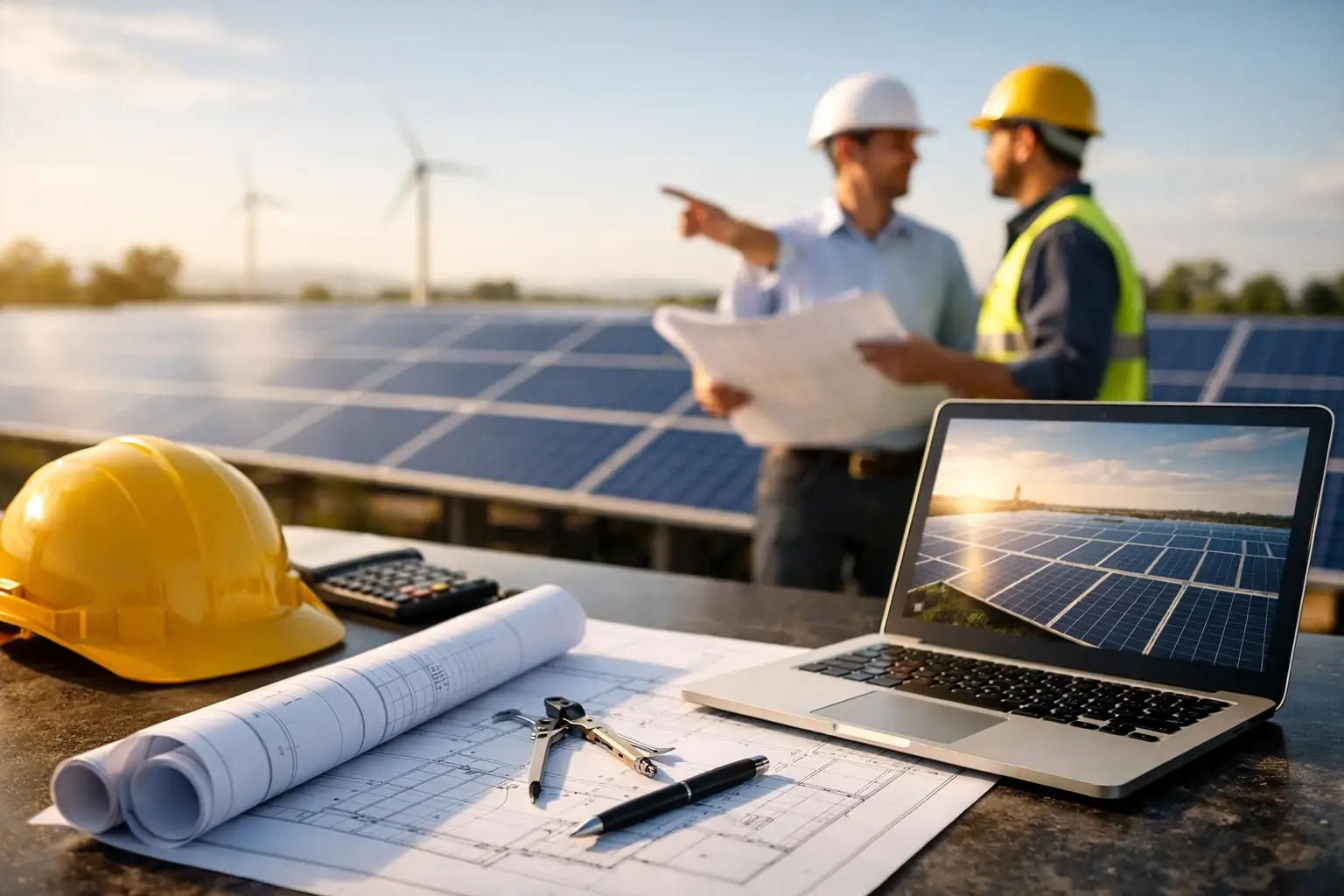
Commercial Solar Project Planning Guide
If your business has high electric bills, a solar project can look like an obvious next step – until the real questions start. How large should the system be? Will the roof need work first? Is battery storage worth it? A strong commercial solar project planning guide helps you answer those questions before costs, delays, or change orders start stacking up.
For most business owners, the challenge is not whether solar works. It is whether the project is scoped correctly for the building, the budget, and the way the property actually uses power. Good planning keeps a solar investment practical. It also helps you avoid the common mistake of treating panels as a standalone purchase when the real project may involve roofing, electrical upgrades, financing, and future energy needs.
What a commercial solar project planning guide should cover
The best commercial projects start with business goals, not equipment. Some owners want to reduce operating costs right away. Others care more about predictable long-term utility expenses, backup power for essential operations, or improving the property for tenants and resale value. Those goals affect system size, financing strategy, and whether battery storage belongs in the project from day one.
Your building type matters just as much. A warehouse, retail center, office building, church, school, or mixed-use property can all benefit from solar, but the energy patterns are different. A site that uses most of its power during the day may see a different value profile than one with heavy evening loads. That is why the planning stage should include more than a quick estimate based on square footage.
A well-scoped commercial project usually looks at four things together: historical utility usage, roof condition, electrical infrastructure, and project economics. If one of those pieces gets ignored, the project may still move forward, but it often becomes more expensive and more frustrating than it needed to be.
Start with your utility data, not the panel count
One of the easiest ways to lose money on a commercial solar project is to size the system based on guesswork. Pull at least 12 months of electric bills, and if your operation is seasonal, 24 months is even better. That usage history shows how much power the property really consumes, when costs spike, and whether demand patterns shift throughout the year.
This matters because commercial bills are not always simple energy-use charges. Depending on the utility rate structure, demand charges, time-of-use pricing, and other factors can shape project savings. A system that looks large enough on paper may not offset the most expensive parts of the bill. On the other hand, oversizing can create a system that costs more upfront without delivering the return you expected.
If your business plans to add EV chargers, refrigeration, expanded hours, more equipment, or battery storage later, that should be part of the planning conversation now. A solar system should fit where your business is going, not just where your power usage happened to be last year.
Evaluate the roof before you finalize the system
Commercial owners sometimes focus on panel layout first and ask about the roof second. That order creates risk. If the roof is nearing the end of its service life, installing solar before roofing work can leave you paying to remove and reinstall panels later.
A practical review looks at roof age, material, warranty status, penetrations, usable space, shading, drainage, and structural considerations. Not every roof problem kills a solar project, but every issue should be identified early. In many cases, combining roofing work and solar planning is the smarter financial move because it reduces duplicated labor and avoids disruptions later.
This is one of the biggest advantages of working with a provider that understands bundled project coordination. When roofing, electrical work, and solar are treated as separate conversations, the owner ends up managing the gaps. When they are planned together, the project usually stays cleaner and more predictable.
Don’t overlook electrical infrastructure
The panels on the roof get most of the attention, but the electrical system in the building can determine how simple or complicated the project becomes. Main service panels, subpanels, transformer capacity, meter configuration, and interconnection requirements all need to be reviewed before final pricing is locked in.
Some commercial properties need a panel upgrade or other electrical improvements to support the new system safely and compliantly. That does not mean the project is a bad idea. It just means the true project cost should be known upfront. Surprises in electrical scope are one of the most common reasons commercial solar jobs end up over budget.
For multi-tenant or mixed-use buildings, the planning process may be even more detailed. Metering setup, shared common-area loads, and lease structure can affect how the savings are realized. A system can still make sense, but the design and financial approach may need more care.
Decide early whether battery storage belongs in the plan
Battery storage is not automatically the right choice for every commercial site, but it should be discussed early instead of added as an afterthought. For some businesses, storage adds resilience and supports critical loads during outages. For others, it can improve bill management, especially when utility rates make timing important.
The right answer depends on your priorities. If your operation cannot afford downtime, backup power may justify the added investment. If your main goal is the shortest possible payback, solar alone may be the first step. In some cases, the best move is to install solar now while designing the project so storage can be added more easily later.
That kind of planning is especially helpful for budget-conscious owners. You do not have to do everything at once to make a smart decision. You do need a plan that leaves room for the next phase.
Financing shapes the project more than many owners expect
A commercial solar project is not just an equipment decision. It is a cash flow decision. Some businesses want to purchase the system outright for maximum long-term value. Others prefer financing because it preserves working capital and keeps the project from competing with other business priorities.
There is no universal best option. It depends on tax strategy, available capital, ownership timeline, and risk tolerance. A lower upfront payment can make solar accessible faster, but the structure of the financing affects monthly savings and total project cost over time. The important part is to compare options clearly and make sure the payment structure matches the business objective.
This is where education matters. Business owners should not have to sort through incentives, financing terms, and scope decisions alone. A good partner explains the trade-offs in plain language and helps you see the real numbers, not just a sales projection.
Permitting, interconnection, and timelines need realistic expectations
Commercial owners often ask one simple question: how long will this take? The honest answer is that it depends on the property, the utility, and the project scope. Design is only one piece. Permitting, utility approvals, equipment lead times, inspections, and final permission to operate all affect the timeline.
Projects that involve roofing work, electrical upgrades, or battery integration naturally take more coordination. That is not a reason to avoid them. It is a reason to set expectations correctly from the start. A rushed proposal may sound appealing, but realistic scheduling is usually a sign of better project management.
Clear communication matters here. If the provider explains each phase, the owner can plan around business operations and avoid unnecessary disruption. That kind of coordination is especially valuable for occupied commercial properties where downtime and tenant impact need to be minimized.
Why local planning matters in Southern California
In Southern California, utility costs, regional permitting conditions, heat exposure, and building diversity all make local knowledge valuable. A property in San Diego County may have different planning considerations than one in Riverside County, Imperial County, Orange County, or Tijuana. Even when the solar goal is similar, the path to a good project can vary.
That is why many businesses benefit from working with a team that understands the local market and can walk the site, review the roof, evaluate the electrical setup, and discuss financing in a way that feels practical. Accessible Solar & Energy Storage is built around that kind of support, especially for business owners who want straightforward guidance and a single team that can help coordinate more than just the panels.
A better commercial solar decision starts before installation
The strongest solar projects are usually the ones that feel uneventful once construction begins. That is not luck. It comes from planning the roof, electrical system, financing, storage options, and timeline before anyone starts installing equipment.
If you are considering solar for a commercial property, slow down just enough to ask better questions at the beginning. A clear plan can protect your budget, reduce delays, and make the entire investment easier to trust. That is how solar becomes more than an upgrade – it becomes a practical business decision that keeps working long after the install is done.


Leave A Comment