


Are Batteries Safe Inside Homes? What to Know
A home battery can keep the lights on when the grid goes down, store extra solar power for the evening, and reduce how much energy you buy during expensive utility hours. But homeowners understandably ask: are batteries safe inside homes? The short answer is yes, when the system is properly selected, installed, and maintained. The longer answer depends on the battery type, installation location, local code requirements, and the experience of the team coordinating the project.
For families and business owners across Southern California and Tijuana, battery safety should never be treated as an afterthought. It is part of choosing the right energy system for your property, budget, and goals.
Are Batteries Safe Inside Homes When Professionally Installed?
Modern home energy storage systems are designed with several layers of protection. Most residential solar batteries use lithium-ion chemistry, often lithium iron phosphate or another chemistry selected for stationary energy storage. These are not loose consumer batteries sitting on a shelf. They are purpose-built systems housed in protective enclosures and managed by advanced electronics.
A properly designed battery installation includes a battery management system that monitors temperature, voltage, current, and battery condition. If the system detects an issue, it can limit charging or discharging, shut down, or alert the homeowner and installer. The equipment is also tested to meet applicable safety standards and must be installed according to manufacturer instructions and local building and electrical requirements.
That does not mean every location inside a home is appropriate. A battery should not be placed in a bedroom, living room, hallway, or a tight closet simply because there is open wall space. Safe placement is planned around access, ventilation requirements, clearances, fire safety, temperature, and the layout of the property.
Why Home Battery Safety Depends on More Than the Battery
The question is not only whether the battery itself is safe. It is whether the entire energy storage system has been designed correctly. That includes the battery, inverter, electrical panel, wiring, disconnects, mounting surface, and backup configuration.
A high-quality battery installed poorly can still create problems. Incorrect wiring, damaged equipment, insufficient clearances, an overloaded electrical panel, or ignored manufacturer requirements can compromise performance and safety. This is why permits, inspections, and experienced installation coordination matter. They create checks that help ensure the finished system is built for the property, not just placed wherever it is easiest.
In California, residential battery projects are commonly subject to building, electrical, and fire requirements. Local rules can vary by city and county, particularly for garages, multifamily properties, wildfire-prone areas, and homes with limited exterior wall space. A professional site evaluation identifies these factors before equipment is ordered or installed.
The risk that gets the most attention: overheating
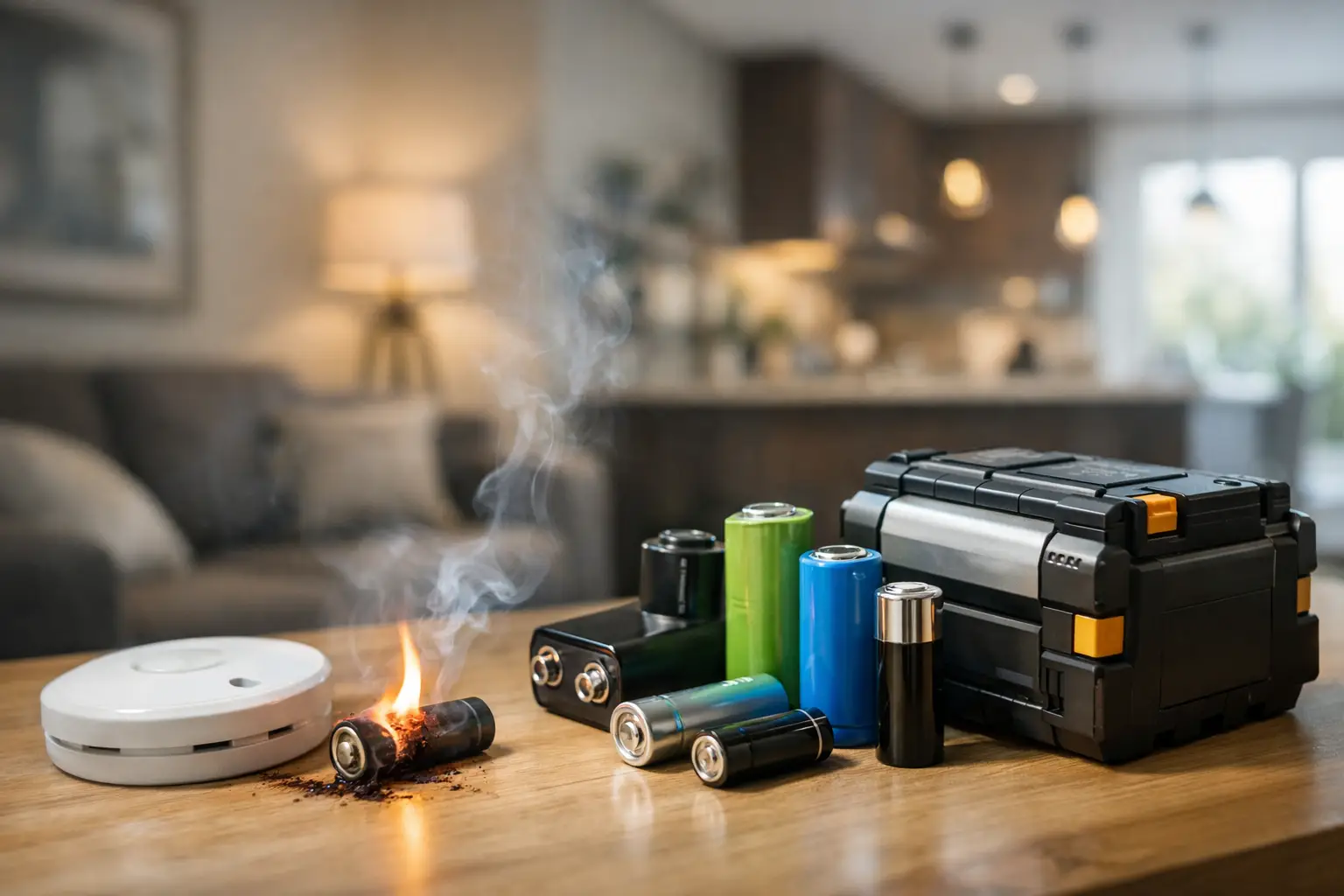
Lithium-ion batteries can overheat under unusual failure conditions, such as significant physical damage, manufacturing defects, severe electrical faults, or exposure to extreme heat. In rare cases, this can lead to thermal runaway, a chain reaction that may produce smoke, fire, or hazardous gases.
This is a real risk, but context matters. Modern stationary battery systems are engineered to reduce the chance of it happening through protected enclosures, internal monitoring, safety shutoffs, and installation standards. The risk is not the same as placing unprotected or damaged batteries indoors. Still, homeowners should work with a provider that takes site conditions seriously rather than making broad promises that every battery works everywhere.
Where Should a Home Battery Be Installed?
Many batteries are installed in garages because garages often provide practical wall space, convenient access to electrical equipment, and separation from primary living areas. Depending on the equipment and local rules, batteries may also be installed on an exterior wall or in another approved utility area.
The best location depends on your home. A garage may not be ideal if it becomes extremely hot, is frequently exposed to vehicle impact, or lacks the required clearances. An exterior installation may be a better fit for some properties, especially when interior space is limited. In coastal areas, equipment selection and placement may also need to account for salt air and weather exposure.
Your installation team should consider more than convenience. They should evaluate the wall structure, proximity to doors and windows, access for service, potential flood exposure, sun and heat conditions, electrical routing, and local permitting requirements. If your battery is paired with solar, they should also review how the battery, inverter, and panel work together during an outage.
Avoid treating storage areas as battery rooms
Even when a battery is installed in a garage, avoid stacking boxes, paint, fuel containers, or other flammable materials around it. Keep the required clearance area open and make sure everyone in the household knows not to hang items from or lean objects against the equipment.
A battery system should remain accessible for inspection and service. It should also be easy to identify, especially if someone needs to locate the disconnect during an emergency.
What Homeowners Can Do to Keep Battery Storage Safe
Once your system is installed, day-to-day battery ownership is usually simple. You do not need to constantly monitor it or perform technical maintenance yourself. Still, a few practical habits support safe, dependable operation:
- Do not modify, open, drill into, or attempt to repair the battery enclosure yourself.
- Keep the area around the battery clear, dry, and free of stored chemicals or combustible materials.
- Check the system app or monitoring platform occasionally for alerts, unusual error messages, or a sudden change in performance.
- Contact your installer if the battery has been hit, exposed to water, emits an unusual odor, makes unexpected noises, or shows visible damage.
- Make sure your household knows where the electrical panel and battery disconnect are located.
If there is a fire, smoke, strong chemical odor, or a suspected battery emergency, leave the area and call 911. Do not attempt to open the enclosure or put out a battery fire yourself. Let first responders know that the property has solar and battery storage equipment.
Solar Batteries, Outages, and Peace of Mind
One of the biggest reasons homeowners choose storage is reliability. During outages, a properly configured battery can power selected essential loads or, with a larger system, support much more of the home. That can mean refrigeration, lighting, internet, medical devices, security systems, and other daily needs stay available when the grid is not.
However, backup power has trade-offs. A smaller battery costs less but may only cover essential circuits for a limited time. A larger battery can offer greater comfort and longer runtime, but it requires more investment and may need electrical upgrades or additional space. Your energy use, solar production, outage history, and budget should guide the design.
For some households, the safest and most sensible choice is an indoor garage installation. For others, an exterior location or a different backup strategy may be better. There is no one-size-fits-all answer, and a trustworthy consultation should make that clear.
Questions to Ask Before Installing a Home Battery
Before moving forward, ask how the proposed battery meets safety standards, where it will be installed, and why that location was chosen. Ask whether your electrical panel needs an upgrade, what permits and inspections are required, and which circuits will have backup power during an outage.
It is also reasonable to ask about warranty coverage, monitoring, service procedures, and what happens if the system reports a fault. Clear answers help you make an informed decision and avoid surprises after installation.
At Accessible Solar & Energy Storage, the goal is to make clean energy feel practical, not complicated. A thoughtful site evaluation can help determine whether battery storage fits your home, what level of backup makes sense, and how to plan the installation safely around your property.
A home battery should give you more confidence in your energy future, not more uncertainty. With the right equipment, a code-compliant installation, and a team that takes time to explain the details, energy storage can be a safe, useful part of a more independent home.


Leave A Comment