


Solar Panels vs Solar Roof: Which Is Right?
A solar decision often starts with your electric bill, but your roof may make the bigger difference. When comparing solar panels vs solar roof, the right choice depends on your roof’s age, your budget, the look you want, and how soon you need energy savings. For most Southern California homes and businesses, traditional solar panels deliver the strongest value. A solar roof can be an appealing integrated option when a full roof replacement is already part of the plan.
The goal is not to sell you the most complicated system. It is to help you choose an energy upgrade that works for your property, your finances, and the way you use power.
Solar Panels vs Solar Roof: The Main Difference
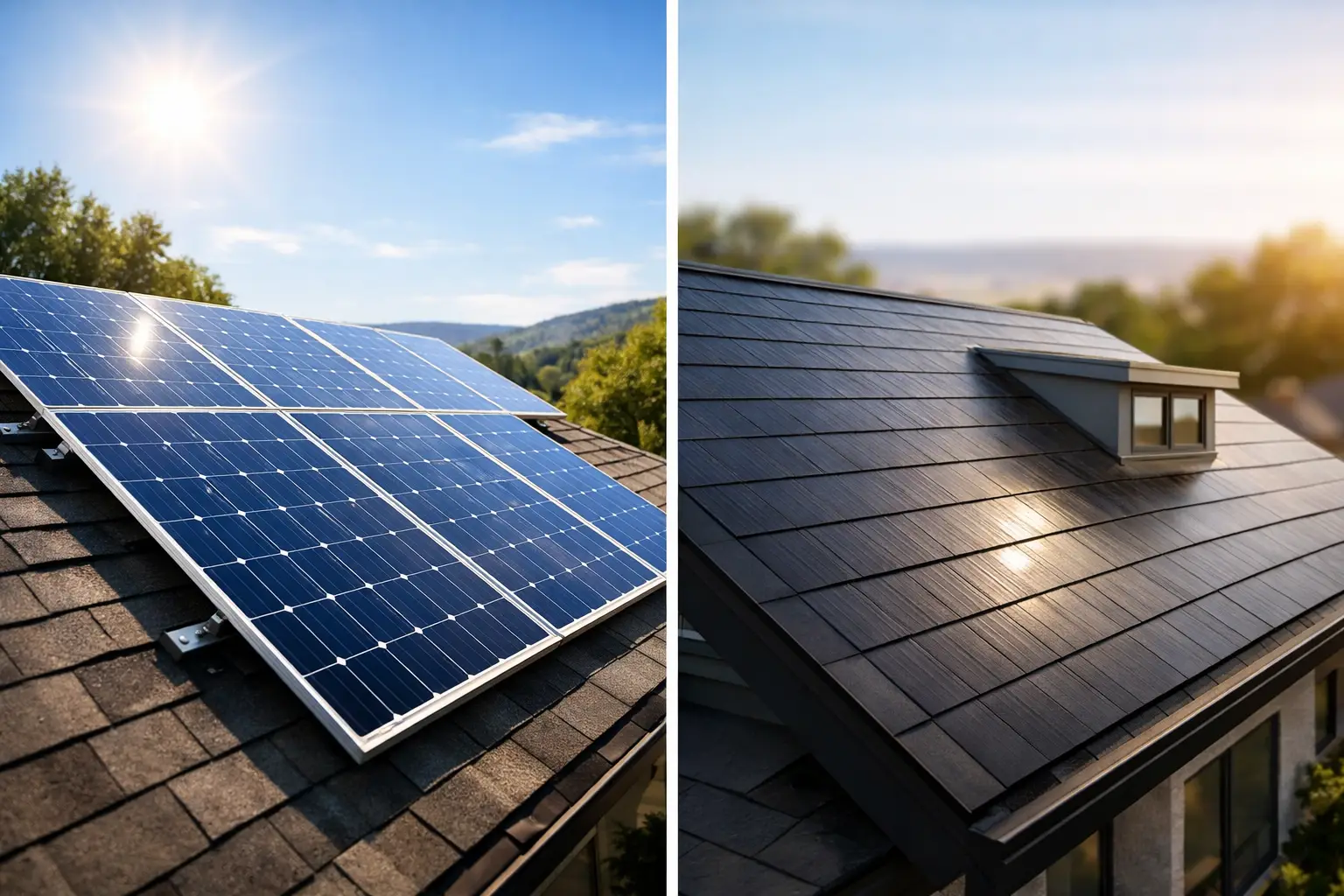
Traditional solar panels are separate photovoltaic modules installed above your existing roof. They capture sunlight and convert it into electricity for your home or business. A qualified installation team secures them to the roof structure with mounting equipment designed for the roofing material.
A solar roof combines roofing materials and solar technology. Instead of placing visible panels over a finished roof, certain shingles or tiles generate electricity as part of the roof itself. Non-solar pieces fill in the remaining areas so the roof has a more uniform appearance.
Both options can reduce the amount of electricity you buy from the utility. Both may also work with battery storage, depending on the system design. The practical differences are cost, output, project timeline, repair considerations, and appearance.
Traditional Solar Panels: A Practical Choice for Most Properties
For a property with a roof in good condition, solar panels are usually the most straightforward path to solar. They are widely available, proven in the field, and flexible enough to fit many roof shapes and energy goals.
Strong value per watt
A traditional panel system generally produces more electricity for the money than an integrated solar roof. That matters for homeowners watching their monthly budget and businesses trying to make a clear investment decision. If your priority is offsetting a meaningful share of your electric use without replacing a healthy roof, panels often make the most financial sense.
Panel systems are also easier to size. If you use more power because of air conditioning, an electric vehicle, a pool, or business equipment, your system can be designed around that usage. A good evaluation considers your past utility bills, roof space, shading, future plans, and local utility rules rather than relying on a one-size-fits-all estimate.
Faster, more familiar installation process
Because panels are added to an existing roof, the project is typically less involved than a complete solar roof installation. Permitting, utility approval, electrical work, and inspections still take time, but the roofing portion may be limited if your roof is sound.
Panels can be removed and reinstalled if roof repairs become necessary later. This is not something most owners want to deal with, but it is a familiar process for experienced solar and roofing professionals. Choosing a provider that understands both trades helps prevent finger-pointing if an issue arises.
What panels may not solve
Traditional panels sit above the roof, so they remain visible from the street or yard. Modern all-black panels and clean mounting layouts can look polished, but they do not have the fully integrated look of solar shingles or tiles.
They also are not a substitute for roof replacement. Installing a long-lasting solar system on a roof that is near the end of its life can create unnecessary future expense. If your roof needs replacement within the next several years, it may be smarter to coordinate roofing and solar work together before panels go up.
When a Solar Roof Makes Sense
A solar roof is often less about finding the lowest cost and more about combining two major projects: replacing a roof and adding solar generation. It can be a good fit for a new build, a major remodel, or a property with an aging roof that needs complete replacement now.
A more integrated appearance
The biggest advantage of a solar roof is visual. The solar components are designed to blend with the rest of the roof, which can be especially attractive for homeowners who prefer a less panel-forward exterior. On a highly visible roofline, that design choice may carry real personal value.
For commercial properties, appearance can also matter when the building is customer-facing or when a renovation is intended to update the entire property. Still, a solar roof is not automatically the best fit for every business. Large, flat commercial roofs often have plenty of room for conventional panels, making panels the more cost-effective choice.
Best timed with a full roofing project
A solar roof requires far more roofing work than adding panels. That means labor, materials, planning, and coordination can add significantly to the project cost. If you already need a new roof, comparing a solar roof against a new conventional roof plus solar panels is the fairest way to evaluate it.
Do not compare only the solar roof price to the price of panels. Compare complete project scopes: roofing materials, tear-off, structural or electrical upgrades, solar production, battery options, permits, warranties, and financing terms. A lower upfront number does not always mean lower lifetime cost, and a premium design choice may be worth it if it matches your property goals.
Output can be constrained by roof design
Solar roof products are limited by the roof areas that receive useful sunlight and can accept active solar materials. Complex roofs with many valleys, small sections, vents, chimneys, or dormers may have less productive space than expected. Traditional panels can sometimes be arranged more efficiently across available roof planes.
This is why an on-site assessment matters. A beautiful roof design does not guarantee the production needed to support your energy goals.
Cost, Financing, and Long-Term Value
The upfront cost is usually the clearest dividing line. Standard solar panels are generally less expensive than a solar roof, especially when the existing roof has many years of useful life left. A solar roof is a larger construction project, so it often carries a higher initial investment.
That does not make it a bad investment. If a roof replacement is unavoidable, the cost conversation changes. Combining roofing, solar, electrical panel upgrades, gutters, and battery storage into one coordinated project may reduce disruption and make planning easier. It can also help you avoid paying to remove recently installed panels just to replace a roof later.
Financing can make either option more manageable, but the details matter. Look beyond a monthly payment. Ask about the total financed amount, interest rate, term length, dealer fees if applicable, expected payment changes, and whether the project includes every necessary upgrade. Guaranteed financing options may help qualified budget-conscious owners move forward, but the best solution is still one that fits comfortably into your household or business budget.
Tax incentives and local programs can affect project economics, but eligibility and availability can change. A professional consultation should use current information and should not promise a credit, savings amount, or utility outcome before reviewing your situation.
Battery Storage Can Change the Conversation
Whether you choose panels or a solar roof, battery storage can give you more control over when you use your solar energy. A battery can store excess daytime production for evening use and may provide backup power during an outage, depending on the equipment and electrical design.
For San Diego County, Orange County, Imperial County, Riverside County, and Tijuana property owners, storage deserves a serious conversation because utility rates can be high and electricity use often rises after sunset. Solar alone may reduce daytime energy purchases, while solar plus storage can help you rely less on the grid during more expensive periods.
Backup expectations should be realistic. A battery may support selected essential loads, such as refrigeration, lighting, internet, and some outlets, rather than every appliance in the building. If you want to run central air conditioning, large pumps, or heavy commercial equipment during an outage, the system may need additional batteries and careful load planning.
Questions to Ask Before You Choose
Before selecting either system, find out how much useful life your current roof has and whether there are leaks, damaged materials, or structural concerns. Review a production estimate based on your actual energy use, not just your roof size. Ask what happens if roofing work is needed later and who coordinates the work when solar, roofing, gutters, electrical upgrades, and storage are all involved.
You should also ask what the proposal includes from start to finish. Clear answers about permits, inspections, utility interconnection, warranties, monitoring, financing, and service responsibilities build confidence before work begins.
For many properties, solar panels paired with a healthy roof offer the clearest route to savings. For a property already due for a new roof, a solar roof may be worth considering for its integrated appearance and combined project approach. Accessible Solar & Energy Storage can help you compare both paths in plain language, including the roof and electrical work that may affect your final decision.
A thoughtful on-site evaluation can turn a confusing choice into a practical plan – one that helps your property use more of the sunshine it already receives.


Leave A Comment