


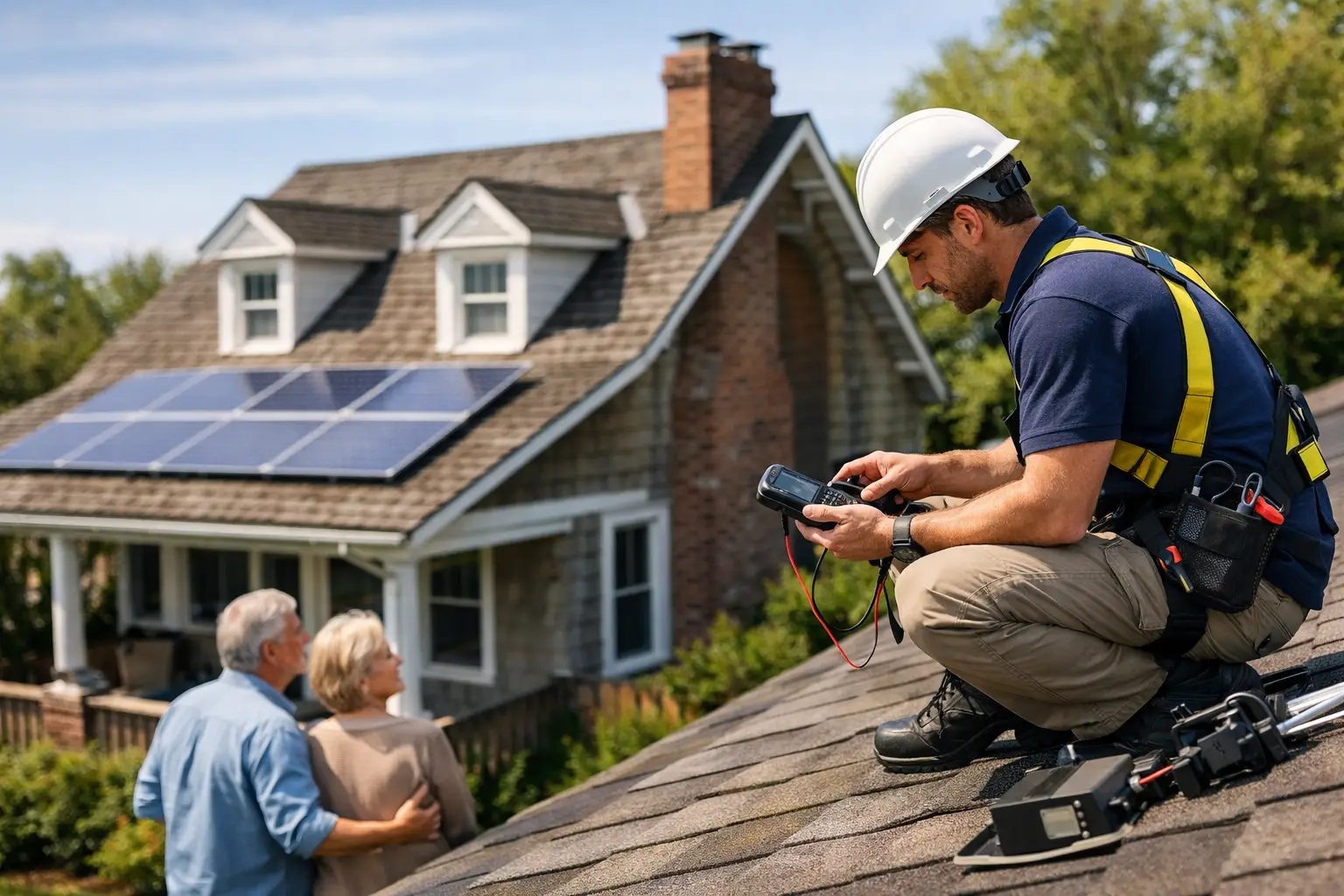
Solar for Older Homes Starts With a Checkup
A 1950s bungalow in San Diego may have plenty of sunshine on the roof, but its electrical panel, shingles, and wiring can tell a very different story. Solar for older homes is absolutely possible, and often a smart long-term investment. The key is to treat it as a home improvement project with a few moving parts, not simply as panels added to the roof.
For homeowners across Southern California, an older property can be a source of pride and a practical asset. It may also have outdated electrical equipment, a roof nearing the end of its life, or energy use that has changed over decades. A thoughtful solar plan looks at the whole property first, then builds a system that fits its condition, energy goals, and budget.
Why older homes need a different solar evaluation
Newer homes are often built with larger electrical panels, newer roofing materials, and space already set aside for modern equipment. Older homes were not. That does not mean they are poor candidates for solar. It means the site evaluation matters more.
A reliable consultation should look beyond the visible roof area. Your solar professional should review your recent electricity usage, the direction and shade on your roof, the age and condition of the roofing material, your main electrical panel, and the location for a possible battery. These details affect system design, installation timing, and cost.
The goal is not to sell the largest system possible. It is to help you avoid paying for work twice. For example, installing panels on a roof that needs replacement in a few years can create unnecessary removal and reinstallation costs later. Planning the roof and solar project together is usually the better move.
Start with the roof, not the panels
A solar system can last 25 years or longer, so the roof beneath it needs to be ready for a similar commitment. If your roof is newer and in good condition, it may be ready for solar installation with little additional work. If it has curling shingles, leaks, soft spots, aging underlayment, or recurring repairs, it is wise to address those issues first.
This is especially relevant for homes built several decades ago, where a roof may have been repaired in sections over time. A professional assessment can identify whether a targeted repair is enough or whether full replacement makes more financial sense.
Bundling roofing and solar can simplify the process. Instead of coordinating multiple contractors and schedules yourself, a full-service provider can help organize the project sequence so the roof is completed before panels are installed. This approach also helps protect your investment and gives you a clearer view of the total project cost from the beginning.
Roof shape and shade still matter
Older homes often have more complex rooflines, smaller sections, dormers, chimneys, and mature trees. These features do not automatically rule out solar, but they can affect panel placement and production.
A good design uses the most productive available roof space rather than forcing panels onto every section. In some cases, trimming vegetation may improve solar access. In others, a smaller system paired with energy efficiency upgrades or battery storage may make better sense. The right answer depends on your electric use, your utility rates, and what you want the system to accomplish.
Check the electrical panel and wiring
The electrical panel is one of the most common considerations for solar for older homes. Many properties still have 100-amp service, older breaker panels, or equipment that no longer meets current needs. A solar system connects to your home’s electrical system, so the panel must have adequate capacity and be safe for the planned installation.
Sometimes, a panel can support solar with a straightforward adjustment. Other homes may need a main panel upgrade, a subpanel, rewiring, or utility coordination. The scope depends on the equipment already in place and the size of the solar and battery system you are considering.
An electrical upgrade can feel like an added expense, but it can also improve safety and prepare your home for future needs. Electric vehicles, heat pumps, induction ranges, air conditioning upgrades, and battery storage all place new demands on a home’s electrical system. If you are already opening up the project for solar, it can be a practical time to plan ahead.
Older wiring deserves a closer look as well. Homes with knob-and-tube wiring, aluminum branch wiring, or signs of damaged insulation may require work before a solar project moves forward. A qualified evaluation helps identify issues early instead of uncovering them after installation has begun.
Consider battery storage for reliability
Solar panels produce power during daylight hours. A battery stores energy for later use, which can be especially valuable for homeowners who want backup power during an outage or greater control over when they use electricity.
For an older home, battery storage can be designed around the circuits that matter most. You may choose to back up refrigeration, lighting, internet, medical equipment, garage access, and selected outlets rather than every appliance in the home. This can make the battery plan more affordable while still providing meaningful support during an outage.
Whole-home backup is also possible in many situations, but it typically requires more battery capacity and careful planning around large loads such as central air conditioning, electric dryers, pool equipment, and electric water heating. There is no one-size-fits-all battery package. The best system reflects how your household actually lives.
Plan around permits, local requirements, and home character
Most solar projects require permits and utility approval. Older homes can occasionally involve additional considerations, particularly if the property is in a historic district, has unusual roof construction, or needs substantial electrical work.
These requirements should not be a surprise. A clear project plan explains what approvals are needed, who handles the paperwork, and how upgrades such as roofing or panel work fit into the schedule. For homeowners, this coordination is valuable because it reduces the chance of one part of the project delaying another.
Local experience matters here. Homes in San Diego County, Orange County, Imperial County, Riverside County, and nearby communities can vary widely in age, utility service, heat exposure, and roof materials. A local team is better positioned to recognize common issues and recommend a practical path forward.
Make the numbers fit your budget
The economics of solar depend on your electricity use, utility rate structure, roof production, system size, financing terms, and whether you add storage or other upgrades. Older homes sometimes need more upfront work than newer properties, but that does not make solar out of reach.
The best place to start is with an honest estimate that separates the costs of solar, roofing, electrical upgrades, and battery storage. That transparency lets you decide whether to complete everything at once or phase the work in a way that fits your budget.
Financing can make a bundled project more manageable, especially for homeowners who do not want to delay a needed roof or electrical improvement. Still, financing should be reviewed carefully. Ask about the payment, term length, interest rate, total cost over time, and whether there are prepayment options. A lower monthly payment may come with a longer term, so comparing the full picture is worthwhile.
Tax incentives and other programs may also affect your project cost, but eligibility can change and depends on your individual tax situation. A solar consultation can help you understand the project itself, while a tax professional can advise you on how available incentives apply to your household.
Choose a partner who can coordinate the details
The easiest solar projects are not always the simplest homes. They are the projects where someone has taken the time to assess the roof, electrical system, energy needs, budget, and installation timeline before making recommendations.
Accessible Solar & Energy Storage helps homeowners coordinate solar, battery storage, roofing, and electrical upgrades as one connected plan. That means fewer handoffs, clearer communication, financing guidance, and support in English or Spanish for families who want straightforward answers.
Before moving ahead, gather a few months of electric bills, note any recent roof repairs, and think about what you would want powered during an outage. Then schedule an on-site evaluation. A well-cared-for older home has already stood the test of time. With the right preparation, it can be ready to make the most of the sunshine for decades ahead.


Leave A Comment