


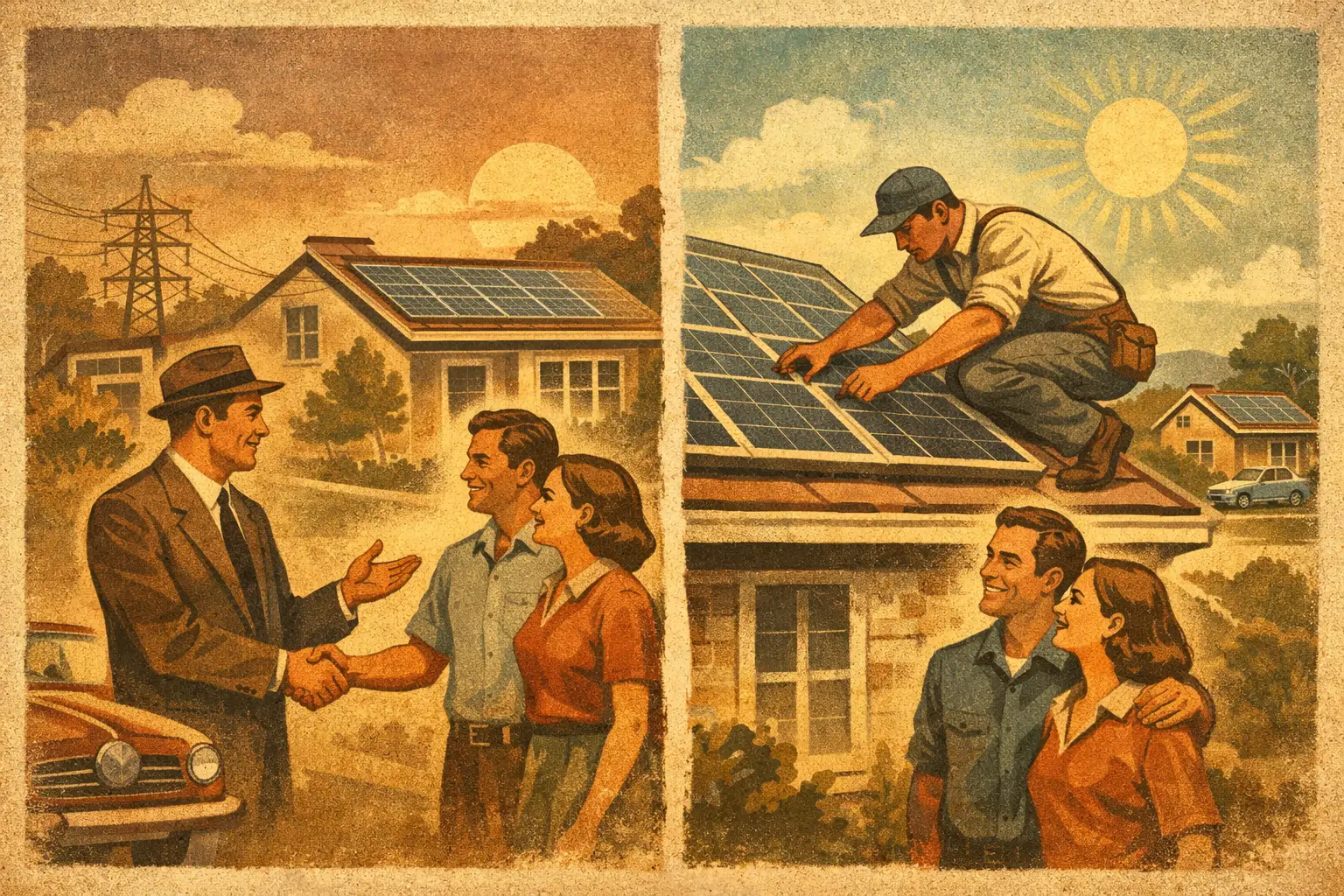
Leasing vs Buying Solar: Which Pays Off?
Your electric bill tells the story fast. If rates keep climbing and you are finally ready to do something about it, the big question is usually not whether solar makes sense. It is leasing vs buying solar, and which path gives you the best value for your home or business.
For most property owners, this is not just a financing question. It affects your monthly savings, tax benefits, long-term return, and how much control you have over the system. The right answer depends on your budget, your plans for the property, and how quickly you want solar to start working for you.
Leasing vs buying solar: the core difference
When you buy solar, you own the system. That can happen with cash or with a loan. Either way, the panels are considered your asset, and you benefit from the energy they produce over time.
When you lease solar, a third party owns the system and installs it on your property. You make monthly lease payments in exchange for using the power it generates. In some cases, the structure may be a power purchase agreement, where you pay for the electricity produced rather than a fixed lease amount. The basic idea is similar – lower upfront cost, but less ownership.
That difference matters more than many people realize. Buying is usually about long-term value. Leasing is usually about lower entry cost and simpler approval for people who want immediate bill relief without a major upfront investment.
When buying solar usually makes more sense
If your goal is to maximize savings over the life of the system, buying is often the stronger option. Once your system is paid off, the electricity it produces can significantly reduce your utility costs for many years. In high-rate areas like Southern California, that long-term benefit can be substantial.
Ownership also gives you access to incentives that a lessee may not receive directly. Tax credits and other available benefits usually go to the system owner. For many homeowners and business owners, that can improve the overall economics of the project and shorten the payback period.
There is also the question of property value. Owned solar can be more attractive to future buyers because they are getting the benefit of lower energy costs without having to take over a lease agreement. That does not guarantee a higher sale price in every case, but it often makes the property easier to market.
Buying tends to work best for people who plan to stay put for a while, want the strongest return over time, and are comfortable treating solar as an investment rather than just a monthly utility alternative.
Cash purchase vs solar loan
A cash purchase usually delivers the highest lifetime savings because there are no finance charges. If you have the funds available and want the cleanest return, cash can be a strong choice.
A solar loan can still make ownership accessible without requiring a large upfront payment. Many property owners prefer this route because it lets them spread out the cost while still keeping the benefits of ownership. In some cases, the monthly loan payment may be close to or lower than the current electric bill, especially when the system is designed well.
That balance is why financing support matters. A good solar plan should fit your cash flow, not strain it.
When leasing solar may be the better fit
Leasing is often appealing because it lowers the barrier to entry. If a large upfront purchase is not realistic, a lease can offer a way to start using solar with little or no money down.
For some households, that simplicity is the main advantage. You get predictable payments, you avoid a major capital expense, and you may still lower your monthly energy costs compared with utility rates. If your top priority is affordability right now, leasing can be worth serious consideration.
This can also be a practical path for customers who may not want to use tax credits themselves, or who simply prefer not to take on ownership responsibilities. Not everyone wants to think about solar as an asset. Some people just want a manageable monthly payment and a lower bill.
That said, leasing usually means lower total savings over time compared with owning. Since the leasing company owns the system, they typically receive the financial benefits tied to ownership. You are getting convenience and lower upfront cost, but you are giving up some long-term upside.
The real trade-off: short-term flexibility vs long-term value
This is where leasing vs buying solar becomes clearer.
Leasing can feel easier on day one. Buying usually looks stronger over 10, 15, or 25 years. If you are focused on immediate affordability, leasing may solve the right problem. If you are focused on building equity in your energy system and keeping more of the savings, buying often comes out ahead.
Neither option is automatically right for everyone. A young family managing a tight monthly budget may value a low-entry option. A business owner planning to stay in the same building long term may see ownership as the smarter financial move. A homeowner preparing to retire may want to reduce utility costs permanently and own the system outright.
The decision should match your goals, not just the sales pitch you hear first.
Questions to ask before you choose
Start with your timeline. If you expect to sell your property soon, you need to think carefully about how a lease or owned system will affect a future transaction. Owned systems are often simpler for buyers to accept. Leases can sometimes require transfer approval or create extra paperwork during escrow.
Next, look at your tax situation. If you can benefit from available tax incentives, buying may become much more attractive. If you cannot use those incentives effectively, the gap between leasing and buying may feel smaller.
Then consider your monthly budget. A lease may lower upfront pressure, while a loan may offer better long-term economics. The right answer depends on what your finances can comfortably support today.
You should also think about the full project, not just the panels. Some properties need roofing work, electrical panel upgrades, or battery storage to make the solar investment work well. If your project involves multiple moving parts, it helps to work with a provider that can coordinate everything instead of treating solar like a standalone item.
For Southern California, rate pressure changes the math
Local utility costs matter. In San Diego County, Orange County, Riverside County, Imperial County, and nearby areas, many property owners are dealing with some of the highest electricity prices in the country. That makes the long-term savings potential of solar more meaningful.
It also means sizing and system design matter. A cheap-looking option on paper is not always the best value if it does not offset enough usage or if it ignores future needs like battery storage. A solid consultation should look at your actual consumption, roof condition, financing options, and long-term plans.
For bilingual families and first-time solar buyers, clear guidance matters just as much as pricing. The best decision often comes from understanding the numbers in plain language, not from being pushed toward a one-size-fits-all offer.
A simple way to decide
If you want the greatest control, stronger long-term savings, and the benefits that come with ownership, buying is usually the better choice.
If you want a lower barrier to entry, minimal upfront cost, and a simpler way to start reducing utility expenses, leasing may be the better fit.
That is why a real consultation should never start with a hard sell. It should start with your goals, your property, and your budget. At Accessible Solar & Energy Storage, that is how we believe solar should work – practical, understandable, and built around what makes sense for the people we serve.
Solar should make life easier, not more confusing. If you are weighing your options, the best next step is to look at real numbers for your property and choose the path that helps you move forward with confidence.


Leave A Comment