


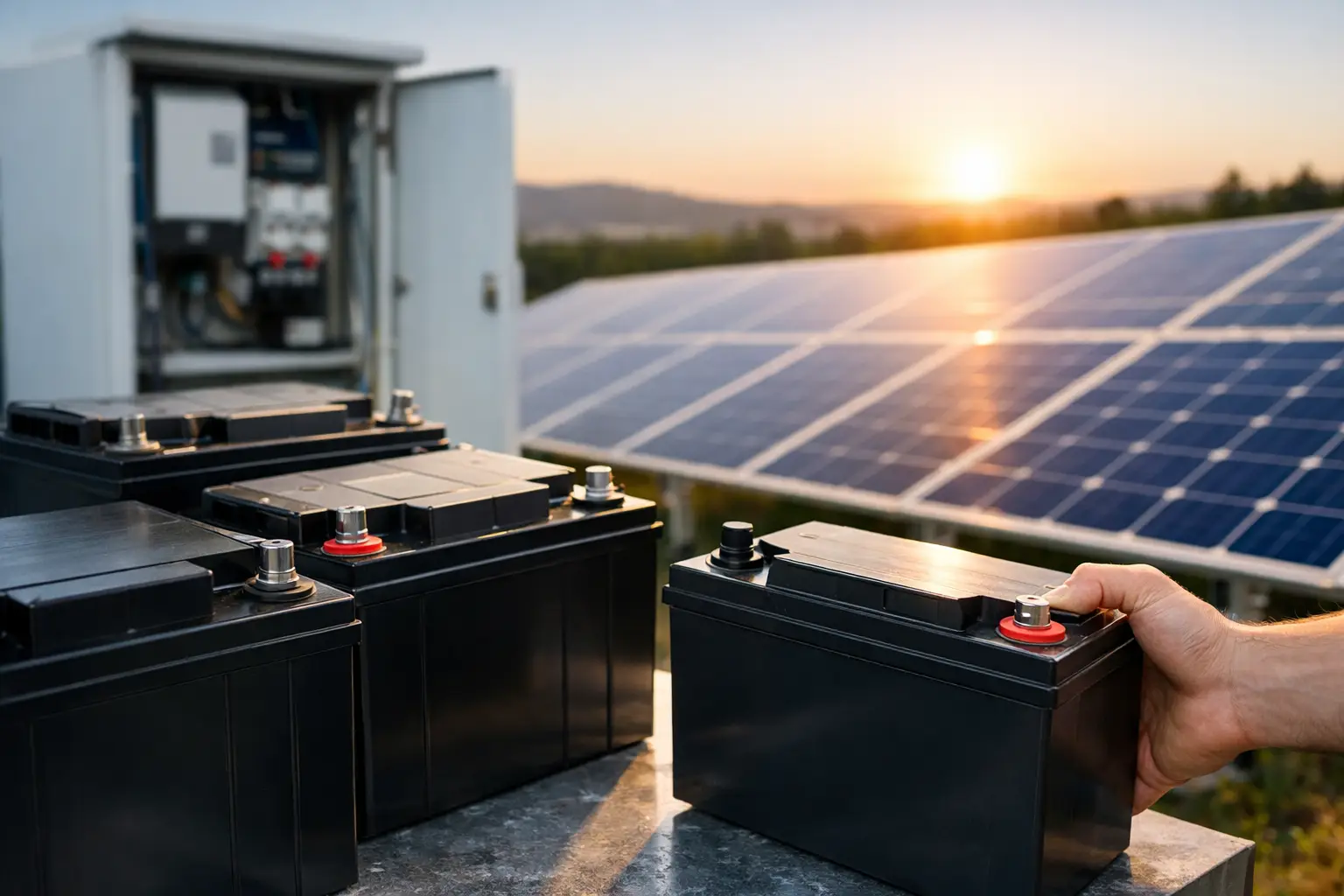
How to Choose Solar Batteries
When the power goes out, most people find out very quickly whether their battery choice was smart or just affordable. That is why learning how to choose solar batteries matters before you sign a contract. The right battery can keep essentials running, lower your dependence on the grid, and make your solar investment work harder. The wrong one can leave you paying for storage that does not match your actual needs.
For homeowners and business owners, the best battery is not always the biggest one or the newest brand on the market. It is the one that fits your energy habits, your property, your budget, and your goals. Some people want backup power during outages. Others want to reduce peak utility costs. Some want a system that can grow later. Those details shape the right decision more than any sales brochure ever will.
Start with what you want the battery to do
Before comparing brands or specs, get clear on the job your battery needs to perform. This is the part many buyers skip, and it often leads to overspending.
If your main goal is backup power, ask yourself what you actually need to keep on during an outage. For some households, that means lights, internet, refrigeration, and a few outlets. For others, it includes air conditioning, medical devices, pumps, or business equipment. A battery sized for basic backup may not support heavy loads for long.
If your goal is lowering electric bills, the question changes. In that case, battery storage can help you use more of your solar power when rates are high instead of sending energy back to the grid and buying it later at a higher price. In California especially, time-of-use rates can make battery storage more valuable than many people realize.
Some customers want both. That is possible, but it affects system size and cost. A battery built for bill savings may not deliver long emergency backup, and a battery sized for outage protection may cost more than you need if rate savings are your only priority.
How to choose solar batteries for your energy use
Your battery should match your real energy use, not a rough guess. The easiest way to start is by reviewing your electric bills and identifying when you use the most power. If your home spikes in the evening, that is an important clue. If your business runs refrigeration, equipment, or lighting for long hours, that matters too.
Capacity is one of the most important specs. It tells you how much energy the battery can store, usually measured in kilowatt-hours. More capacity means more stored energy, but more is not always better if your usage is modest. A smaller battery may be enough for a home that only wants essentials covered during short outages.
Power rating matters too. This tells you how much electricity the battery can deliver at one time. You can think of capacity as the size of the tank and power as how fast it can flow out. A battery may store plenty of energy but still struggle if too many large appliances turn on at once.
That is why a proper site evaluation is so valuable. A good installer will look at your usage patterns, electrical panel, solar production, and backup priorities instead of recommending the same battery package to every customer.
Battery chemistry matters, but it should not be confusing
Most residential solar batteries today use lithium-ion technology, and for many properties that is the practical choice. Lithium-ion batteries tend to be more compact, more efficient, and longer lasting than older battery types. They also require less maintenance.
You may also hear about lithium iron phosphate and other lithium variants. These differences can affect safety, cycle life, and cost. For most buyers, the key takeaway is simple: battery chemistry influences longevity, performance, and price, but it should be evaluated in the context of the full system.
Lead-acid batteries still exist, and they can be less expensive upfront, but they are bulkier, shorter-lived, and generally less appealing for modern residential solar storage. They may make sense in certain off-grid or budget-driven situations, but for most grid-connected homes and businesses, lithium-based systems are the more common fit.
The best choice depends on how often you expect to cycle the battery, how much space you have, and how long you want the system to last. Lower upfront cost can be appealing, but if replacement comes sooner, that bargain may not hold up over time.
Look closely at usable capacity and depth of discharge
This is one of the easiest places to get misled if you only compare headline numbers. Not all of a battery’s stated capacity is always available for daily use. Usable capacity tells you how much stored energy you can realistically access.
Depth of discharge is related. It refers to how much of the battery can be used before recharging. In general, the more usable capacity you have, the more value you get from the battery. Two batteries might look similar on paper, but one may allow you to use more of the energy you paid for.
Efficiency also matters. Every battery loses some energy during charging and discharging. Higher round-trip efficiency means more of your solar production is actually available when you need it later. That may not sound dramatic at first, but over years of operation it affects performance and savings.
Warranty tells you a lot about long-term value
A battery is not just a purchase for this summer or this year. It is a long-term energy asset, so the warranty deserves real attention.
Look at how many years the battery is covered, but do not stop there. Check whether the warranty also includes a throughput limit or a guaranteed retained capacity. Some batteries are warranted for ten years but may degrade differently depending on how often they are used.
This is where cheaper options can become risky. A lower price may come with weaker coverage, less proven support, or more limited service access if something goes wrong. A battery from a well-supported manufacturer with a clear warranty can be the safer financial choice even if the upfront number is higher.
For local customers, service coordination matters just as much as the product itself. If there is a problem, you want to know who is responsible for diagnosing it, managing the claim, and getting your system back online.
Think about your solar system and future upgrades
A battery does not operate in isolation. It has to work with your solar setup, inverter, electrical panel, and backup goals.
If you already have solar, not every battery will integrate the same way. Some systems are easier to retrofit than others. Depending on your existing equipment, you may need inverter changes or additional electrical work. That can affect total project cost more than the battery itself.
If you are installing solar and storage together, you have more flexibility. That is often the best time to design the full system around your long-term needs. If you think you may add an EV charger, upgrade your HVAC, or expand your household or business operations later, say that upfront. A battery system that can scale may save money and headaches down the road.
This is also where working with a provider that understands bundled projects can make a real difference. Roofing, panel upgrades, and battery storage often overlap, especially in older homes.
Budget matters, but monthly affordability matters too
The biggest mistake some buyers make is treating battery storage as an all-or-nothing decision. You do not always need the largest system available to get meaningful value.
Instead of asking only, “What does the battery cost?” ask, “What am I getting for that cost?” A right-sized battery that covers your priority loads and supports your financial goals may be a stronger investment than a premium system with capacity you rarely use.
Financing can also change the conversation. For many families and business owners, the better question is whether the monthly payment fits the budget alongside expected utility savings and energy security benefits. That is especially important for customers who want cleaner energy but need the path to be practical.
An honest consultation should walk through those numbers clearly. You should understand the trade-offs between a smaller system now, a larger system later, and a full installation upfront.
How to choose solar batteries without getting sold the wrong one
A good battery recommendation should feel specific to your property. If every answer sounds generic, that is a red flag.
Ask what loads the battery will back up, how long it is expected to last during an outage, whether the system can expand later, and what installation upgrades may be required. Ask how the warranty works in real life, not just on paper. Ask what happens if performance drops or service is needed.
You should also ask for a realistic explanation of limitations. For example, many battery systems will not run central air all night unless they are sized for it. That does not make the battery bad. It just means expectations need to match design.
At Accessible Solar & Energy Storage, that education-first approach matters because most customers are not looking for a complicated energy lecture. They want clear answers, fair options, and a setup that makes sense for their home or business.
Choosing a solar battery should leave you feeling more confident, not more confused. The best place to start is with your own priorities, your own usage, and a provider willing to explain the options in plain language. When the system fits your life, storage stops being a technical add-on and starts becoming real peace of mind.


One Comment