


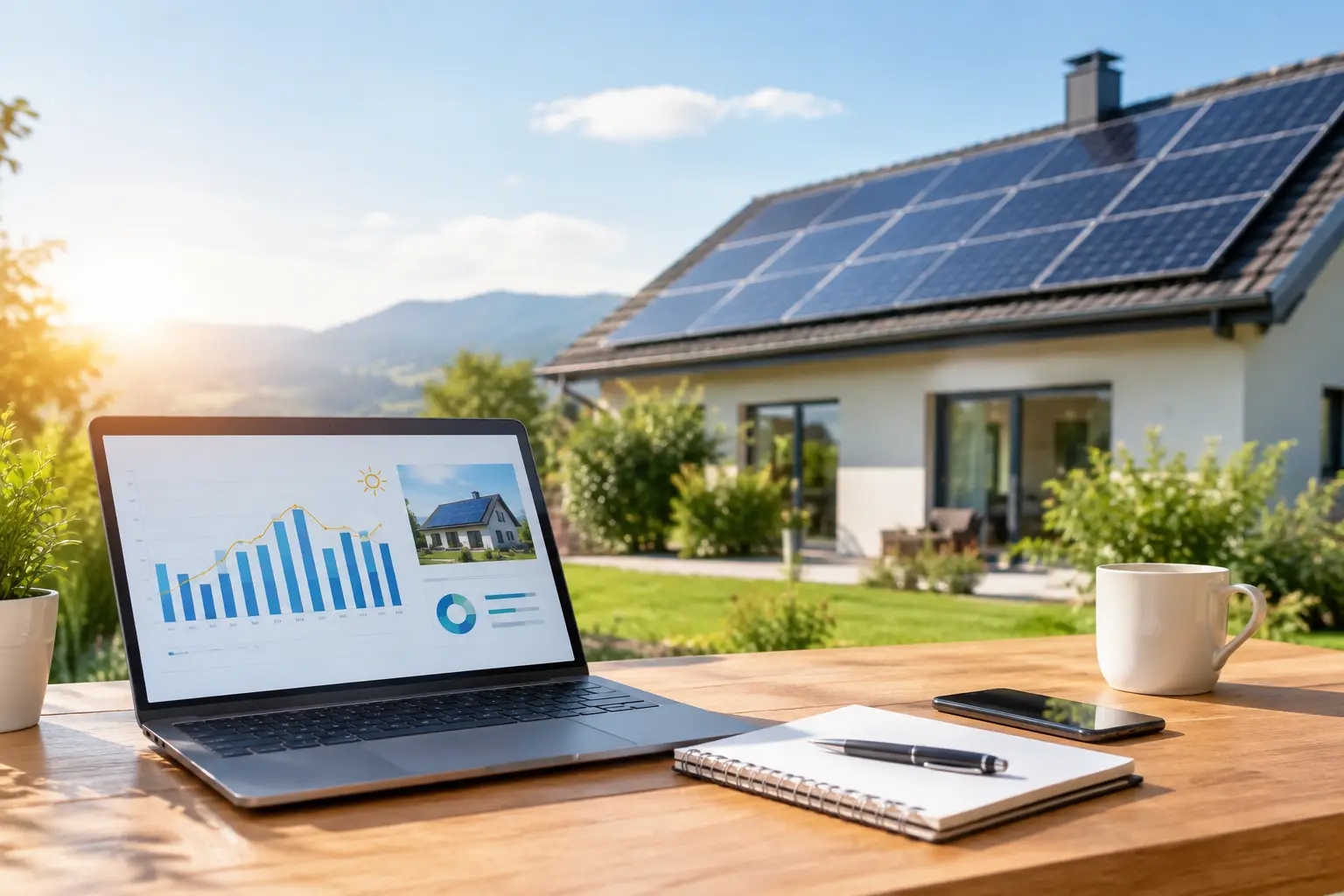
Your Guide to Solar Production Estimates
A solar proposal may say your system will produce 9,000, 14,000, or 25,000 kilowatt-hours per year. That number matters, but it should never be treated as a promise pulled from thin air. A useful guide to solar production estimates helps you see what is behind the number, what can change it, and whether the system is sized for the way your household or business actually uses power.
For property owners across Southern California and Tijuana, solar production can be excellent. We have abundant sunshine, but sunshine is only one part of the calculation. Your roof, energy habits, utility rate plan, and plans for electric vehicles or battery storage all affect what a system should produce and how much value that production creates.
What a Solar Production Estimate Means
A solar production estimate predicts how much electricity a solar panel system is expected to generate over a year. It is usually measured in kilowatt-hours, written as kWh. Your utility bill also uses kWh, which makes this figure one of the best ways to compare your current electricity use with a proposed system.
For example, if your home used 12,000 kWh over the last 12 months and a proposed system is estimated to produce 10,800 kWh annually, the design may be targeting about 90% of your current usage. That can be a reasonable choice, especially if your roof has limited usable space or your budget calls for a smaller first step.
Production and savings are related, but they are not the same. A system can produce a certain number of kWh, while the dollar value of those kWh depends on when the energy is produced, when you use it, your utility’s rates, and the current billing rules. This is one reason a clear proposal should discuss both estimated production and estimated utility savings.
The Main Factors Behind Solar Production Estimates
Sunlight at Your Property
San Diego County, Orange County, Imperial County, Riverside County, and Tijuana receive strong solar resources, but each property still has its own conditions. A roof near the coast may have more morning marine layer than an inland roof. A hillside property may receive late-afternoon shade. Even neighboring homes can have different results because of trees, chimneys, roof angles, and nearby buildings.
A good estimate uses local weather data rather than assuming every day is cloudless. It also accounts for normal seasonal changes. Summer days tend to produce more electricity, while winter production is lower because days are shorter and the sun sits lower in the sky.
Roof Direction, Angle, and Available Space
In the Northern Hemisphere, south-facing panels often produce the most total energy over a year. But south-facing is not the only worthwhile option. West-facing panels can be valuable for customers who use more electricity later in the day, while east-facing panels can help cover morning use.
Roof pitch also affects output, though it is rarely a reason to rule out solar. The larger issue is usable roof area. Vents, skylights, fire setbacks, chimneys, and roof layout determine how many panels can fit and where they can be placed. A well-designed system makes practical use of the roof instead of forcing a one-size-fits-all design.
Shade and System Losses
Shade has a bigger effect than many people expect. A mature tree, a second-story addition, or a nearby palm can reduce production during key hours. Modern equipment can help minimize the impact of partial shade, but no equipment can create sunlight where it does not reach.
Estimates also include normal system losses. Panels do not operate at their laboratory rating every minute of every day. Heat, dust, wiring, inverter conversion, and panel aging slightly reduce output. These are expected realities, not signs that a system is underperforming.
Panel Size and Equipment Choice
Solar panels are rated in watts. A 400-watt panel has a different capacity than a 350-watt panel, but panel wattage alone does not tell the full story. The number of panels, roof layout, inverter design, shading conditions, and projected annual kWh are all more useful when comparing proposals.
Higher-output panels can be helpful where roof space is tight. In other cases, a different panel and equipment combination may provide better value. The right choice depends on the property and the customer’s goals, not on chasing the largest number printed on a panel.
How to Read a Solar Proposal Without Guessing
Start with your last 12 months of utility bills. One or two bills do not show the full picture, especially if your air conditioning, business operations, or household occupancy changes by season. Annual usage gives the installer a much more reliable baseline.
Then compare that annual usage to the proposed annual production. Ask what percentage of your current electricity use the system is designed to offset and why. A 100% offset is not always necessary or possible. Some customers prefer a smaller system to meet a monthly payment target. Others want more production because they expect to add an electric vehicle, a pool, a heat pump, or new business equipment.
You should also ask whether the estimate accounts for visible shading and the exact roof sections where panels will go. If a proposal looks unusually high compared with another quote, find out what assumptions produced the difference. A strong estimate should be easy to explain in plain language.
A Guide to Solar Production Estimates for Batteries
Adding battery storage changes how you use solar energy, but it does not make the panels produce more electricity. A battery stores some of the solar energy your system generates so you can use it later, such as during the evening, overnight, or during an outage if the system is designed for backup power.
This distinction matters. Solar production answers, “How much energy will the panels make?” Battery planning answers, “How much of that energy can I save for later, and which appliances do I want to keep running?”
For many Southern California customers, batteries are especially useful because electricity can be more expensive during certain evening hours. A battery may help reduce the amount of high-cost grid power you buy after the sun goes down. It can also provide peace of mind during outages, although backup duration depends on battery capacity, household loads, weather, and how carefully energy is managed.
If backup is a priority, be specific. Running a refrigerator, lights, internet, and a few outlets requires far less energy than backing up central air conditioning, an electric dryer, or every circuit in a large home. Clear expectations lead to a battery plan that fits both the budget and the real need.
Why Actual Production Can Vary
A production estimate is a planning tool, not a guarantee that every month will match a chart perfectly. Weather varies from year to year. New tree growth can create shade. Dust and debris can affect performance, particularly in dry inland areas. A change in your own energy use does not change panel production, but it can change the size of your utility bill and the value you receive from the system.
That said, major differences between expected and actual output deserve attention. Monitoring tools can help identify whether a system is producing normally. If output seems lower than expected, the first step is to compare the same months year over year rather than comparing a cloudy winter month with a sunny summer month.
Your utility bill can also be confusing because it reflects grid purchases, solar credits, rate changes, and household consumption. A higher bill does not automatically mean the solar system is producing poorly. It may mean your family used more electricity, utility rates changed, or you used more power at times when solar was not generating.
Questions Worth Asking Before You Sign
Before moving forward, ask how the annual kWh estimate was calculated, how much of your current use it is expected to cover, and whether the design includes shade analysis. Ask how future needs, such as an EV charger or battery, would affect the recommended system size.
It is also smart to ask about the roof. If it is nearing the end of its useful life, handling roofing before or alongside solar may prevent the cost and inconvenience of removing panels later. The same goes for electrical panel upgrades, which may be needed to safely support a new solar and storage system.
Accessible Solar & Energy Storage helps customers look at these connected decisions together, including solar, batteries, roofing, and electrical upgrades. That coordinated approach can make the project easier to plan and easier to afford.
The best estimate is not the biggest number or the cheapest quote. It is the one that reflects your actual property, your daily energy habits, and the life you expect to live in that home or operate in that building. Bring a full year of utility bills to your consultation, share your future plans honestly, and ask for the assumptions behind every projection. That is how solar becomes a practical step toward more control over your energy costs.


Leave A Comment