


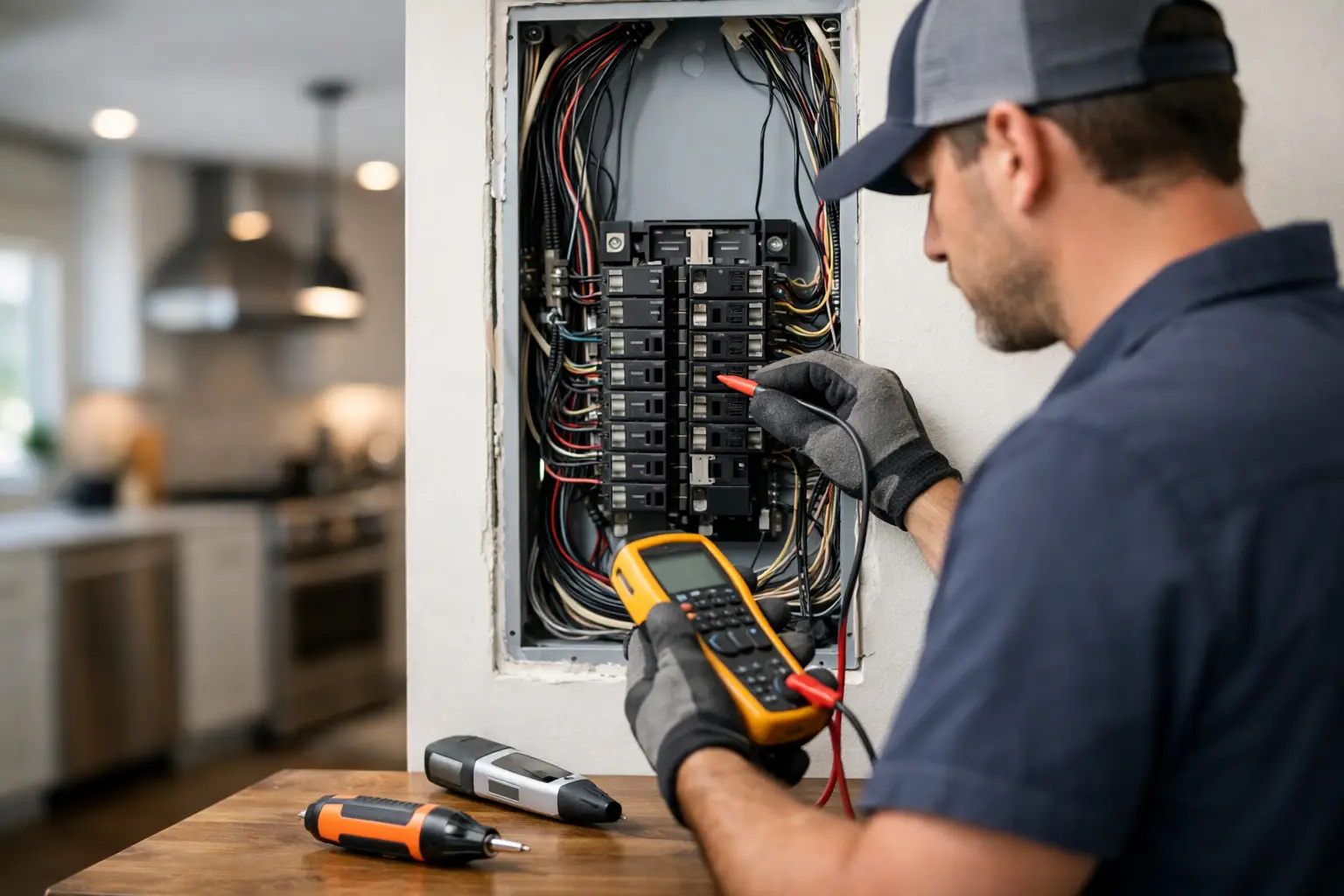
Guide to Electrical Panel Upgrades for Homes
A solar system can produce clean power for decades, but the electrical panel is the point where that power has to safely join your home or business. This guide to electrical panel upgrades helps Southern California and Tijuana property owners understand when a panel needs attention, what an upgrade can support, and how to plan the work without surprises.
For many properties, the question comes up during a solar consultation: Can the existing panel handle solar, a battery, and future electric upgrades? Sometimes the answer is yes. Other times, a panel upgrade is the practical next step toward lower utility bills, backup power, and more energy independence.
What an Electrical Panel Does
Your electrical panel, sometimes called a breaker box or service panel, distributes electricity from the utility to the circuits that run lights, outlets, appliances, heating and cooling equipment, and other loads. Each breaker is designed to protect its circuit from carrying more electricity than it safely can.
When solar is added, the panel also becomes part of the connection between your solar equipment, your utility service, and possibly a battery. A properly designed system must account for the panel’s rating, available breaker space, electrical load, and applicable code requirements. This is not simply about fitting one more breaker into the box.
Older homes throughout San Diego County, Orange County, Riverside County, Imperial County, and Tijuana may have panels that were sized for a very different lifestyle. A home built before widespread air conditioning, electric vehicle charging, induction cooking, and home batteries may not have the capacity or layout needed for the upgrades its owner wants today.
Signs You May Need an Electrical Panel Upgrade
Age alone does not automatically mean a panel must be replaced. A well-maintained panel can sometimes support a solar installation, while a newer panel may still lack capacity for a major expansion. An on-site evaluation gives the clearest answer.
Still, certain signs deserve a closer look. Frequent breaker trips, flickering lights, warm breakers or panel covers, rust or visible damage, and an overloaded panel are reasons to contact a qualified electrical professional promptly. A panel with no open breaker spaces can also complicate plans for solar, batteries, or EV charging.
You may also need an upgrade if your service is rated below the capacity your property now requires. Many modern homes benefit from 200-amp service, but there is no universal rule that every home needs it. The right size depends on a formal load calculation, your existing equipment, and your plans for future electrification.
For commercial properties, the same principle applies on a larger scale. A business adding solar, refrigeration, new equipment, EV charging, or expanded operations may need a review of its main service, distribution equipment, and utility connection before moving forward.
Common situations that trigger an upgrade
An electrical panel review is especially useful before or during projects such as:
- Installing a solar panel system that requires a new interconnection point
- Adding battery storage for backup power during outages
- Installing a Level 2 EV charger
- Replacing gas appliances with electric heat pumps, water heaters, or induction ranges
- Expanding a home, adding an ADU, or renovating a commercial space
The goal is not to sell work a property does not need. It is to identify the safest, most cost-effective path before construction begins.
How Solar and Battery Storage Affect Your Panel
Solar electricity does not simply flow from the roof directly into your appliances. It is managed through equipment that connects to your electrical system. Depending on the design, that can include a solar inverter, production meter, disconnects, battery equipment, and a backup gateway or critical-load panel.
A solar-only installation may be possible with an existing panel if the electrical calculations work and the panel is in good condition. In other cases, an upgrade makes the project safer, cleaner, and easier to permit. It can also create room for future needs rather than forcing another electrical project a few years later.
Battery storage adds another layer of planning. If you want selected loads to keep operating during an outage, the design may use a critical-load panel. This smaller panel serves priority circuits such as refrigeration, internet, lights, garage doors, selected outlets, and possibly medical equipment. Whole-home backup may require more battery capacity, more detailed load management, and an electrical service that can support the design.
That trade-off matters. Backing up a few essential circuits is often more affordable than trying to run every large appliance without interruption. A thoughtful consultation can help you decide what reliability means for your household or business and build around that priority.
What Happens During a Panel Upgrade?
A panel upgrade should be planned as part of the full project, not treated as an afterthought. The process usually begins with an evaluation of the existing panel, service rating, electrical loads, roof and solar goals, battery needs, and utility requirements.
After the scope is confirmed, the electrical team prepares the appropriate plans and permit paperwork. Depending on the property, the work may involve replacing the main panel, upgrading the meter-main equipment, adding breakers, relocating equipment to meet current clearances, or coordinating a service upgrade with the utility.
There may be a scheduled power interruption while the panel is replaced or connected. The length of the interruption varies by project, utility coordination, and site conditions. Your project team should explain the expected schedule in advance so you can plan for refrigerated food, remote work, security systems, medical devices, or business operations.
Inspections are a normal part of the process. They help verify that the work meets local requirements and is ready for the next stage of your solar or storage installation. Permit timelines can differ by city and utility, so avoid relying on a one-size-fits-all schedule.
Cost Factors to Understand Before You Commit
Panel upgrade costs vary because properties vary. The panel itself is only one part of the job. Labor, permit fees, trenching, equipment relocation, meter changes, grounding updates, drywall or stucco repair, and utility service work can all affect the final scope.
A straightforward panel replacement at an accessible location may be very different from an older property with damaged equipment, limited clearance, or a required service upgrade. If a home also needs roofing work before solar, coordinating the projects can prevent duplicated labor and reduce the inconvenience of multiple construction visits.
Financing can make a bundled energy project more manageable, particularly when solar, battery storage, roofing, and electrical work are planned together. Ask for a clear proposal that separates the major components and explains what is included. Affordable does not mean cutting corners on safety, permits, or equipment quality.
Questions to Ask Before Approving the Work
You deserve clear answers before any electrical upgrade begins. Ask whether your current panel can support the proposed solar system, whether the design leaves room for a future battery or EV charger, and whether a utility service upgrade is required.
Also ask how long power may be off, who coordinates permitting and inspections, and whether the proposal includes any required repairs or equipment relocation. If backup power is part of the plan, ask exactly which appliances and circuits will operate during an outage. “Battery backup” can mean very different things depending on the system design.
For bilingual households, receiving these explanations in the language that feels most comfortable can make a major difference. A good project partner should make the details understandable, not rush you through technical decisions.
Plan the Panel for the Energy Future You Want
The best time to evaluate an electrical panel is before you are forced to replace it. If your breakers are crowded, you are considering solar, or you want more protection from outages, a professional assessment can show what is possible and what should come first.
Accessible Solar & Energy Storage helps property owners look at the full picture: solar production, battery backup, financing, roofing needs, and the electrical foundation that brings it all together. A well-planned panel upgrade is not just a box of breakers. It is a practical step toward a home or business that is safer, more flexible, and better prepared to be powered by sunshine.


Leave A Comment