


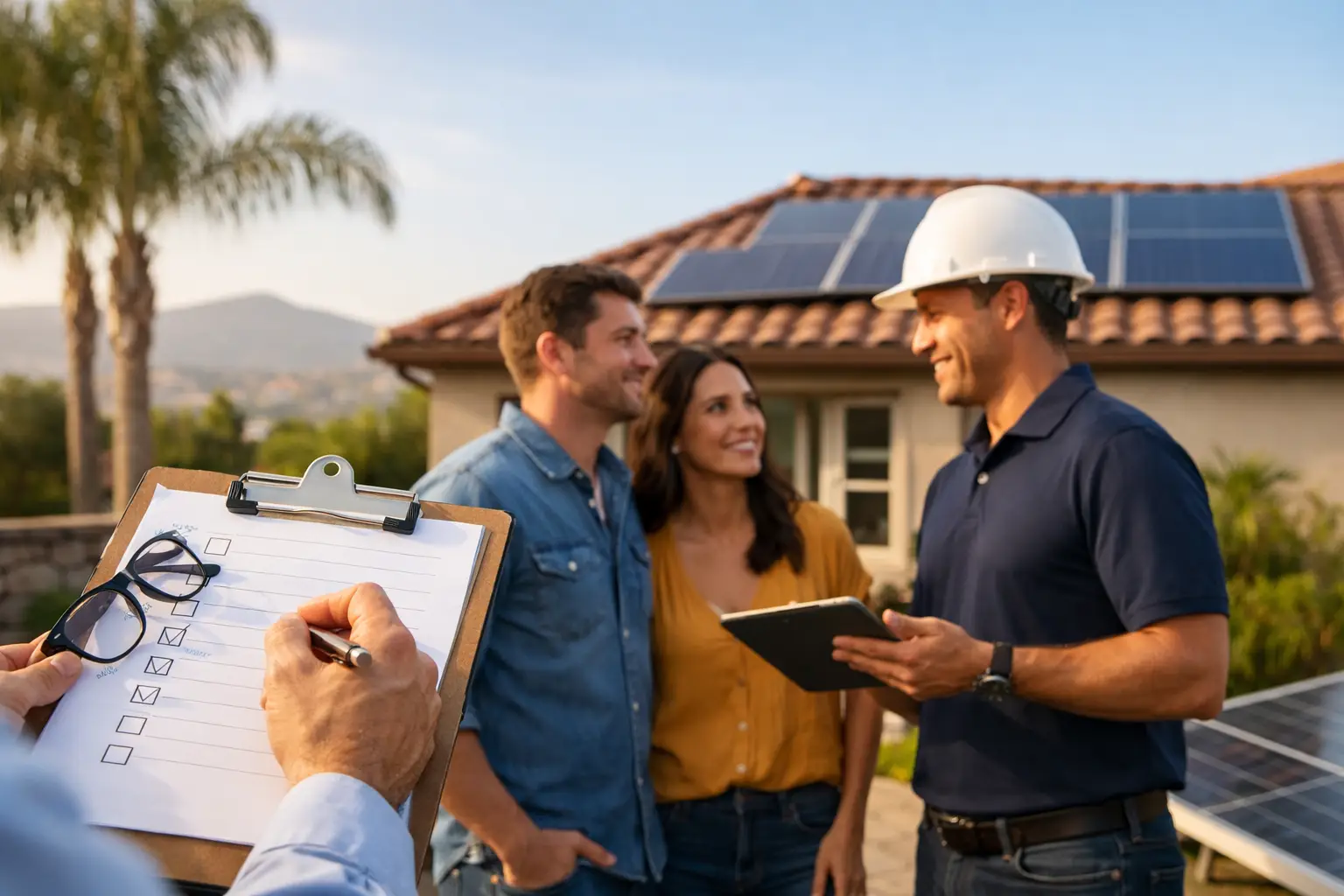
Free Solar Consultation Checklist for SoCal Homes
A solar consultation should leave you with clear numbers, practical options, and a plan that fits your property – not more questions than you started with. This free solar consultation checklist helps homeowners and business owners prepare for a productive conversation about solar panels, battery storage, financing, roofing, and the upgrades that may be needed before installation.
For property owners across San Diego County, Orange County, Imperial County, Riverside County, and Tijuana, the right system can lower reliance on utility power and create more predictable energy costs. But the right system is not always the biggest one. It depends on your electricity use, roof condition, budget, future plans, and whether energy backup matters to you.
Before Your Free Solar Consultation Checklist
A little preparation helps your solar consultant build a recommendation around your real needs instead of a rough estimate. You do not need to understand solar equipment or have every document ready. Bring what you can, and be honest about what you do not know.
Start with your recent electricity bills. Ideally, collect 12 months of bills so your consultant can see how your usage changes during hot summers, cooler months, holidays, or busy business seasons. If you only have a few bills, bring those. Your current monthly bill is useful, but yearly usage gives a more accurate picture of the system size your property may need.
Also think about changes ahead. Are you buying an electric vehicle, adding air conditioning, building an ADU, expanding a business, or welcoming more people into the home? These changes can raise electricity use. Planning for them early may be more cost-effective than adding panels later.
Have basic property information available, including your address, utility provider, and whether you own the property. If you are a business tenant or homeowner in an HOA community, you may need to involve the property owner or association at certain points in the process. That does not mean solar is off the table. It simply means the approval path may look different.
What to Review at Your Property
Your consultation may include an on-site evaluation or a review of aerial images and utility data. Either way, it helps to know the condition of the major parts of your property that affect a solar installation.
Your roof’s age and condition
Solar panels are built for long-term use, so it makes sense to consider the roof beneath them. If your roof is near the end of its useful life, has active leaks, or needs major repairs, roofing work may be the better first step. Removing and reinstalling panels later can add cost and inconvenience.
Ask whether your roof has enough usable space and which sections receive the strongest sunlight. A south-facing roof can be helpful, but east- and west-facing roof areas can also work well depending on your electricity use and local utility rates. Shade from trees, chimneys, neighboring buildings, or second-story sections can affect production, too.
Your electrical panel
Your electrical panel is the traffic center for your property’s power. Some older panels or undersized systems may need an upgrade before solar or battery storage can be added safely. This is especially common when a home also has high-demand equipment such as central air conditioning, pool pumps, electric dryers, EV chargers, or electric cooking.
A panel upgrade is not automatically required. The right answer depends on your existing equipment and the proposed solar design. A full-service provider should explain the reason for any recommended electrical work and include it clearly in the project scope.
Your goals during an outage
Solar panels alone generally do not keep a property powered during a grid outage. For safety reasons, a standard grid-tied solar system shuts down when utility power goes out. If backup power is a priority, ask about battery storage and which circuits you want to protect.
Some owners want essentials such as lights, refrigeration, internet, and medical equipment. Others want broader backup for the whole home or business. The larger the backup goal, the more battery capacity and planning may be required. A battery can also help you use more of your solar energy after sunset, but its value depends on your utility plan, daily habits, and budget.
Questions to Ask During a Solar Consultation
A good consultation is a two-way conversation. You should feel comfortable asking direct questions, requesting plain-language explanations, and taking time to review your options.
Use these questions to keep the conversation focused:
- How much electricity does my property use each year, and how was that number calculated?
- What system size do you recommend, and why is it a fit for my usage and roof space?
- How much of my current electricity use is the system expected to offset?
- What assumptions are being used for energy production, utility rates, and future savings?
- Does the proposal include battery storage, and what will the battery power during an outage?
- Will my roof, electrical panel, gutters, or other property features need work before installation?
- Which equipment brands are proposed, and what product and workmanship warranties apply?
- Who coordinates permits, utility paperwork, inspections, installation, and any related upgrades?
- What financing options are available, and what are the total costs, terms, and monthly payment expectations?
- What happens if actual production is lower than projected or service is needed after installation?
The answers should be specific to your property. Be cautious if a provider promises an exact bill amount without reviewing your utility usage, roof, and rate plan. Solar can reduce electricity costs significantly, but no honest provider can control future utility rates, weather, or changes in how much energy your household or business uses.
Compare Proposals Beyond the Monthly Payment
A low monthly payment can look attractive, but it is only one part of the decision. Compare proposals based on the full project, including the system size, estimated production, equipment, warranties, financing term, and any needed roof or electrical upgrades.
For example, two quotes may show similar payments while offering very different value. One may include a battery, panel upgrade, permit coordination, and long-term workmanship coverage. Another may leave important site work out of the price. Ask for every included and excluded item in writing so you can make a fair comparison.
Pay attention to projected annual production rather than panel count alone. More panels do not automatically mean a better system. Panel wattage, roof orientation, shading, equipment design, and your energy goals all affect performance.
If financing is part of your plan, ask for the cash price as well as the financed total. Review the interest rate, payment schedule, loan term, and whether there are fees. Guaranteed financing support can make solar more accessible for many property owners, but you should still understand the commitment and choose a payment that works comfortably within your budget.
Make Room for a Complete Energy Plan
Solar works best when it is planned as part of the property, not treated as a separate purchase. A consultation is a chance to discuss related needs that could affect timing, cost, and long-term results.
If you expect to replace a roof soon, install an EV charger, upgrade an electrical panel, add a battery, or make changes to a commercial space, bring those plans up early. Coordinating work under one project can reduce duplicated labor and prevent avoidable delays. It also gives you a clearer view of your total investment.
At Accessible Solar & Energy Storage, the goal is to make this process easier to understand and more practical to complete. That means discussing the details that matter to your property, from energy usage and financing to roofing and backup power, without making you feel pressured to become a solar expert first.
Free Solar Consultation Checklist: What to Leave With
Before the consultation ends, make sure you know the next step. You should receive or understand the path toward a custom proposal, site evaluation, financing review, contract, permits, installation, inspection, and utility approval.
Take notes on the recommended system size, expected annual production, estimated project cost, and any additional work your property may need. If something is unclear, ask for it to be explained again. The best solar decision is one you can describe confidently to your family, business partner, or property owner.
Your property already receives the sunshine. A thoughtful consultation helps you decide whether turning that sunlight into power makes sense for your budget, your building, and the future you are planning.


Leave A Comment