


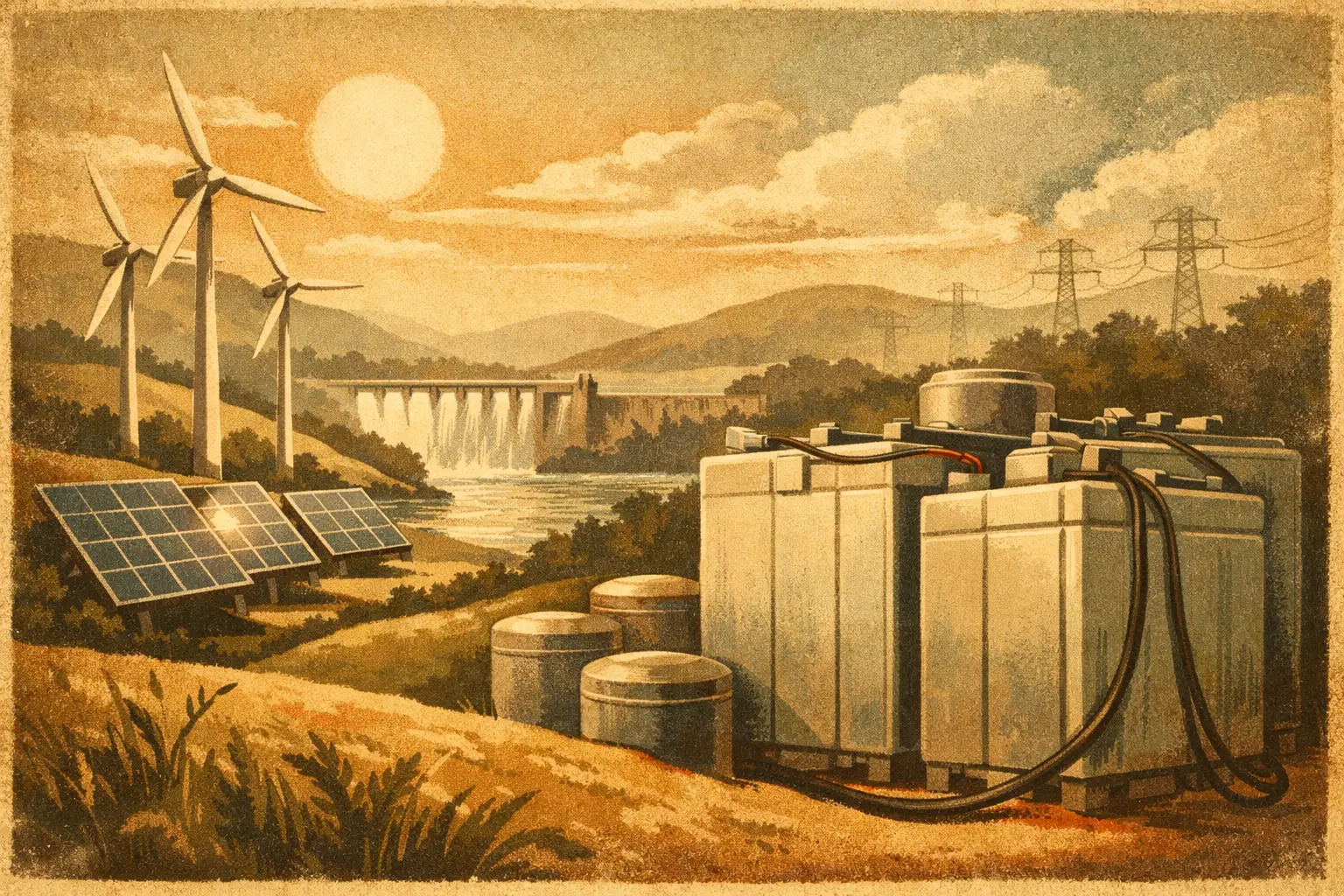
Energy Storage Systems for Renewable Energy
A solar system can produce plenty of power at noon and still leave you buying electricity after sunset. That gap is exactly why energy storage systems for renewable energy matter so much for homeowners and business owners across Southern California and Tijuana. If your goal is lower utility bills, better backup power, and more control over your energy use, storage is often what turns solar from a good upgrade into a much smarter one.
For many property owners, the question is no longer whether renewable energy works. It does. The real question is how to use more of the energy you generate, depend less on the grid, and keep your property running when utility rates rise or outages hit. That is where storage comes in.
What energy storage systems for renewable energy actually do
At the simplest level, an energy storage system saves electricity for later use. In a solar setup, that usually means your panels generate power during the day, your property uses what it needs first, and the extra energy charges a battery. Later, when the sun goes down or utility rates are higher, the battery can supply power back to your home or business.
That sounds straightforward, but the value goes beyond saving excess solar. Storage gives you timing control. Instead of using electricity only when it is produced, you can use it when it saves you the most money or when you need it most.
For residential customers, that often means powering evening usage like lights, appliances, air conditioning, or home office equipment. For commercial properties, it can mean reducing expensive peak demand charges, supporting critical equipment, or avoiding disruptions during outages.
Why storage matters more now than it did a few years ago
The economics of solar have changed. Utility rate structures are more complicated, and in many areas, exporting extra solar power back to the grid does not pay the way many customers expect. In plain terms, sending unused power away may be less valuable than keeping it and using it yourself later.
That shift makes storage far more attractive. A battery can help you increase self-consumption, which means more of the electricity your system produces actually benefits your property instead of being sent back at a lower value.
There is also the reliability factor. In California especially, grid instability, shutoffs, and outages are not abstract concerns. They affect real families, real businesses, and real schedules. A battery will not always run every load in a building, but a well-designed system can keep essentials operating and reduce the stress that comes with losing power.
The biggest benefits for homeowners
For homeowners, storage is usually about three things: savings, resilience, and peace of mind. Savings come from shifting energy use away from costly utility periods. Resilience comes from backup power during outages. Peace of mind comes from knowing your home has another layer of protection when the grid is unreliable.
That said, the right battery setup depends on how you live. A family working from home may care most about keeping internet, refrigeration, lighting, and a few outlets running. Another household may want to support larger loads like air conditioning for part of the day. Those goals affect battery size, solar production needs, and budget.
The best system is not always the biggest one. It is the one that matches your usage patterns and priorities without pushing you into a payment that no longer makes financial sense.
How businesses use storage differently
Commercial customers often look at storage through a slightly different lens. Backup power still matters, but operating costs tend to be the bigger driver. If your business sees high demand charges or expensive late-day utility rates, storage can help reduce those costs by discharging during the most expensive periods.
Some businesses also need continuity. Restaurants, offices, retail spaces, and service-based operations can all lose revenue when the power goes out. In those cases, storage can support business continuity in a way that is hard to measure only on a monthly bill.
There is usually more customization involved with commercial projects. Load profiles, operating hours, equipment needs, and panel capacity all play a role. That is one reason a site-specific evaluation matters so much.
Not all battery systems are the same
When people hear “battery storage,” they sometimes assume every system works the same way. In reality, there are important differences in capacity, power output, chemistry, warranty, and backup capabilities.
Capacity tells you how much energy a battery can store. Power output tells you how much electricity it can deliver at one time. Both matter. A battery may store enough energy for many hours but still be limited in what it can run at once. That is why system design matters as much as the equipment itself.
You also need to look at whether the battery is intended mainly for bill savings, whole-home backup, partial backup, or business continuity. Those are different use cases, and they should be planned differently.
When solar and storage work best together
Storage can be installed on its own in some situations, but it usually makes the most sense when paired with solar. Solar gives the battery a clean, low-cost source of electricity during the day. The battery then helps you use that power later when it is more valuable.
This combination is especially useful for customers who want more independence from utility pricing. Without storage, even a strong solar system may leave you exposed during evening hours. With storage, you have more control over when your energy gets used.
For many properties, it also opens the door to a more complete upgrade path. If your roof needs attention, your electrical panel needs an upgrade, or your property would benefit from a coordinated solar-plus-storage plan, bundling those improvements can simplify the process and reduce headaches.
What to consider before choosing a system
The first thing to understand is your energy use. Not just how much electricity you use in a month, but when you use it. Evening-heavy usage often benefits more from storage than daytime-heavy usage.
Next, think about your real backup priorities. Do you want to keep a few essentials powered, or do you want broader home or business coverage? There is no wrong answer, but there is a cost difference, and the design should match your expectations.
Budget matters too. Storage is a long-term investment, and affordability is part of making clean energy practical. Financing can help many customers move forward without waiting years, but the monthly payment still needs to fit comfortably. A good consultation should make the economics clear, not confusing.
Finally, consider the installation team. Battery storage touches your electrical system, your solar production strategy, and sometimes other property improvements. Working with a provider that can coordinate those moving parts makes a real difference.
Energy storage systems for renewable energy are not one-size-fits-all
This is where many customers need honest guidance. Some homes absolutely benefit from a larger battery bank. Others may be better served by a smaller system focused on essentials. Some businesses will see strong value from demand management. Others may care more about outage protection than monthly savings.
It depends on your property, your goals, your utility plan, and your budget. A trustworthy provider should say that clearly. Storage is a powerful tool, but it works best when it is recommended for the right reasons and sized correctly.
At Accessible Solar & Energy Storage, that is part of the conversation we believe customers deserve – practical education, realistic expectations, and solutions that fit real budgets.
The local advantage matters
In Southern California and Tijuana, energy decisions are shaped by local conditions. Utility costs are high. Heat drives seasonal usage. Outages and grid concerns are real. And many customers are trying to improve their property without taking on a complicated, drawn-out project.
That is why local service matters. You want guidance that reflects the actual conditions in your area, not generic advice copied from a national template. You also want someone who can explain your options in clear language, answer financing questions, and help you think through storage as part of the bigger picture.
For many families and business owners, clean energy becomes much more appealing when it feels accessible instead of technical. A well-planned storage system can do exactly that. It turns solar into something you can use on your terms, not just when the sun is shining.
If you are considering solar or already thinking about how to get more value from the system you have, storage is worth a serious look. The right setup can lower your dependence on utility pricing, strengthen your backup plan, and make your investment work harder day and night. A brighter future is not only about generating clean energy – it is about keeping more of it when you need it most.


Leave A Comment