


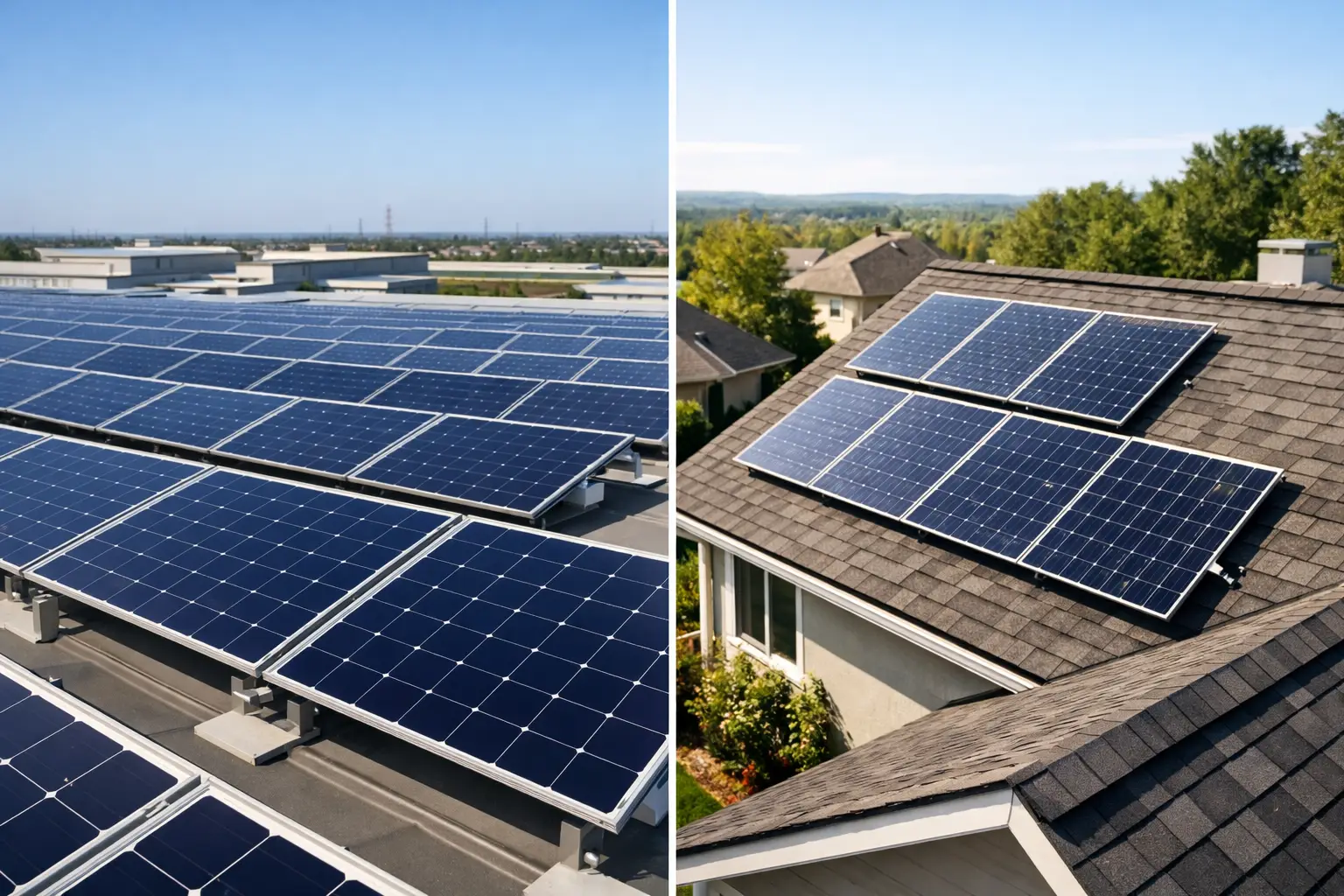
Commercial Solar vs Residential Differences
A solar project should fit the way a property uses energy, not just the square footage of the roof. When comparing commercial solar vs residential, the panels may look similar, but the planning, system size, savings timeline, and electrical needs can be very different. For homeowners and business owners across Southern California, the right choice starts with a clear picture of your utility bills, property condition, and long-term goals.
At Accessible Solar & Energy Storage, we believe clean energy should feel practical and approachable. Whether you are trying to lower household expenses or manage a business’s operating costs, solar can be designed around the real needs of your property.
Commercial Solar vs Residential: The Main Difference
Residential solar is built around a home’s energy use. A typical system helps cover electricity used for air conditioning, appliances, lighting, electric vehicle charging, and other daily household needs. Homeowners often want more predictable energy costs, protection from rising utility rates, and greater independence when paired with battery storage.
Commercial solar serves a business, nonprofit, warehouse, multifamily property, agricultural operation, or other income-producing site. These properties often use much more electricity than a home, especially during business hours. A commercial system may be installed on a larger roof, a carport, open land, or a combination of available spaces.
The basic technology is similar, but the project approach is not. Commercial systems usually require more detailed load analysis, electrical engineering, permitting coordination, and planning around business operations. Residential projects tend to be smaller and more straightforward, although roof repairs, main panel upgrades, and battery storage can add important layers to the work.
System Size Follows Energy Use
The best solar system is not necessarily the largest one that fits on a roof. It is the one designed to serve your energy needs, available space, budget, and future plans.
For a residence, a solar consultation usually begins with a review of recent utility bills. A household using more energy because of a pool, central air conditioning, an electric vehicle, or a growing family may need a larger system. A homeowner planning to add an EV charger or replace gas appliances with electric equipment should discuss those plans before the system is designed.
For commercial properties, energy usage can change by season, shift schedule, occupancy, equipment, refrigeration, manufacturing, or tenant needs. A restaurant, medical office, retail store, and warehouse may have very different load patterns even if their buildings are similar in size. Reviewing interval data and peak-demand periods can help identify where solar will make the greatest difference.
A business that uses substantial electricity during sunny daytime hours can often benefit directly from solar production. A homeowner may use more power in the morning and evening, when the family is home. That difference is one reason battery storage may have a different value from one property to another.
Savings Depend on Timing, Rates, and Goals
Solar savings are not one-size-fits-all. They depend on the utility rate plan, how much electricity the system produces, when the property consumes power, and how much energy is sent back to the grid.
For homeowners, the goal is often to reduce the monthly electric bill and gain more control over future energy costs. In California, current net billing rules make it especially valuable to use solar energy when it is being produced or store it for later use. A battery can help a household use more of its own solar power after sunset and provide backup during an outage when properly configured.
For businesses, savings can be connected to both energy consumption and operating schedules. Solar may reduce a major overhead expense, which can improve cash flow over time. A business with high daytime consumption may be well positioned to use solar production on-site rather than relying entirely on grid power.
Still, solar is not a promise that every bill will disappear. Customers should expect to keep some utility charges and should review realistic production estimates rather than relying on a quick rule of thumb. A trusted solar provider should explain the assumptions behind the proposal in plain language.
Installation Planning Is Often More Complex for Businesses
Most residential projects can be coordinated around a household’s daily routine. Installation crews may need access to the roof, electrical panel, garage, and meter area, but the project can often move forward with limited disruption. If the roof is aging, it may make sense to handle roofing work before panels are installed so the system does not need to be removed later.
Commercial work requires closer attention to operations. Business owners may need to preserve customer access, maintain safety procedures, schedule around deliveries, and protect employees from construction activity. On some sites, roof warranties, lease agreements, structural requirements, or tenant responsibilities must be reviewed before work begins.
The electrical side can also be more involved. A commercial property may have multiple meters, larger service equipment, three-phase power, or equipment that needs a careful interconnection strategy. These details do not make solar out of reach. They simply make a professional site evaluation more important.
A full-service approach can be especially helpful when a project involves more than panels. Coordinating roofing, electrical panel work, gutters, storage, and solar through one project plan can reduce confusion and help property owners avoid costly timing mistakes.
Financing Looks Different, but Options Matter in Both Cases
Residential customers commonly evaluate solar through cash purchases, loans, and other financing structures. The right option depends on the homeowner’s goals, available budget, and comfort with monthly payments. For many families, accessible financing is the difference between putting off an energy upgrade and moving forward with one that can deliver long-term value.
Commercial owners may purchase a system outright, finance it, or explore arrangements that align with business cash flow. The decision can involve accounting considerations, tax planning, ownership structure, and the length of time the business expects to occupy the property. A business owner should speak with qualified tax and financial professionals about incentives and how they may apply to their situation.
In both cases, clear numbers matter more than flashy promises. Ask what the projected payment is, what assumptions are being used for utility rates, whether battery storage is included, and what work is covered in the project scope. A good proposal should make it easier to compare options, not harder.
When Battery Storage Makes Sense
Battery storage can be valuable for both homes and businesses, but the reason for adding it may differ. A homeowner may prioritize backup power for essential loads such as refrigeration, lights, internet, medical devices, and selected outlets during an outage. Others want to save daytime solar energy for evening use.
A business may be more focused on keeping critical equipment running, protecting inventory, supporting communications, or reducing reliance on expensive grid power during certain periods. Not every commercial site needs whole-building backup. In many cases, identifying critical loads is the more affordable and practical approach.
Battery capacity, backup duration, and electrical configuration should be discussed early. The right solution depends on what must stay powered and how much energy those loads require. This is where a site-specific consultation is far more useful than a generic battery package.
Choosing the Right Solar Partner
Whether you own a home or operate a business, look for a provider that asks questions before recommending equipment. Your roof condition, electrical service, utility history, plans for storage, and financing needs should all be part of the conversation.
For property owners in San Diego County, Orange County, Imperial County, Riverside County, and Tijuana, local guidance can make a meaningful difference. You deserve a team that can explain your options clearly, coordinate the moving parts, and respect your budget and property.
The next step does not have to be a major commitment. Start with an honest assessment of how your property uses power, what your utility bills are telling you, and what a brighter, more dependable energy plan could look like for the years ahead.


Leave A Comment