


A Guide to Solar Roof Replacement Timing
A roof that is nearing the end of its life can turn a good solar decision into an expensive redo. This guide to solar roof replacement timing helps homeowners and business owners plan the work in the right order, avoid paying twice for labor, and build a system that is ready to produce clean energy for years.
For most properties, the best answer is simple: replace an aging roof before installing solar panels. But the right timing depends on your roof’s condition, the type of roofing material, your energy goals, budget, and whether you want to add battery storage or electrical upgrades at the same time.
Why roof timing matters before solar
Solar panels are designed to last 25 years or longer. A typical asphalt shingle roof may have a similar lifespan, but only if it is relatively new and has been maintained well. Installing a long-term solar system over a roof with just a few years left may save money today, but it can create a major expense when the roof needs replacement.
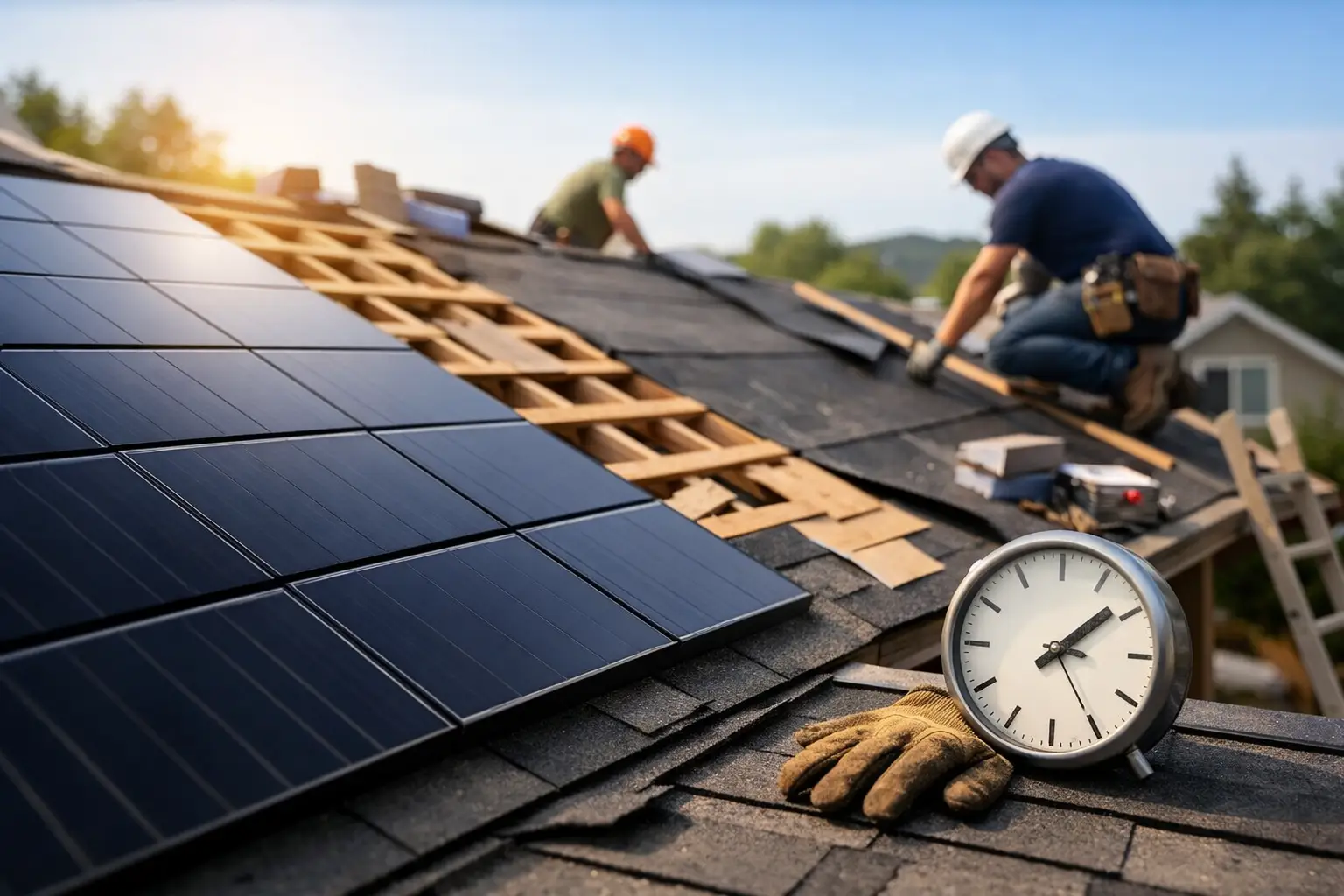
When a roof must be replaced after panels are installed, the solar array usually needs to be removed, stored safely, and reinstalled. That process involves labor, equipment, inspections, and careful coordination to protect the system and maintain its performance. It is usually far more cost-effective to handle roofing first when replacement is already on the horizon.
Roof replacement is also the right time to confirm that your property can support the full energy plan you want. That may include solar panels, battery storage, a main electrical panel upgrade, new gutters, or roof ventilation improvements. Bundling compatible work can reduce scheduling headaches and help ensure each part of the project is designed to work together.
A guide to solar roof replacement timing by roof condition
The age of a roof is useful, but age alone should not make the decision. A 15-year-old roof with quality materials, good drainage, and no visible damage may still have many dependable years ahead. A younger roof with repeated leaks, poor installation, or sun damage may need attention sooner.
When replacing the roof first is the clear choice
Plan the roof replacement before solar if there are active leaks, missing or curling shingles, soft spots in the decking, frequent repairs, damaged flashing, sagging areas, or visible daylight in the attic. These issues should be resolved before any solar mounting equipment is installed.
Replacement is also usually the better choice if an asphalt shingle roof is more than 15 to 20 years old and you expect the solar system to remain in place for decades. In Southern California, intense sun and heat can shorten the useful life of roofing materials, especially on exposed south- and west-facing roof planes. A professional roof evaluation can tell you whether the roof has enough remaining service life to make solar installation a smart investment.
For commercial properties, look closely at the condition of flat roofing membranes, drains, penetrations, and ponding water. Even a small drainage issue can become more difficult and costly to repair once a solar array is in place.
When solar can move forward without a new roof
Solar may be ready to install if the roof is in good condition, has substantial life remaining, and passes a professional inspection. Many newer roofs can support solar without any replacement work. Tile, metal, and certain low-slope roofing systems can have long service lives, though their condition and installation details still matter.
The key question is not whether the roof looks acceptable from the street. It is whether the roof is expected to perform reliably for a period that makes sense alongside a solar investment. If a roof has 15 to 20 years of dependable life left, solar may be a practical next step. If it has five years left, replacement first is often the wiser financial decision.
When a partial repair may be enough
A minor repair can be appropriate when the issue is isolated and the rest of the roof is sound. For example, damaged flashing around a vent, a small number of missing shingles, or a localized leak may not require full replacement.
However, do not use a small repair to postpone a clearly aging roof just to start solar sooner. Ask whether the repair solves a one-time problem or simply buys a short amount of time. A trusted roofing and solar evaluation should give you a direct answer, not pressure you into work you do not need.
Timing your project around weather, permits, and utility planning
In San Diego, Orange, Riverside, Imperial counties, and Tijuana, roofing and solar work can often be completed throughout much of the year. Still, project timing affects comfort, scheduling, and risk.
Dry weather is generally favorable for roof replacement because roofing materials and underlayment can be installed without interruption from rain. If your roof is leaking before the rainy season, do not wait simply to coordinate with solar. Protecting the building comes first. A temporary repair may be needed while your full roof and solar plan is finalized.
High summer temperatures can also affect crews, material handling, and household comfort during construction. That does not mean summer projects should be avoided, but it is a reason to choose a contractor that coordinates schedules carefully and communicates clearly about what to expect.
Permits, utility approvals, and equipment availability can add time as well. Solar projects often require plan review and utility coordination, while roofing permits vary by location and scope. Starting the planning process early gives you more flexibility and helps prevent a rushed decision when your roof develops a serious problem.
The financial trade-off: replace now or pay for removal later?
The decision often comes down to whether to invest in a new roof now or accept the future cost of removing and reinstalling panels. There is no single number that applies to every property, because array size, roof height, roof material, access, and local labor costs all matter.
Still, the principle is straightforward. If the roof will likely need replacement during the solar system’s early or middle years, completing both projects together can protect your budget. You also avoid having a newly installed solar system temporarily out of service while roofing work is completed.
A combined project may make financing easier to understand because you can evaluate the roof, solar, storage, and electrical work as one long-term property upgrade. The goal is not to add services unnecessarily. It is to make sure the work you do choose is coordinated, properly sequenced, and built around your actual budget.
Ask for clear, separate estimates for roofing and solar, along with an explanation of any savings from coordinating the work. You should also ask who handles permits, inspections, warranty documentation, and communication between the roofing and solar teams.
Questions to ask before committing
A good consultation should leave you with practical answers, not more confusion. Before making a decision, ask how many years of useful life your roof has, whether repairs are enough, and whether the roof deck needs any structural work.
Ask how the solar mounting system will be flashed and waterproofed for your roof type. Confirm who will be responsible if a roof issue appears near a solar attachment point. You should also understand the warranty terms for both the roof and solar installation, since these are separate products with separate coverage.
If you are considering battery storage, ask whether your electrical panel has enough capacity and whether a panel upgrade makes sense during the same project. For a business, ask how construction will affect operations, parking, customer access, and energy use during installation.
Build the right order of work
The usual order is roof inspection first, roof replacement or repairs second, and solar design and installation after the roof is ready. In many cases, solar planning can begin while the roofing scope is being finalized. That way, the final roof layout can account for vents, setbacks, shading, and the best placement for panels.
Choosing one project partner to coordinate the moving pieces can make a meaningful difference. Accessible Solar & Energy Storage helps property owners bring roofing, solar, battery storage, gutters, and electrical upgrades into one clear plan, with a focus on practical options and straightforward guidance.
Your roof protects everything below it. Give it the same long-term consideration you give your energy savings, and your solar investment will start on a stronger foundation.


Leave A Comment