


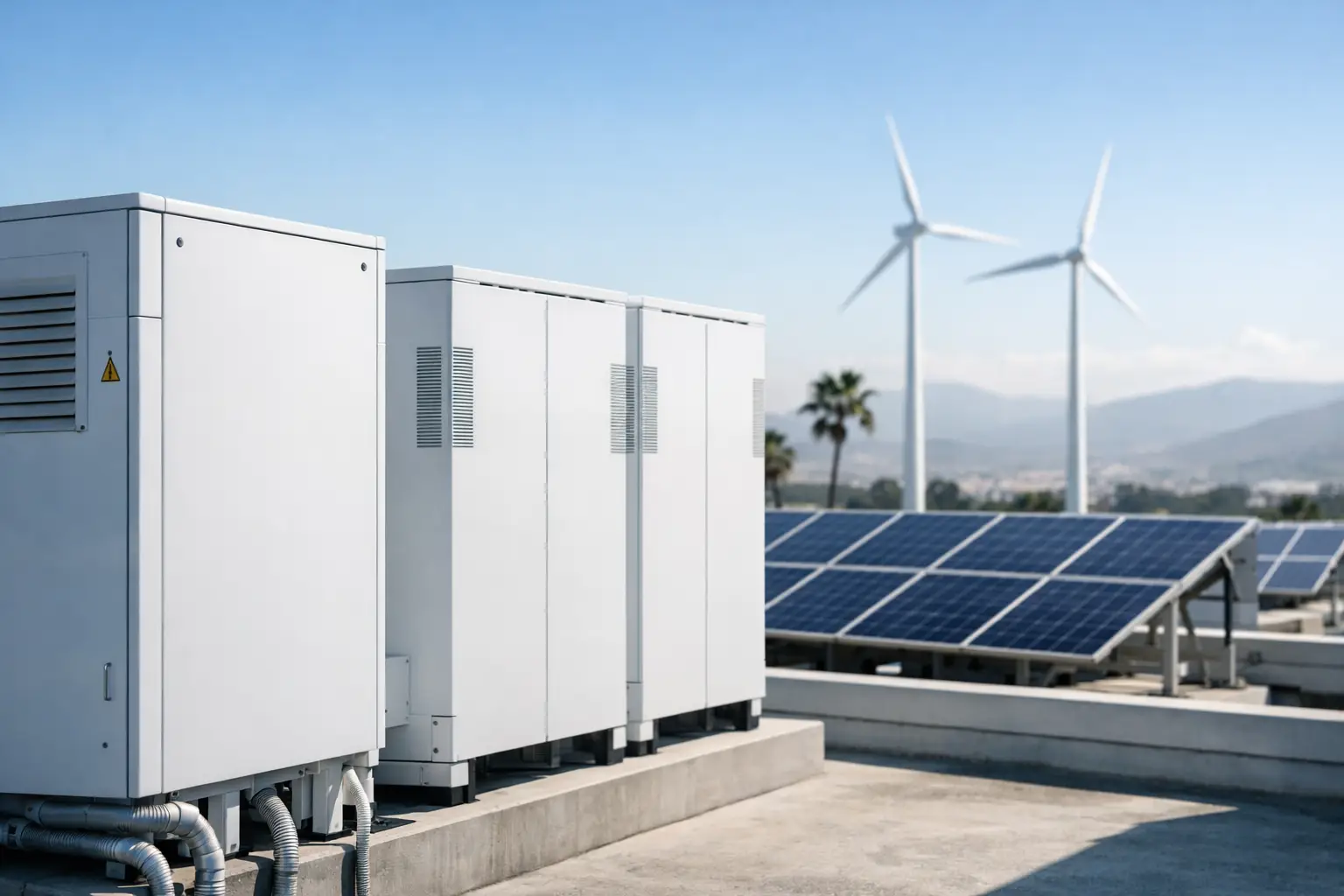
Commercial Battery Incentives for California Businesses
A battery can do more for a business than keep the lights on during an outage. It can reduce costly demand charges, support essential operations, and help a solar investment work harder after the sun goes down. Commercial battery incentives can make that investment more attainable, but the best value usually comes from combining available programs with the right system design and operating plan.
For business owners across Southern California, the question is not simply whether an incentive exists. It is whether a battery will solve a real energy problem at your property, whether your business qualifies, and whether the projected savings support the investment over time.
Why Commercial Battery Incentives Matter
Commercial energy bills often include more than the electricity a business uses each month. Many larger facilities also pay demand charges, which are based on the highest level of electricity drawn during a billing period. One short spike from air conditioning, refrigeration, machinery, or EV charging can affect the bill for the entire month.
Battery storage can discharge during those high-demand periods, reducing the amount of power your business pulls from the grid. It can also store solar energy for evening use, provide backup power during outages, and help businesses shift energy use away from higher-cost hours.
Incentives can reduce the upfront cost of this equipment, but they are not all the same. Some are tax credits, some are performance-based payments, and others are utility programs with limited funding and specific eligibility rules. A clear project review is the best way to avoid building a budget around an incentive that may not apply.
Federal Tax Credits for Commercial Battery Storage
For many qualifying commercial projects, the federal Clean Electricity Investment Tax Credit under Section 48E is a major part of the financial picture. Standalone battery storage may qualify, meaning a battery does not necessarily need to be charged only by solar to be eligible.
The credit amount depends on the project and the taxpayer’s ability to meet federal labor requirements. Projects that meet prevailing wage and apprenticeship requirements can generally qualify for a higher credit rate than projects that do not. Additional bonus credits may be available in certain situations, including projects that meet domestic content standards or are located in qualifying energy communities.
The details matter. System size, ownership structure, construction timing, labor documentation, and the business’s tax position can all affect the final value. A battery proposal should not treat the highest possible tax credit as guaranteed before those details are reviewed with a qualified tax professional.
Commercial property owners should also ask how the credit will be used. Many tax-paying businesses may claim it against eligible federal tax liability. Some project owners may have options to transfer certain credits, while tax-exempt entities may have access to different payment structures. These rules can be useful, but they are not one-size-fits-all.
Depreciation can also improve the economics of a commercial solar and storage project. At the same time, tax-credit basis adjustments and depreciation treatment require careful review. Your installer can help provide project documentation, while your CPA or tax advisor should confirm how the incentives apply to your business.
Timing Can Affect the Value
Tax incentives are governed by rules that can change, and eligibility often depends on when construction begins, when the equipment is placed in service, and how the project is documented. Waiting until after installation to ask about incentives can create missed opportunities.
Before signing a contract, request an itemized proposal that separates solar, battery storage, electrical upgrades, and any other project work. This makes it easier for your tax advisor to review the eligible costs and helps your team understand what is being financed.
California SGIP Incentives for Battery Storage
California’s Self-Generation Incentive Program, commonly called SGIP, has helped qualifying customers pay for energy storage. The program is especially relevant for some businesses that need resilience during outages, operate in areas with elevated fire risk, or provide critical services to vulnerable customers.
SGIP funding levels, eligibility categories, reservation rules, and available budgets can change. In some cases, an incentive may be based on battery capacity. In others, enhanced support may be available to businesses that meet specific resilience or equity-related requirements. Funding is limited, so an eligible project is not automatically funded simply because it is a good fit.
For a commercial customer, the practical first step is to determine whether the property is served by an eligible utility and whether it fits a currently funded SGIP category. A business with refrigeration, medical equipment, food service operations, communications equipment, or essential customer services may have a stronger case for resilience-focused storage than a business seeking savings alone.
It is also important to understand what SGIP requires after installation. Program participation may involve equipment standards, interconnection requirements, reporting, warranties, and operational commitments. A lower upfront price is valuable, but only if the project remains workable for your business long after the incentive paperwork is complete.
Utility Savings Are Part of the Incentive Story
A battery does not need a rebate to produce value. For many commercial customers, the most dependable financial benefit comes from reducing demand charges and avoiding electricity use during expensive time-of-use periods.
That is why an energy analysis should review more than annual electricity consumption. A business may use a moderate amount of electricity overall but still have expensive spikes that make storage worthwhile. Another business may use a great deal of energy but have a flat load profile, making a battery less compelling without a strong backup-power need.
The right battery size depends on when your loads peak, how long they remain high, your utility rate schedule, the amount of solar production available, and the circuits you want to protect during an outage. Oversizing a battery can add cost without delivering proportional savings. Undersizing it can leave demand charges largely unchanged or fail to support critical operations when the grid goes down.
A well-designed project may coordinate solar production, battery charging, demand management, backup power, and electrical panel upgrades. Looking at these elements together often produces a better result than treating the battery as a separate add-on.
How to Evaluate a Commercial Storage Project
Start with your last 12 months of utility bills, not an estimate of what you think you spend. Bills reveal demand charges, rate schedules, seasonal changes, and operating patterns that directly influence battery value.
Next, identify the business problem you want to solve. Are outages shutting down operations? Are summer demand charges too high? Do you want to keep cold storage, computers, lighting, security, or point-of-sale systems running? Clear priorities help determine whether the project should focus on bill savings, backup power, or both.
Then review incentives as a range rather than a promise. A dependable proposal should explain the assumed federal credit, the status of any SGIP funding, the projected utility savings, the financing payment if applicable, and the items that could change those figures. This approach keeps expectations realistic and gives you a better basis for comparing options.
Finally, plan for the property as a whole. Older electrical infrastructure, roof condition, service capacity, and future expansion can affect the project. If your business expects to add EV chargers, new equipment, or more refrigeration, that should be considered before choosing a battery system.
A Local Partner Makes the Process Clearer
Commercial storage involves several moving pieces: site evaluation, utility data, solar production, battery design, interconnection, incentives, financing, and installation coordination. Business owners should not have to manage every detail alone.
Accessible Solar & Energy Storage helps property owners review the full picture, including solar, storage, electrical work, and practical financing options. We believe clean energy should feel accessible, not reserved for businesses with large capital budgets or in-house energy experts. Se Habla Español.
For businesses in San Diego County, Orange County, Imperial County, and Riverside County, a local evaluation can identify the incentives that may be available and, just as importantly, whether storage makes financial sense for your actual operations. Federal and California programs generally apply to U.S. projects, so businesses in Tijuana should request a separate review based on their local utility and installation requirements.
The most useful next step is simple: bring your utility bills, your backup-power priorities, and your plans for the property to a consultation. A battery should earn its place in your business, whether that comes from incentives, lower peak charges, greater resilience, or a combination of all three.


Leave A Comment