


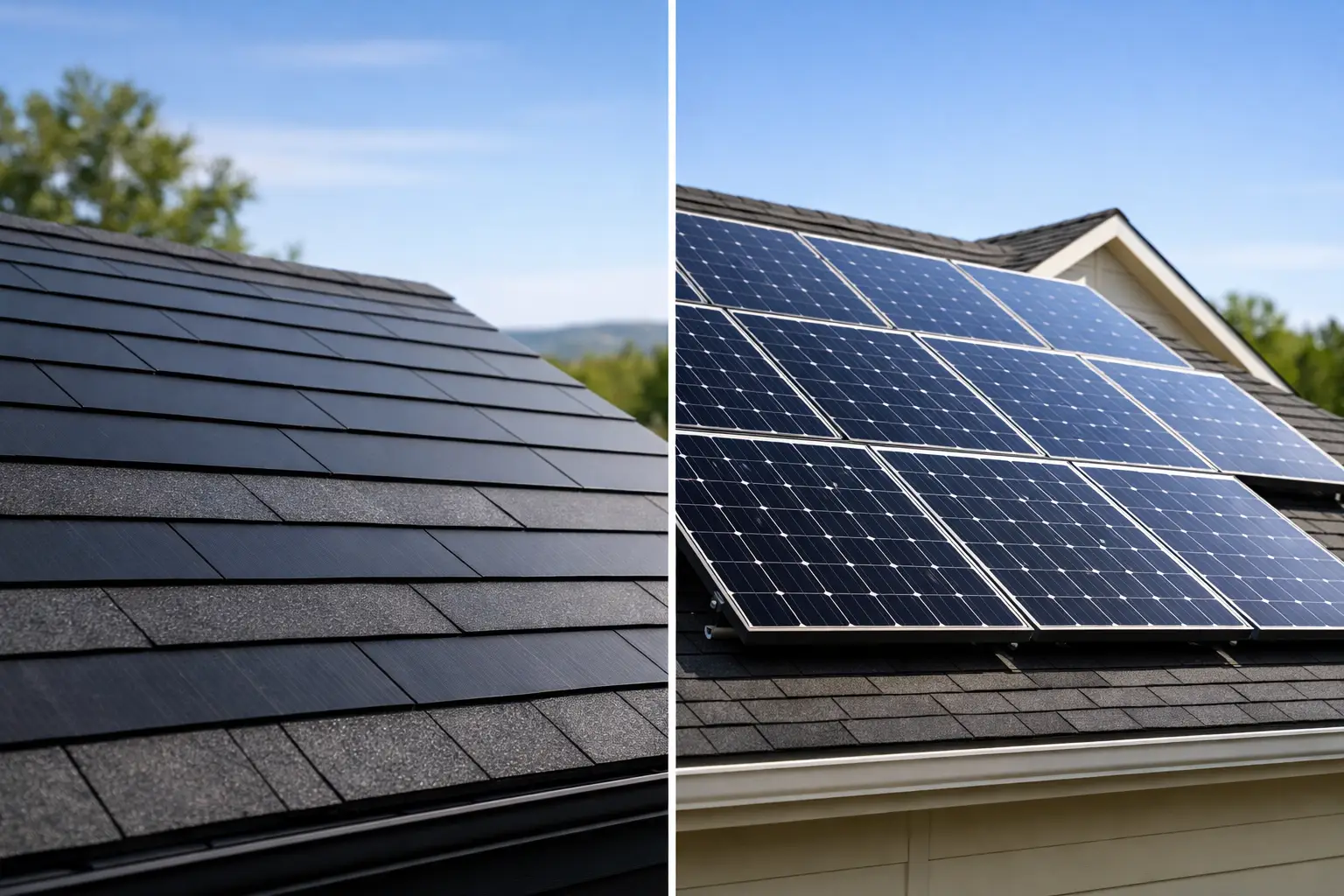
Solar Shingles Versus Panels: Which Fits?
If your roof needs work and you are thinking about going solar at the same time, the question of solar shingles versus panels becomes very real, very fast. For many property owners in Southern California and Tijuana, this is not just about appearance. It is about budget, long-term savings, roof condition, and whether you want one project or several.
The good news is that both options can help reduce utility costs and move you closer to energy independence. The better news is that there is no need to guess. Once you understand how each system works in real-life conditions, the right choice usually becomes much clearer.
Solar shingles versus panels: the basic difference
Traditional solar panels sit on top of your existing roof. They are mounted above the roofing material and connected as part of a solar energy system. This is the option most people picture when they think of solar.
Solar shingles are different. They are designed to function as both roofing material and solar technology. Instead of adding a system over your roof, they become part of the roof itself. That integrated look is the main reason people consider them.
At first glance, the decision can seem simple. If you want the sleekest appearance, choose shingles. If you want the most familiar and often most cost-effective setup, choose panels. But that is only part of the story.
Cost usually decides the conversation
For most homeowners and business owners, cost is where the comparison starts. In many cases, traditional panels have the advantage.
Panels are generally more affordable on a cost-per-watt basis. The technology is more established, equipment choices are broader, and installation is usually more straightforward. If your roof is still in good shape and does not need replacement soon, panels often make more financial sense.
Solar shingles usually come with a higher upfront price. You are not just paying for solar production. You are paying for a roofing product and a solar product combined into one system. That can be worthwhile if you already need a new roof, but it can be hard to justify if your current roof has plenty of life left.
This is where context matters. If a homeowner is facing roof replacement anyway, the pricing gap can feel smaller because part of the roofing cost would happen with or without solar. When the roof and solar are handled together, the project may also feel simpler than hiring separate contractors at different times.
Appearance matters more than some people admit
Let us be honest. Curb appeal matters. Some homeowners want clean energy, but they do not want the look of raised panels on the front-facing roofline.
Solar shingles are built for that concern. They sit flush with the roof and create a more uniform appearance. For higher-end homes, design-conscious neighborhoods, or owners who strongly value aesthetics, that can be a major selling point.
Panels have improved visually over the years, especially with all-black designs, but they still look like mounted equipment. Many customers are completely comfortable with that. Others are not. Neither reaction is wrong. It depends on how much visual integration matters to you and whether that benefit is worth the extra investment.
Performance is not always equal
When people compare solar shingles versus panels, they often assume the more modern-looking product must perform better. That is not always the case.
Traditional solar panels typically offer higher efficiency and greater power output. They have had more time to mature in the market, and they are usually easier to configure for strong production. If your goal is to maximize energy generation from limited roof space, panels often have the edge.
Solar shingles can still perform well, but they may not generate as much electricity per square foot as a standard panel system. That matters on smaller roofs or properties with complicated rooflines, vents, and shaded sections. If every usable area counts, panels may give you more flexibility to build a system that offsets a larger share of your electric bill.
For commercial properties, this difference can be especially important. Business owners often care less about roof appearance and more about output, payback, and predictable savings. In those cases, panels are commonly the more practical fit.
Your roof condition changes the answer
Roof age is one of the biggest factors in this decision, and it gets overlooked too often.
If your roof is newer and structurally sound, adding panels can be a smart move. There may be no reason to replace roofing materials before their time. Installing panels over a roof that still has years of life left is usually the cleaner financial choice.
If your roof is older, leaking, or nearing replacement, solar shingles become much more relevant. Nobody wants to install a solar system and then discover a year or two later that the roof needs major work. In that situation, combining solar and roofing into one coordinated project can save hassle and help you avoid paying twice for labor and disruption.
This is one reason bundled project management matters. When roofing, solar, electrical upgrades, and battery planning are evaluated together, you get a clearer picture of your real options instead of making decisions one piece at a time.
Installation and repairs are not the same experience
Panels are familiar to many installers, and that can work in your favor. There is a larger base of trained professionals, replacement parts are generally more available, and future service tends to be more straightforward.
Solar shingles can require a more specialized installation process. Depending on the product, repairs and future expansions may also be more complex. If a section is damaged, the service approach is not always as simple as swapping out a standard panel.
That does not mean solar shingles are a bad choice. It just means buyers should think beyond the initial install. Ask what maintenance looks like, how warranties work, and what happens if roofing or electrical service is needed years down the line. A beautiful system is still a long-term investment, and long-term support matters.
Financing and accessibility matter too
A lot of solar conversations focus so much on equipment that they ignore the real-life question customers ask first: Can I afford this?
Panels usually offer a lower barrier to entry, especially for budget-conscious households trying to reduce high utility bills without taking on the cost of a full roof replacement. For many families, that makes panels the more accessible option.
Solar shingles may still be worth considering if they help consolidate multiple necessary upgrades into one financed project. If you already need roofing work, and you prefer a single coordinated plan instead of juggling separate contractors, the value can go beyond the sticker price.
For local customers who want guidance in plain language, this is where a consultative approach helps. Accessible Solar & Energy Storage works with homeowners and businesses that need education, financing support, and practical options, not pressure. That is especially important when the right answer depends on both your property condition and your budget.
Which option makes more sense for Southern California and Tijuana?
In sunny markets like San Diego County, Orange County, Imperial County, Riverside County, and Tijuana, both products can benefit from strong solar conditions. But climate alone does not make the decision.
Panels are often the better fit when the priority is maximizing return on investment, increasing energy production, and keeping upfront costs lower. They are a strong choice for many homes and most commercial buildings.
Solar shingles make more sense when the roof is due for replacement, aesthetics are a top priority, or the owner wants an integrated solar roof rather than mounted equipment. They can also appeal to buyers who want a cleaner look and are comfortable paying more for that design advantage.
How to choose without overcomplicating it
If you are deciding between the two, start with three simple questions. Is your roof in good condition? How important is appearance compared with cost? And are you trying to get the highest possible power output from your available roof space?
If your roof is solid, your budget matters, and you want proven performance, panels are usually the practical answer. If your roof needs replacement and you want solar built into the home in a more discreet way, shingles may be worth the premium.
The smartest move is not picking a product based on trends. It is getting an honest assessment of your roof, energy usage, financing options, and upgrade needs as one complete picture.
Clean energy should feel accessible, not confusing. The right system is the one that fits your property, your budget, and your long-term plans – and gives you confidence every time the utility bill shows up.


Leave A Comment